

The most popular advice about a dog with lots of wrinkles is also the most incomplete: keep the folds clean and move on. Cleaning matters, but wrinkles aren't merely a grooming feature. They change how moisture, friction, infection, eye disease, breathing problems, and lifelong veterinary care can affect a dog.
A heavily wrinkled dog may need daily inspection, careful drying, and a veterinary plan for recurring skin or ear disease. In some breeds, the folds also signal a broader conformation risk. That means the responsible question isn't only whether you can manage a puppy's wrinkles, but whether your household can support the dog's ongoing welfare and medical needs.
Table of Contents
- The Clinical Reality Behind Wrinkled Dog Breeds
- Genetic and Anatomical Differences Across Breeds
- Statistical Risk Profiles for Skin Fold Dermatitis
- Daily Fold Maintenance and Drying Protocols
- Recognizing Infection and Systemic Warning Signs
- Long Term Welfare and Financial Implications
- Evaluating the Commitment for Your Household
The Clinical Reality Behind Wrinkled Dog Breeds
A fold is a small enclosed environment. When two skin surfaces remain tightly pressed together, they can retain moisture, heat, sebum, debris, and microorganisms. Friction then irritates the skin, and inflammation may progress to bacterial or yeast overgrowth. Veterinary literature describes this process as skin-fold dermatitis, also called intertrigo. The veterinary review of skin-fold dermatitis explains why close skin contact creates conditions that are different from those on exposed skin.
That distinction changes the owner's role. A person caring for a dog with ordinary coat maintenance may brush, bathe, and check the ears as needed. A person caring for a heavily wrinkled dog needs to inspect areas where skin touches skin, remove moisture without abrading the tissue, and notice changes before irritation becomes a painful lesion.
Practical rule: A clean fold that remains damp can still become a problem. Cleaning and drying are separate tasks.
The risk varies across facial, neck, tail, and body folds. Facial folds can collect tear fluid or saliva. Neck folds may stay warm after drinking or exercise. Tail pockets can be difficult to see and may remain hidden even when the visible coat looks clean. A Chinese Shar-Pei breed health profile deserves particular attention because the breed's skin structure represents more than localized facial wrinkling.
The population evidence supports treating conformation as a medical risk pattern. In a large UK veterinary-record study, skin-fold dermatitis affected dogs across the population, but the diagnosis was substantially more common in heavily wrinkled and flat-faced breeds. The practical conclusion is straightforward: daily fold care is preventive health maintenance, not an optional cosmetic routine.
Genetic and Anatomical Differences Across Breeds
Breed label is not a cosmetic detail here. It changes the likely mechanism of disease, the daily care burden, and the point at which home management stops being enough.
Wrinkling in a Pug, French Bulldog, or English Bulldog usually sits within brachycephalic anatomy. Those dogs often have deep facial folds, narrow spaces where skin contacts skin, and limited airflow across moist areas around the nose, lips, and neck. That combination can keep tear fluid, saliva, and heat against the skin for long periods. The result is a maintenance problem, but it is also a medical one, because the same head shape can bring separate risks involving breathing, heat tolerance, eyes, and ears. Fold care in these breeds works only as part of a broader risk-control routine that also includes conservative exercise and close heat management.
The Chinese Shar-Pei is different at the tissue level. A 2011 genetic study linked the breed's thick, folded skin to an unstable duplication upstream of the HAS2 gene, which affects hyaluronan production in connective tissue. The veterinary research on Shar-Pei genetics and health supports treating the breed's skin phenotype as a genetically mediated conformation issue, not a surface-cleaning problem.
Two different pathways to heavy folds
That distinction matters in practice.
In a brachycephalic breed, the owner is often dealing with concentrated facial moisture, friction, allergy-related inflammation, and recurring ear or skin disease in exposed folds. The routine may be time-consuming, but the problem pattern is commonly local. If cleaning, drying, and reducing irritants keep the skin stable, home care may remain the main tool.
In a Shar-Pei, heavy folding can sit inside a wider breed-specific disorder profile. Veterinary concerns may include skin-fold dermatitis, otitis, inflammatory gastrointestinal disease, Shar-Pei autoinflammatory disease, entropion, and reactive amyloidosis. Recurrent redness, odor, discharge, pain, fever, eye irritation, or repeated flare-ups should not be treated as a signal to clean more aggressively. They can indicate that the folds are one visible part of a larger inflammatory process and that clinical assessment is needed.
A Bloodhound breed health page shows why loose skin should not be managed under one universal protocol. Fold depth, skin tension, facial shape, and inherited disease patterns all shift both the medical risk and the likely cost of care. Breed identification is the first clinical filter. The dog's actual symptoms come next.
Statistical Risk Profiles for Skin Fold Dermatitis
Veterinary records make the risk gap hard to dismiss. A large UK study estimated the one-year prevalence of skin-fold dermatitis across all dogs at 0.37%. In the same analysis, the estimate rose to 6.05% in English Bulldogs, 2.69% in French Bulldogs, 2.11% in Pugs, and 1.96% in Basset Hounds. The published veterinary-record analysis is the source for those figures.
| Breed Category | Estimated Prevalence | Relative Risk |
|---|---|---|
| All dogs | 0.37% | Reference population |
| English Bulldog | 6.05% | About 16 times the all-dog estimate |
| French Bulldog | 2.69% | About 7 times the all-dog estimate |
| Pug | 2.11% | About 6 times the all-dog estimate |
| Basset Hound | 1.96% | About 5 times the all-dog estimate |
Those ratios matter because they change how an owner should budget time, attention, and money. A low-population problem in the general dog population becomes a recurring management issue in some wrinkled breeds. That shifts the discussion away from occasional wiping and toward a risk model that can include repeat skin checks, prescription topicals, cytology or other diagnostics, and treatment of linked conditions such as otitis or allergy-driven inflammation. Any individual dog may stay stable. The point is that these care needs fall within the expected ownership pattern for higher-risk breeds.
The same analysis also showed an anatomical gradient. Across brachycephalic breeds, the estimated prevalence was 1.02%, compared with 0.26% in mesocephalic dogs and 0.22% in dolichocephalic dogs. In practical terms, short-skulled conformation was associated with roughly four times the observed prevalence recorded in medium-skulled dogs in that dataset.
That does not predict the outcome for one puppy. It does justify screening breed type as an early clinical risk factor rather than treating every wrinkled dog as a simple grooming case.
Shar-Peis belong in a separate category for the same reason. In a large UK primary-care dataset, they accounted for 1,913 of 455,557 dogs, or 0.42%, and had a reported 0.91% annual prevalence of diagnosed skin-fold dermatitis. The study also reported odds 6.4 times higher than those observed in crossbred dogs. The Shar-Pei population-health research supports treating the breed as more than a cosmetic wrinkle phenotype.
For owners, the practical conclusion is simple. Breed-specific planning is more rational than assuming ordinary grooming needs apply equally to all dogs. A Bulldog health guide is useful as a breed-context check before purchase, especially if the household is trying to estimate how often routine moisture control may turn into clinical care.
Daily Fold Maintenance and Drying Protocols
The daily routine should be simple enough to repeat and precise enough to catch change. The aim isn't to sterilize the skin. It's to prevent moisture and debris from remaining in contact with folded surfaces, while avoiding products or friction that damage the skin barrier.
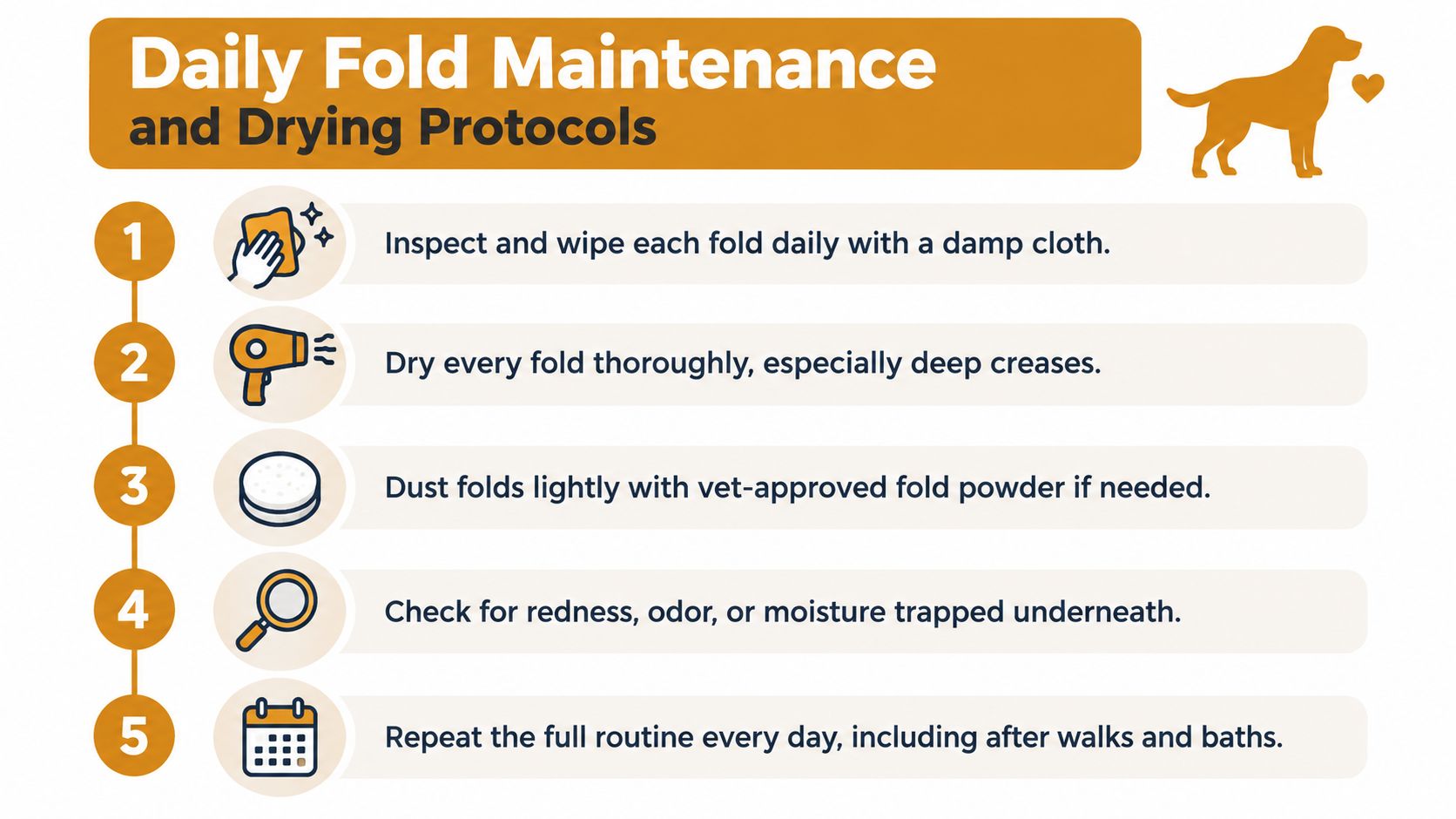
A repeatable home routine
Inspect first. Lift each facial, neck, tail, or body fold gently. Look for trapped hair, debris, redness, dampness, odor, discharge, or areas that your dog resists you touching.
Clean with an appropriate product. Use a damp, soft cloth or a veterinary-recommended cleanser. Don't scrub, pick at crusts, or apply human creams. Dermatitis has several possible causes, including allergies, parasites, irritants, bacterial infection, fungal disease, and trauma, so a product that helps one problem may irritate or obscure another.
Dry completely. Pat the fold with a clean, soft towel or pad, separating the surfaces so moisture doesn't remain underneath. A wipe that leaves the crease damp has only completed half the job.
Recheck the hidden surface. Deep folds can look dry from the outside while remaining moist at the base. Pay particular attention after bathing, swimming, walks in wet weather, or heavy panting.
Track changes. Note recurring odor, redness, discharge, hair loss, pain, or repeated licking. A pattern gives your veterinarian more useful information than a single photograph taken during a flare.
A Pug care resource is relevant because short-nosed dogs may need wrinkle care alongside careful heat and exercise management. Excess body weight and allergic skin disease can increase friction or sustain inflammation, so keeping the dog at a healthy body condition and managing allergies are part of fold prevention, not separate concerns.
Avoid turning medicated bathing into a default routine. Merck Veterinary Manual states that when medicated bathing is prescribed for canine pyoderma, it may occur two to three times weekly, with the product left on the skin for 10 to 15 minutes. Merck's guidance on pyoderma treatment makes clear that the product and schedule should follow veterinary direction.
Recognizing Infection and Systemic Warning Signs
Home care is appropriate for routine inspection and moisture control. It isn't a substitute for diagnosis when the skin is inflamed, painful, infected, or repeatedly relapsing. Persistent odor, redness, discharge, bleeding, hair loss, flaky scales, lesions, excessive scratching, or pain should move the problem out of the grooming category.
The local warning pattern
Fold pyoderma can develop when damaged, moist skin supports bacterial overgrowth. A dog may show an abnormal odor, greasy or flaky material, red or raw tissue, crusts, hair loss, or sensitivity when the fold is touched. Merck lists itching, scaling, redness, thickened skin, increased pigmentation, oily seborrhea, odor, and hair loss among possible manifestations of dermatitis. Merck's overview of canine dermatitis emphasizes that the underlying cause must be identified.
The American Kennel Club advises veterinary evaluation for pyoderma because the veterinarian needs to determine the infection's location and depth before selecting treatment. Severe infections may require prescription antibiotics or anti-itch medication. The AKC guidance on pyoderma in dogs also explains why topical home care shouldn't replace an examination when lesions are significant or persistent.
Don't apply human products just because they soothe human skin. A cleanser, steroid, antifungal, antibiotic, or barrier product may be inappropriate if the actual problem is a parasite, allergy, deep infection, eye disease, or another condition. Repeated episodes warrant a veterinarian's assessment of the fold, ears, paws, and broader skin history.
Signs that suggest more than fold irritation
Certain symptoms deserve faster attention because they may point beyond localized moisture:
- Eye pain or squinting: Fold tension and entropion can injure the eye surface.
- Recurrent ear disease: Repeated odor, discharge, head shaking, or scratching may indicate an allergy or breed-associated skin problem.
- Fever, marked lethargy, or lameness: These signs don't fit a simple dirty fold and can indicate systemic disease.
- Persistent scratching or bleeding: Ongoing self-trauma can deepen skin damage and sustain infection.
- Breathing difficulty, exercise intolerance, or overheating: These are especially important in brachycephalic dogs, where airway anatomy creates risks beyond skin care.
- Recurring episodes in a Shar-Pei: Skin problems accompanied by fever, joint or limb changes, gastrointestinal signs, or poor general health require veterinary evaluation for breed-specific inflammatory disease.
For a French Bulldog health profile, fold maintenance should be considered alongside airway, eye, ear, heat, and allergy concerns. The useful triage question isn't whether the wrinkle looks mildly dirty. It's whether the dog is comfortable, whether the skin is healing between episodes, and whether another disease is driving the recurrence.
Long Term Welfare and Financial Implications
The lifetime implications of extreme wrinkles are easiest to understand when owners separate routine maintenance from conformation-linked disease. Cleaning supplies and inspection time belong to ordinary daily care. Recurrent dermatitis, eye surgery, airway assessment, allergy management, and systemic disease belong to a different planning category.
Shar-Pei provide a clear example. A veterinary population study found that nearly one-fifth of Shar-Pei received veterinary care for entropion each year, identifying a painful eye condition strongly associated with the breed's extreme folded skin and hyaluronosis. The study of Shar-Pei health and entropion also discusses reactive amyloidosis, which can affect the kidneys and may progress fatally at a relatively young age.
Short-nosed breeds carry a separate welfare burden. The AVMA summarized an analysis of more than 50,000 brachycephalic dogs with pet health insurance, covering 15 purebred brachycephalic breeds. Brachycephalic dogs were almost three times as likely as nonbrachycephalic dogs to have a claim for a breathing problem, including brachycephalic obstructive airway syndrome. The AVMA research summary identifies respiratory disease, ocular disease, heatstroke, pregnancy complications, allergic reactions, and BOAS as important concerns.
These conditions affect more than a veterinary ledger. Painful eyes can alter sleep and behavior. Airway disease can limit exercise, heat tolerance, eating, and rest. Recurrent dermatitis can make ordinary handling uncomfortable and may require repeated treatment. The financial consequence is that a household may face both predictable daily care and uncertain specialist or emergency decisions.
Insurance comparisons require careful reading. Owners should check hereditary and conformational exclusions, waiting periods, pre-existing-condition rules, reimbursement structure, and whether a documented problem could affect later claims. A policy that appears suitable in general terms may treat a breed-associated condition differently from an unrelated accident.
For individualized planning, PetCostEngine offers breed- and state-adjusted lifetime ownership projections, breed health profiles, and insurance comparison tools. Its cost calculator can help owners model recurring care and veterinary categories without reducing the decision to a single grooming estimate.
Evaluating the Commitment for Your Household
A household considering a dog with lots of wrinkles should test the decision against a normal week, not an idealized puppy visit. Can someone inspect and dry the folds consistently? Can the household respond promptly to odor, redness, discharge, eye pain, breathing changes, or recurring ear disease? Can the family maintain a veterinary relationship when a problem stops behaving like routine irritation?
The answer should also account for anatomy. A Pug, French Bulldog, or English Bulldog may require fold care plus heat and airway precautions. A Shar-Pei may need a plan that includes eye monitoring and awareness of breed-specific inflammatory or kidney disease. The dog's individual history matters, but the breed's conformation determines which risks deserve attention first.
A practical decision includes three layers:
- Daily care: inspection, gentle cleaning, complete drying, and monitoring for change.
- Clinical care: veterinary assessment when symptoms persist, recur, hurt, spread, or involve the eyes, ears, breathing, or general health.
- Long-term planning: a realistic review of hereditary exclusions, specialist treatment possibilities, and the household's ability to absorb unpredictable medical decisions.
Wrinkles can be managed responsibly, but they demand more than a wipe-and-forget routine. Owners who understand the distinction between moisture control and disease treatment are better positioned to protect comfort, recognize danger early, and choose a breed that fits their time, attention, and financial resilience.
PetCostEngine helps U.S. owners model lifetime dog ownership by breed, state, and age, including veterinary care, grooming, and insurance categories. Visit PetCostEngine to compare the long-term care profile of wrinkle-heavy breeds before bringing one home or while reassessing your current dog's needs.
Estimated lifetime and yearly costs for a Chinese Shar Pei, state by state, plus whether pet insurance breaks even for the breed.
See Chinese Shar Pei costs →
Is insurance worth it for a Chinese Shar Pei? →
Digestive support → Deshedding brush → Premium dry food →
As an Amazon Associate, PetCostEngine earns from qualifying purchases.