

The travel crate is by the door, the leash and water bowl are packed, and your dog is circling while you wonder whether that crate will fit in the car. Before loading up, decide how your dog will be restrained, where they'll ride, and how you'll keep them comfortable at stops. Those choices matter on a quick errand as much as on a long drive.
In a 2010 AAA survey of dog owners who had driven with their pets, 80% said they took their dogs on car trips, but only 17% used a restraint system. The survey also found that 31% had been distracted by their dog while driving. A loose dog can interfere with steering or braking, distract the driver, or be thrown forward if the vehicle stops suddenly. (AAA's survey findings)
Table of Contents
- Setting Up for a Safe First Car Trip
- Crash-Tested Harness Versus Travel Crate
- Preparing Your Dog for the Drive
- Stops, Heat Safety, and Driving Routine
- Comfort, Cooling, and Breed-Specific Adjustments
- Legal Rules and Money Considerations by State
- Your Pre-Trip Action Plan
Setting Up for a Safe First Car Trip
A safe setup starts before the engine does. Keep your dog in the rear seating area, secured in a properly fitted, vehicle-rated harness or a crate anchored so it can't slide. The front seat is off-limits: an airbag can seriously injure a dog, even if the dog is restrained. A dog shouldn't ride on your lap, roam between seats, or put their head outside the window.
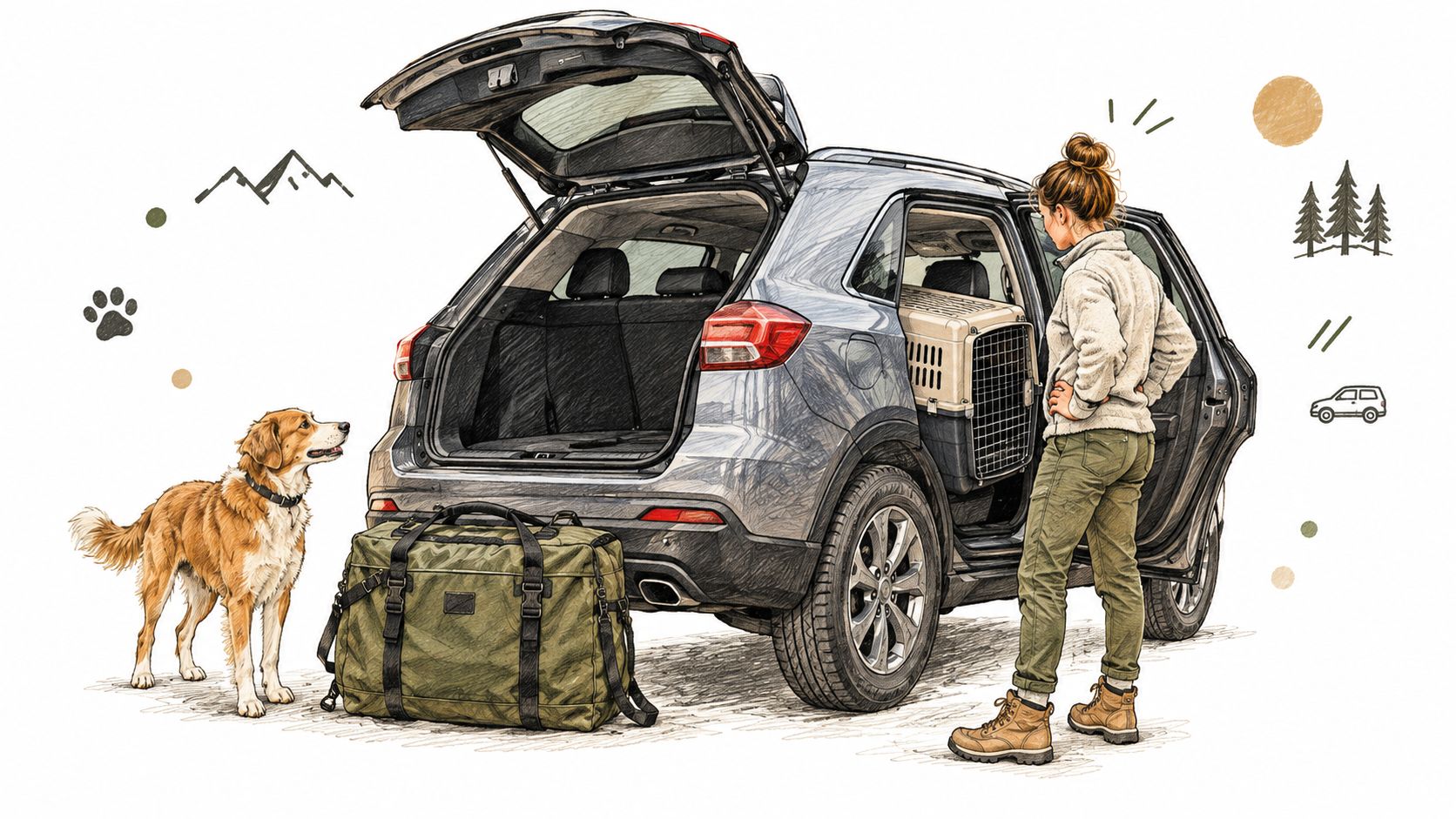
The logic is simple: containment protects the dog and helps keep the driver focused. In an AAA survey cited by AVMA, over 80% of drivers recognized the danger of unrestrained pets, but only 16% reported using restraints. (AVMA guidance on pets in vehicles) That gap is why restraint belongs in the trip plan, not on a shopping list of optional accessories.
Make three decisions before you start the engine
- Choose a restraint. Use a crash-tested harness attached to the vehicle's seat-belt system, or a rigid, well-ventilated crate secured against sliding.
- Choose the position. Put your dog in the rear seating area, away from front airbags and the driver.
- Check the fit and security. Your dog must not be able to escape or launch forward. In a crate, they should be able to stand, sit, turn around, and lie down comfortably.
Practical rule: A walking harness or simple tether isn't a substitute for a vehicle-rated restraint. Secure the dog before the car moves, and don't rely on a barrier alone to hold them in place.
The question isn't whether to buy a crate or harness. It's which option suits your dog's size, body, behavior, and the vehicle's layout. Owners comparing dogs of different builds can start with breed and size comparisons, then assess the dog in front of them. The next step is matching that dog to a restraint they can tolerate and you can secure correctly.
Crash-Tested Harness Versus Travel Crate
A harness and a crate can both work, but they aren't interchangeable for every dog. Start with fit and behavior, then consider where the restraint can be secured in your car. A dog that stays settled in a familiar crate may travel poorly in a harness; another may panic when confined but accept a properly fitted harness.
Look for independent crash-test evidence, not just a product description that uses the words “crash-tested.” The Center for Pet Safety publishes information about its testing and certification program. A product designed for vehicle use should also provide clear instructions for seat-belt routing or anchoring. Don't assume a tether attached to a walking harness will restrain a dog safely in a collision.
| Criteria | Crash-tested harness | Rigid travel crate |
|---|---|---|
| Dog's response | Often suits a dog comfortable wearing a harness and sitting or lying in the rear seat. | Often suits a dog that already rests calmly in a crate, or needs a defined space. |
| Fit and movement | Must fit securely without restricting breathing or movement. Adjust it according to the manufacturer's instructions. | Must allow the dog to stand, sit, turn around, and lie down comfortably. |
| Escape behavior | A poor fit or twisting straps may give a determined dog room to slip free. Check the fit before driving. | Helps contain dogs that try to climb or move around, but only if the crate is secured and the dog is comfortable inside it. |
| Vehicle layout | Can be practical in a sedan when the seat-belt path is clear and the dog fits comfortably in the rear seat. | Often works well in an SUV or wagon when the crate can be anchored securely. |
| Motion sickness | May be a better starting point for a dog that becomes nauseated when confined, though symptoms need individual assessment. | May suit a dog that settles better in an enclosed, familiar den. |
Match the equipment to the dog and car
A large dog needs enough space to sit and lie down, while the restraint still has to prevent forward projection. A crate that fits your dog but can't be anchored securely isn't a safe choice. Compare your dog's build with the vehicle's available space using large-breed size guidance, then check the restraint manufacturer's fit and installation instructions.
Crates often make more sense for anxious dogs who already view one as a safe resting place, households transporting multiple dogs, and SUVs or wagons with room for a secured enclosure. A harness may be the simpler starting point for a single small or medium dog in a sedan, especially when the owner travels light and the dog tolerates wearing it. But a dog that freezes, thrashes, or tries to escape in a harness needs a different plan, not a tighter guess at the straps.
Test the setup on a stationary car first. Then take a short drive and watch for persistent panting, drooling, vomiting, panic, or escape attempts. Stop if these signs persist, and reassess the fit, the restraint type, or the dog's health with a veterinarian.
Preparing Your Dog for the Drive
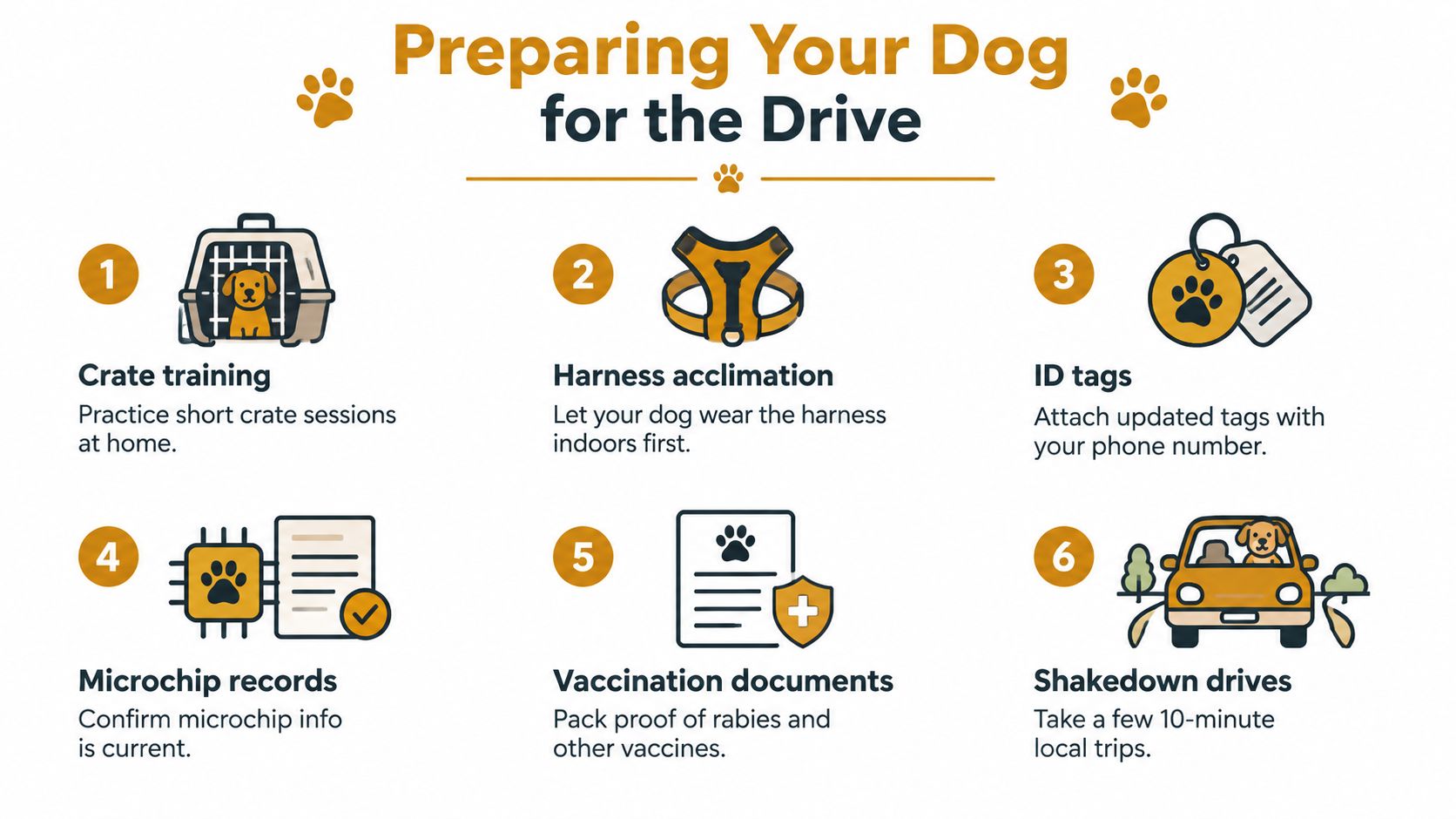
Preparation is easier when you practice before departure rather than introducing every unfamiliar thing at once. Over the week before a trip, let your dog meet the restraint at home, check their identification, and take a few short local drives. If your dog has never ridden in a car, don't make the first ride a long highway trip.
Build familiarity in small stages
Start with the crate at home. Leave the door open, make the space comfortable, and reward your dog for choosing to enter. Practice short sessions and keep the crate associated with rest, not punishment. Once your dog is comfortable inside, secure the crate in the vehicle and give them a chance to settle while the car is parked.
For a harness, let your dog wear it indoors before connecting it to the vehicle restraint. Check that it fits snugly without rubbing or restricting movement, then follow the manufacturer's directions for the seat-belt path. Never clip a vehicle tether to a collar. A loose harness may fail to restrain the dog; one that fits badly can make the dog resist wearing it.
Next, check identification. Attach an up-to-date ID tag with your phone number, and confirm the contact details linked to your dog's microchip are current. Keep vaccination records, including proof of rabies vaccination, accessible in case your destination or travel arrangements require them.
Take a shakedown drive
Once the dog accepts the restraint while stationary, try a short drive around the block. Keep the first outing calm and brief, then gradually extend the drive if your dog settles. A familiar blanket or bedding can make the setup feel less strange, but it shouldn't interfere with the restraint.
Watch for the difference between possible motion sickness and travel anxiety. Drooling, lip licking, panting, whining, and pacing can overlap, so calmness alone doesn't prove that fear is the problem. Motion sickness and anxiety may need different approaches: ask your veterinarian about anti-nausea treatment or anxiety support rather than trying human medication or assuming a sedative will help. (VCA guidance on motion sickness in dogs)
If your dog is brachycephalic, elderly, very small, or medically fragile, ask your veterinarian whether the restraint and travel plan suit their health and body shape. Breed-specific information can help you know what to ask; start with the relevant breed health profiles if breathing risk or breed-related anxiety is a concern.
Stops, Heat Safety, and Driving Routine
Two rules shape a safe driving rhythm: don't leave your dog alone in a parked vehicle, and plan regular recovery stops. AAA recommends stopping approximately every two hours on long journeys so dogs can drink, relieve themselves, stretch, and settle before the next leg. (AAA's guidance on keeping pets safe in the car)
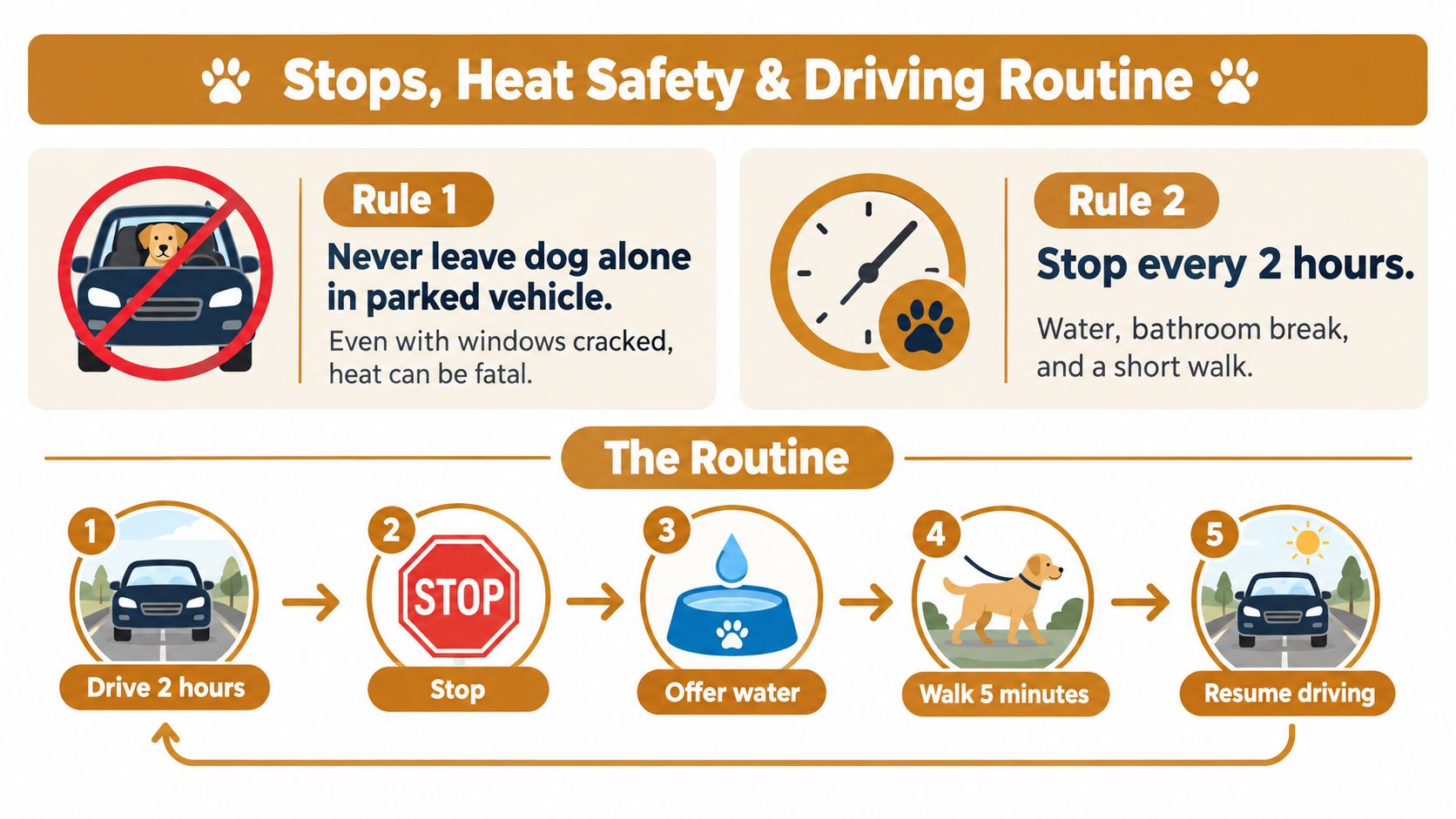
A cracked window doesn't make a parked car safe. On an 80°F day, the interior can reach 114°F within 30 minutes, according to heat-safety data cited by the AVMA and FDA. (CDC guidance on pet travel safety) Shade can shift while you're away, and an open window doesn't reliably control cabin temperature. Don't leave your dog unattended, even for a short stop or with the air conditioning running.
Make each stop predictable
Plan fuel, food, and bathroom breaks around the dog, not just the route. If your dog can't leave the vehicle with a responsible person, choose a stop where they can exit safely. Check ahead that rest areas and destinations permit pets, and keep the dog leashed before opening a door.
Pack a simple stop kit:
- Leash and identification: Check the collar and current contact details before opening the vehicle.
- Water and a bowl: Offer water during stops and let your dog drink at a comfortable pace.
- Waste bags and a towel: Be ready for a bathroom break, wet paws, or an accident.
- Medication: Keep any prescribed medication accessible, not buried in luggage.
- A secure handoff: At unfamiliar stops, use a second attachment or have one adult take the leash before another opens the door.
After a walk and water break, let your dog settle back into the crate or harness before moving. Keep the routine calm. Rushing to reload while the dog is pulling at the door increases the chance of an escape.
Stop sooner if your dog needs it, if conditions are hot, or if they show signs of distress. Breed, age, weight, and medical history affect heat tolerance, so owners of higher-risk dogs should plan cooler travel periods and get veterinary advice before a long trip. For a state-specific view of local ownership considerations, use the site's state tools alongside your travel planning.
Comfort, Cooling, and Breed-Specific Adjustments
The standard routine needs to flex around the dog. A brachycephalic pug and a 90-pound Labrador may share a destination and vehicle, but they don't necessarily share the same tolerance for heat, restraint, or long stretches between breaks. Treat breed and body type as reasons to plan carefully, not as a substitute for watching the individual dog.
A pug's shortened airway can make heat and respiratory strain more concerning. Choose cooler travel periods, keep the cabin temperature controlled, limit time outside the vehicle in warm weather, and ask a veterinarian whether a long drive is appropriate. Don't rely on open windows for cooling while moving; a dog's head should stay inside to protect the eyes, ears, nose, and mouth from debris. Breed-specific information can help owners prepare targeted questions, including the Bulldog health profile.
A large Labrador may have more room to settle in a crate or harness, but size alone doesn't guarantee comfort. The restraint still needs to fit and remain secure, and a dog that becomes anxious or nauseated needs a symptom-led plan. For either dog, a roomy crate that can't be anchored is a poor compromise, as is a harness that permits the dog to climb forward.
Adjust food, water, and activity
Avoid a large meal immediately before departure. Offer smaller portions and water during planned stops rather than feeding heavily right before the ride. If your dog has a history of nausea, talk to your veterinarian about meal timing and treatment before traveling.
Keep the cabin comfortable with air conditioning when needed. Don't let a dog ride with their head outside the window, and don't leave them unattended in a parked car as a cooling strategy. Watch for persistent panting, drooling, vomiting, panic, or attempts to escape. These signs are a reason to stop safely and reassess, not to press on because the destination is close.
Young, elderly, overweight, short-muzzled, thick- or dark-coated, and medically compromised dogs can be at elevated risk in heat. They may need shorter exposure outside the vehicle, cooler travel times, and advice from a veterinarian before a long drive. Build the plan around the dog's health and behavior, rather than assuming that what worked for another dog will work for yours.
Legal Rules and Money Considerations by State
A safety recommendation and a legal requirement aren't the same thing. State rules differ, so check the current requirements for every state on your route rather than assuming that one rule applies everywhere. AAA notes that Rhode Island requires dogs traveling in vehicles to be secured by a crate, harness, or dog seat belt. (AAA's car-safety guidance)
Even where a specific restraint isn't required, a loose dog can distract the driver and interfere with safe vehicle control. A driver may face consequences for unsafe or distracted driving depending on the circumstances and local law. Treat secure restraint as a baseline, then verify what's legally required where you drive.
Before a trip: Check the rules for your state and destination, secure the dog in the rear seating area, and confirm that the restraint's installation matches the vehicle and product instructions.
Injury planning is also part of responsible ownership. A vehicle incident can lead to veterinary care, but whether a pet insurance policy covers a particular injury depends on its terms, including exclusions and waiting periods. Don't assume that travel-related treatment is covered without reading the policy and checking with the insurer.
For state- and breed-specific ownership projections, review the California Bulldog cost profile. Use it as planning context, not as a substitute for checking your policy or your state's current restraint laws. The sensible order is to establish safe containment first, verify local rules, and then assess how insurance fits your dog's health risks and your own preferences.
Your Pre-Trip Action Plan
Choose the restraint your dog can tolerate and that you can secure correctly. Practice with it at home, check the fit and identification, gather vaccination records and supplies, then take a short local drive before the trip. Plan regular stops, keep the dog with you outside the car, and adapt the schedule to the dog's age, health, and response to heat.
This week, take one concrete step: order a properly tested harness, start crate practice, or run a neighborhood shakedown drive. Before leaving, confirm state requirements and review your dog's health needs with your veterinarian. For a broader ownership projection, use the lifetime cost calculator as part of your planning.
PetCostEngine offers breed- and state-based ownership estimates and side-by-side insurance comparisons, which can help put travel decisions in the wider context of caring for your dog. Visit PetCostEngine to explore the tools and reference guides for your dog's breed and where you live.
Estimated lifetime and yearly costs for a Compare, state by state, plus whether pet insurance breaks even for the breed.
See Compare costs →
Is insurance worth it for a Compare? →
Car restraint → Crate and bedding → No-pull harness →
As an Amazon Associate, PetCostEngine earns from qualifying purchases.