
You've just watched your puppy wake from a long nap, race across the room, pee beside the door, chew a shoe, and fall asleep again before you can decide whether to laugh or worry. At 12 weeks, this cycle is normal. A 3 month old puppy is learning quickly, growing rapidly, and still has very limited control over sleep, bladder habits, excitement, and fear.
This age also brings several decisions close together. Your puppy may need another veterinary visit, a vaccination discussion, three meals a day, carefully limited exercise, frequent bathroom trips, and gentle introductions to people, sounds, surfaces, and safe dogs. The right routine won't make every day tidy, but it will make the puppy easier to understand.
Table of Contents
- What Life Looks Like With a 3 Month Old Puppy
- How Your Puppy Is Growing and Changing Right Now
- Veterinary Visits and Vaccination Timing at 12 Weeks
- Feeding Sleep and Safe Exercise for Steady Growth
- Housetraining and Socialization During the Sensitive Window
- Common Health and Behavior Patterns to Watch By Breed and Size
- Planning Daily Life and the Year Ahead With Confidence
What Life Looks Like With a 3 Month Old Puppy
A typical morning starts before the household is ready. Your puppy wakes, needs to go outside promptly, eats, plays with a toy, and then becomes so tired that the puppy falls asleep near your feet. Later, a delivery truck passes, a visitor arrives, or a new floor surface feels strange. Your puppy may investigate confidently, retreat, bark, or freeze. None of these reactions automatically means stubbornness or bad character.
At this age, puppies often alternate between short bursts of energy and long periods of sleep. They may seem to forget a cue they performed earlier, bite during play, or have an accident after appearing to understand housetraining. Their brain is taking in more information than it can organize. Supervision and predictable routines work better than punishment because management prevents the puppy from rehearsing habits you don't want.
Practical rule: Treat behavior as information. A frantic puppy may need a nap, a bathroom break, food, less stimulation, or a quieter activity.
Your day will probably revolve around a few repeating tasks:
- Bathroom trips: A young puppy needs several daytime opportunities because bladder control is still developing.
- Rest periods: Sleep isn't wasted time. It supports learning and helps prevent overtired, mouthy behavior.
- Small learning sessions: Name recognition, coming when called, handling, crate comfort, and simple cues fit well into brief interactions.
- Safe exploration: Your puppy needs positive experiences, but exposure should be controlled while vaccines are still in progress.
- Human logistics: Work schedules, errands, visitors, and nighttime supervision need a plan.
Breed and adult size affect the shape of that plan. A small puppy may need different handling and feeding guidance from a rapidly growing large-breed puppy, while a highly active breed may need more mental enrichment without more forced exercise. Use the breed browsing library to compare general breed characteristics before assuming every puppy follows the same pattern.
The next few weeks are less about producing a perfectly obedient dog and more about building safe habits. Health appointments, feeding, sleep, exercise, housetraining, socialization, and alone-time practice all need to fit together.
How Your Puppy Is Growing and Changing Right Now
At 12 weeks, your puppy may look sturdy enough for anything, yet the body is still under construction. Height, muscle, coordination, teeth, and the nervous system are developing at the same time. That combination affects daily decisions: choose low-impact play, schedule quiet breaks, and limit overwhelming exposure even when your puppy seems eager to keep going.
Teeth and chewing
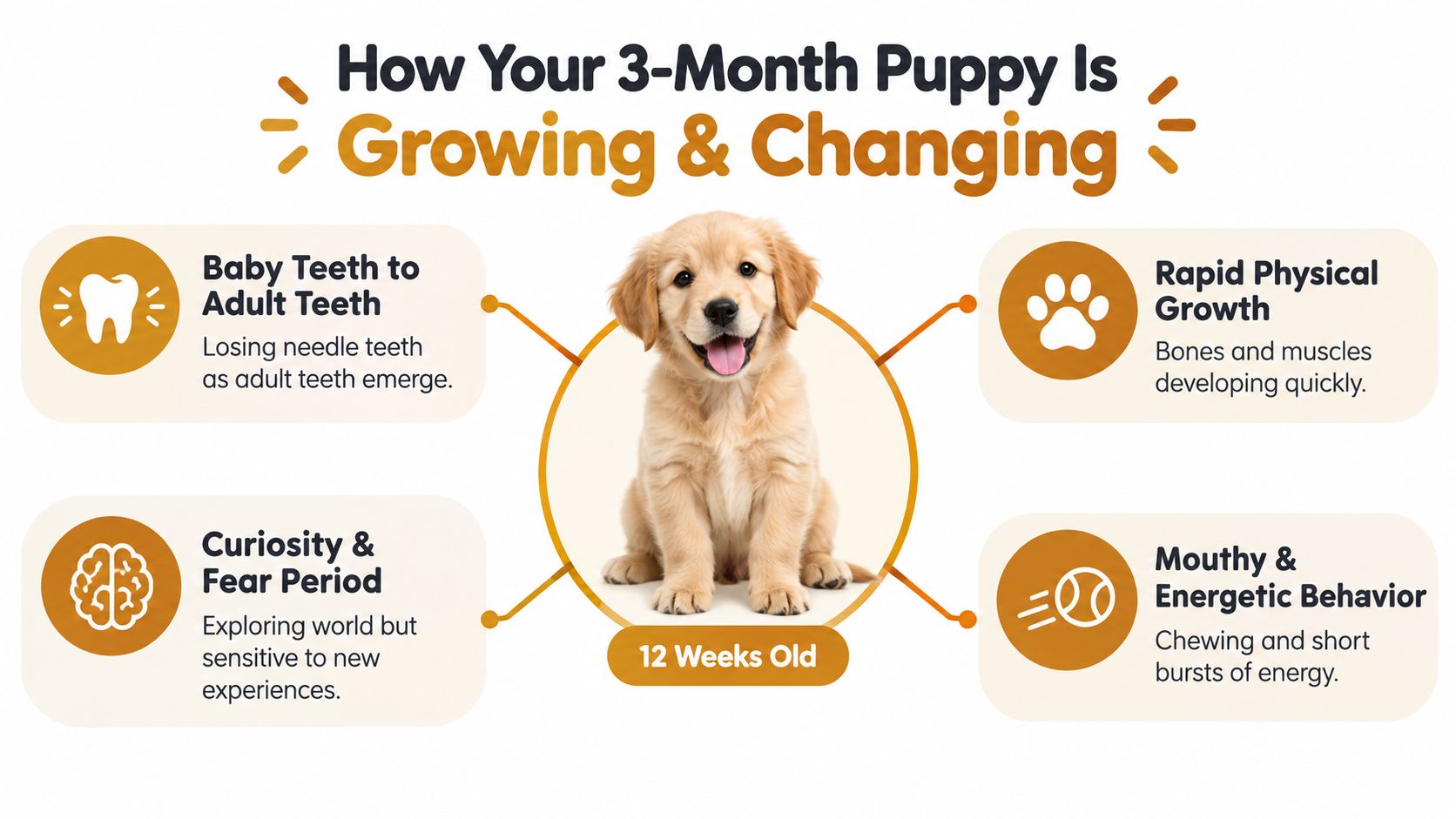
Many puppies have most of their 28 baby teeth by this age and may be starting to get their first 2–4 adult incisors, according to the AKC puppy vaccination and development guidance. Baby teeth are narrow and sharp, so normal play can still hurt when your puppy mouths hands or clothing.
Keep suitable chew items within reach and redirect calmly. Your puppy is using its mouth to explore, ease gum discomfort, and learn which objects attract attention. A quiet replacement works better than turning every bite into a confrontation.
Sleep and energy
A puppy at this stage may sleep about 18–20 hours per day. Rest works like a reset between learning, play, and new experiences. If your puppy becomes wild, nippy, or unable to settle, adding another game may make the problem worse. A quiet nap may be the better choice.
Create a rest area that is not repeatedly disturbed. A crate, pen, or gated room can support this routine when introduced gradually. Alone-time practice should begin with periods your puppy can handle, then increase as calm behavior becomes reliable.
Bladder control and growth
A 3 month old puppy can usually hold urine for roughly 2–4 hours, although daytime guidance may be closer to about 3 hours, according to puppy milestone guidance. Treat that range as a planning aid, not a promise. Activity, excitement, drinking, waking, and individual development can shorten the interval.
Many puppies have roughly doubled their weight from 8 weeks by 12 weeks. Adult size remains far away, so enthusiasm and athletic movement do not prove physical maturity. A puppy may run confidently while still developing the coordination and joint resilience needed for adult activity.
For size-specific planning, compare your puppy with this medium-breed guide, then ask your veterinarian how growth should be monitored for your individual dog. Breed and state tools can help organize expectations, but your puppy's health history and daily response should guide the final plan.
Veterinary Visits and Vaccination Timing at 12 Weeks
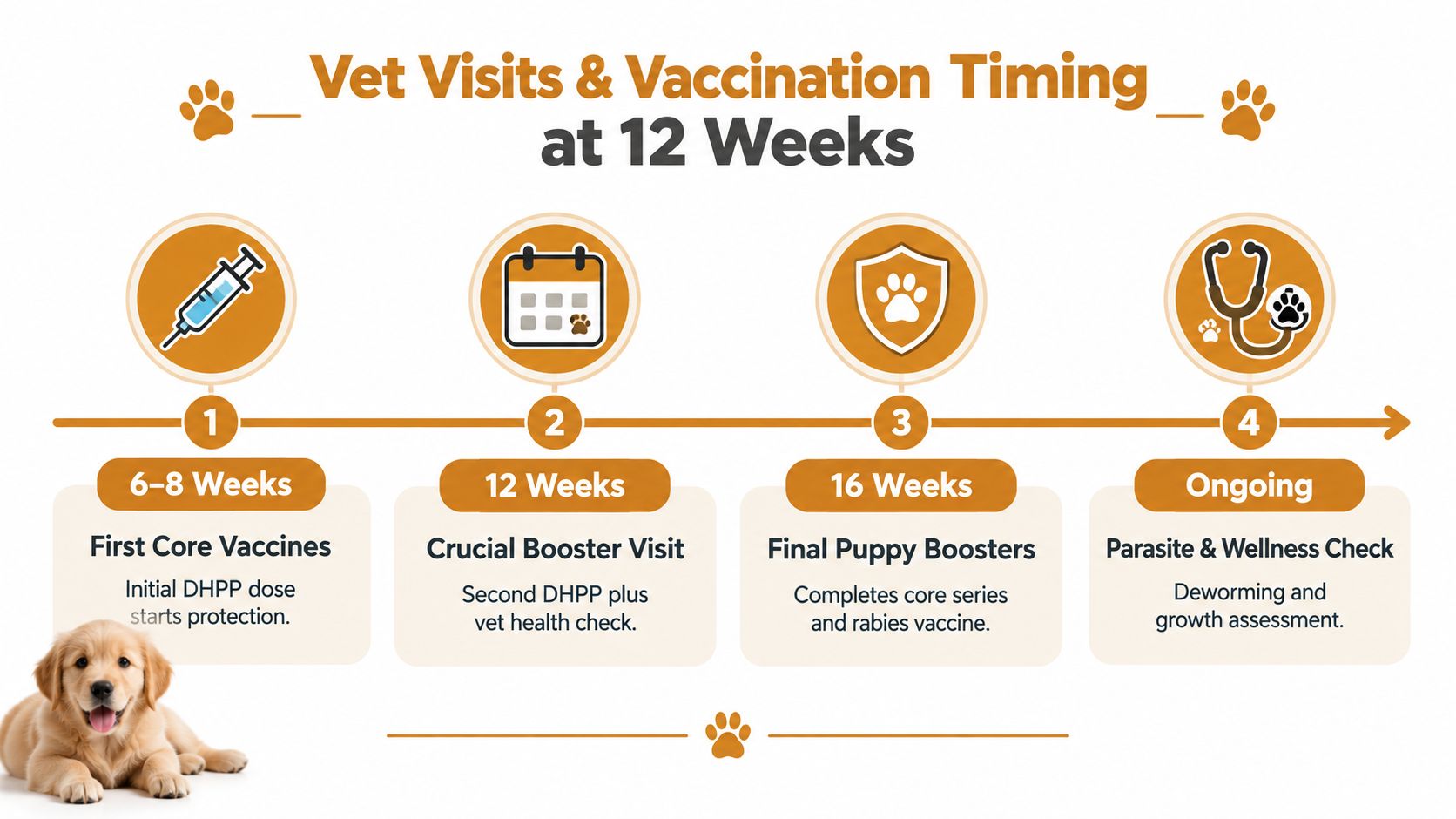
At 12 weeks, your puppy may be between vaccine appointments, so daily choices should account for both growing immunity and limited exposure. Core vaccinations commonly repeat every 2–4 weeks until about 16 weeks of age, according to VCA's pediatric puppy guidance. The schedule works like adding layers of protection while your veterinarian monitors how your puppy responds.
What may happen at the 12-week appointment
Your puppy's medical history, location, lifestyle, and veterinarian will shape the plan. Common topics include:
- Core boosters: DHPP boosters are often part of the series.
- Rabies timing: Rabies vaccination is generally given once a puppy is at least 12 weeks old, though legal and clinical requirements vary by location.
- Parasite prevention: Ask about intestinal parasites, heartworm prevention, flea and tick control, and whether testing or deworming is appropriate.
- Growth assessment: The veterinarian can check body condition, weight progression, teeth, gait, joints, ears, eyes, and overall development.
- Exposure planning: Discuss suitable places to visit before the vaccination series is complete, including how to limit contact with unknown or unwell dogs.
The ASPCA vaccination schedule places a puppy at three months on DA2PP plus rabies, with another DA2PP dose at four months and boosters one year later. Your veterinarian may suggest other vaccines based on exposure risk. Treat online schedules as planning references, then follow the medical record and local advice.
Classes and handling practice
Many puppies can begin obedience classes after receiving appropriate core vaccines, but facility requirements differ. Ask which vaccines are required, how floors are cleaned, and whether sick dogs are excluded. These details help you choose a class that fits your puppy's current exposure limits.
Bring questions about appetite, stool quality, coughing, scratching, sleep, fear reactions, chewing, and movement. Use the puppy care calculator to organize recurring care categories and breed or state planning, but rely on your veterinarian to determine needed medical services.
Feeding Sleep and Safe Exercise for Steady Growth
A three-month-old puppy may wake hungry, play for a few minutes, then fall asleep before you finish your coffee. Building the day around that pattern helps you decide when to feed, schedule alone time, and limit activity without treating the puppy like a small adult dog.
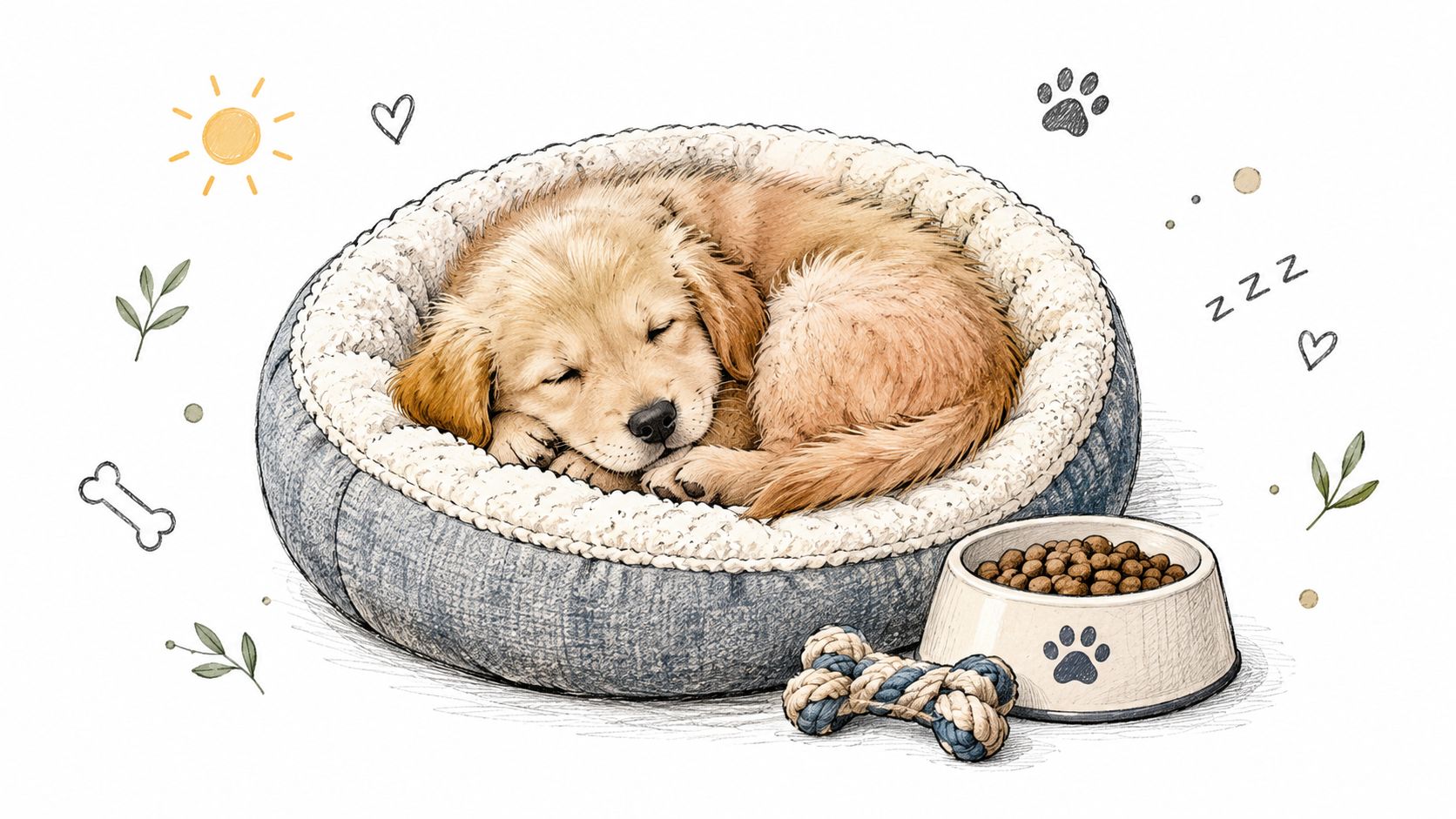
At this age, many puppies are moving toward three meals per day. The ASPCA guidance cited by the AKC describes three meals daily from three to six months, while puppies from eight to 12 weeks may need four meals. Follow your veterinarian's advice for portions, especially if your puppy is expected to become very small or very large.
Build the day around consistency
Measure food according to the label and veterinary guidance, then serve it at predictable times. A regular meal pattern can make bathroom needs easier to anticipate, although accidents can still happen. Keep fresh water available and judge portions by body condition as well as the bowl measurement.
A practical daily sequence is:
- Wake and bathroom break.
- Meal followed by quiet digestion.
- Short play or training session.
- Supervised exploration.
- Nap in a safe area.
Repeat this rhythm while adjusting for appetite, energy, and your household schedule. Consistency gives the puppy a clear map of the day. It also creates natural periods for brief, calm alone-time practice in a pen or crate, rather than leaving the puppy alone only when you must go out.
Protect developing joints
Puppies need movement, while forced exercise can overload growing bones and joints. A commonly used guide allows about 5 minutes per month of age per walk, so a three-month-old should take a short walk rather than a distance-focused outing. Use VCA's puppy guidance as a reference, then adjust for your puppy's breed, footing, heat, and movement.
Choose free movement, gentle play, sniffing, and simple indoor training. Avoid repeated jumping, sharp stops, prolonged running, and strenuous stair work. A Golden Retriever breed profile can add breed context when planning future activity, while your veterinarian can assess your individual puppy's growth.
Housetraining and Socialization During the Sensitive Window
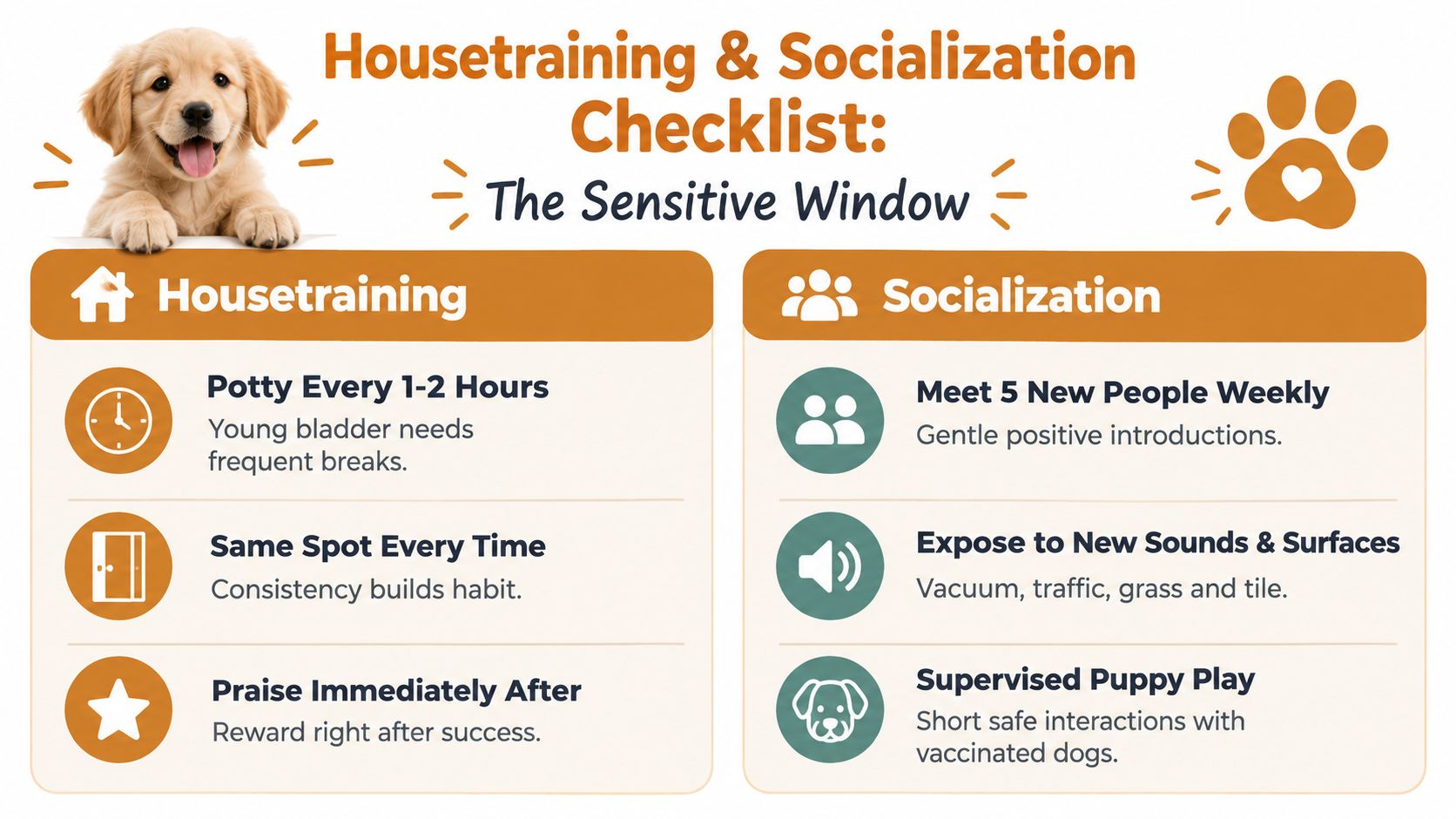
Housetraining succeeds through timing, supervision, and immediate feedback. At this age, accidents don't mean your puppy is ignoring you. The puppy may not have enough bladder control to wait, especially after waking, eating, drinking, playing, or becoming excited.
Take the puppy to the same bathroom area and reward success immediately afterward. Watch for circling, sniffing, wandering away, or suddenly stopping play. If an accident begins indoors, interrupt gently and move outside without scolding. Clean the area thoroughly so lingering odor doesn't invite repetition.
Practice short, successful lessons
Use food, toys, and calm praise to teach the puppy what earns good outcomes. Start with the name, attention, touch, sit, come, gentle handling, and settling on a mat. Keep sessions brief enough that the puppy can succeed. Crate training also works best as gradual comfort practice, not as a sudden test of endurance.
Reward behavior you want repeated:
- Checking in: Praise when your puppy looks toward you without being called.
- Quiet choices: Reinforce lying down, chewing an appropriate toy, or resting in the pen.
- Gentle greetings: Reward four paws on the floor around people.
- Cooperative handling: Pair brief ear, paw, mouth, and collar touches with something pleasant.
Use the sensitive window wisely
The Texas A&M veterinary timeline describes a socialization-sensitive period that begins near three weeks and can extend to 12–14 weeks. During this time, fear responses to unfamiliar people, animals, and environments may become more established if exposure is delayed.
Socialization doesn't mean forcing your puppy to greet everyone. It means creating calm, manageable experiences with varied people, sounds, surfaces, vehicles, household equipment, and safe dogs. Let the puppy choose distance, pair new things with food, and stop before the puppy becomes overwhelmed.
Your veterinarian can help you balance infection risk with the benefits of early exposure. Until vaccines are complete, choose controlled settings rather than unknown, heavily trafficked dog areas.
Common Health and Behavior Patterns to Watch By Breed and Size
A 3 month old puppy's needs vary with expected adult size, body structure, and breed tendencies. Toy and small puppies may tire or become hungry sooner, while large and giant puppies require especially careful growth monitoring and joint-conscious activity. Medium puppies sit between those extremes, but size labels don't replace an individual veterinary assessment.
Breed can also influence behavior. A herding puppy may notice movement intensely, a retriever may carry and chew objects, and a sensitive breed may need more time to approach unfamiliar people. These are tendencies, not guarantees. Your puppy's history, environment, sleep, training, and health all shape behavior.
Look for patterns, not isolated moments
Normal puppy behavior can include chewing, mouthing, sudden energy, imperfect coordination, frequent elimination, and hesitation around something unfamiliar. Concern rises when a change is persistent, severe, or paired with physical symptoms.
Call your veterinary clinic promptly if you notice:
- A major appetite change: Your puppy repeatedly refuses food or can't keep food down.
- Digestive problems: Vomiting or diarrhea continues, becomes severe, or is accompanied by weakness.
- Breathing or movement changes: Coughing, difficult breathing, collapse, marked lameness, or unusual weakness needs professional attention.
- Pain or neurologic signs: Crying with handling, disorientation, seizures, or a sudden inability to walk should not wait.
- A concerning fear response: Hiding, panic, or escalating defensive behavior deserves early guidance from a veterinarian or qualified behavior professional.
Don't diagnose a breed-linked condition from an online profile. Use a detailed page such as the American Water Spaniel breed guide to prepare questions, then let your veterinary team interpret symptoms in context. Early advice often prevents a manageable issue from becoming a rehearsed behavior or a more serious health problem.
Planning Daily Life and the Year Ahead With Confidence
A workday can expose the gap between a puppy's needs and an adult schedule. At three months, your puppy may manage about 3 hours alone, but that is a general limit, not a training goal. Safety, comfort, toileting, and sleep all matter. PetCircle's puppy guidance summarizes this timeframe, while individual puppies may need shorter periods.
Set up a trusted bathroom break if you work outside the home. A sitter, family member, neighbor, or carefully selected daycare can provide supervision, provided the daycare follows your veterinarian's vaccination and health requirements. Practise brief absences at home first, using a safe area and calm departures. A puppy's day works better when alone time is fitted between toilet breaks, meals, play, and long quiet naps.
Ground walks may also need to wait. Guidance commonly recommends avoiding shared outdoor ground until about two weeks after the final vaccination series, around 16 weeks. Ask your veterinarian to adjust that plan for local disease risk and your puppy's vaccination history. Until then, choose controlled exposure, such as being carried outdoors or visiting clean private areas approved by your veterinary team.
Keep this checklist visible for the next month:
- Confirm the next veterinary appointment and vaccination plan.
- Keep the appropriate meal rhythm and note appetite changes.
- Provide frequent bathroom opportunities.
- Protect long, quiet sleep periods.
- Practise gentle handling and short training sessions.
- Arrange supervision for workdays and errands.
- Choose low-risk socialization experiences.
- Record questions about breed, adult size, and local care.
Plan around the puppy in front of you rather than a generic national average. Breed, expected adult size, state, health history, training needs, and your supervision arrangements affect the care and supplies your household may need. PetCostEngine provides breed- and state-adjusted ownership projections, a calculator, breed pages, and insurance guidance, allowing you to review veterinary care, food, training, boarding, gear, and insurance together.
PetCostEngine can connect your puppy's breed, age, and state with practical first-year planning. Visit PetCostEngine to organize those decisions while your 3 month old puppy is building daily habits.
Estimated lifetime and yearly costs for a Golden Retriever, state by state, plus whether pet insurance breaks even for the breed.
See Golden Retriever costs →
Is insurance worth it for a Golden Retriever? →
Crate and bedding → Durable chews → Premium dry food →
As an Amazon Associate, PetCostEngine earns from qualifying purchases.