
A white coat is the least useful filter for choosing a big dog. It tells you almost nothing about grooming workload, guarding instincts, space requirements, exercise needs, or breed-specific health exposure. The phrase “big fluffy white dog” describes a type, not one standardized breed.
This list ranks eight large or giant-leaning white breeds by the ownership decisions they force. A Great Pyrenees asks whether you can manage a territorial guardian. A Samoyed tests your capacity for interaction and coat care. A Standard Poodle shifts the question toward training and scheduled grooming. Smaller options such as the American Eskimo Dog, Puli, and Polish Lowland Sheepdog reduce the physical demands but still require purposeful activity and regular coat maintenance.
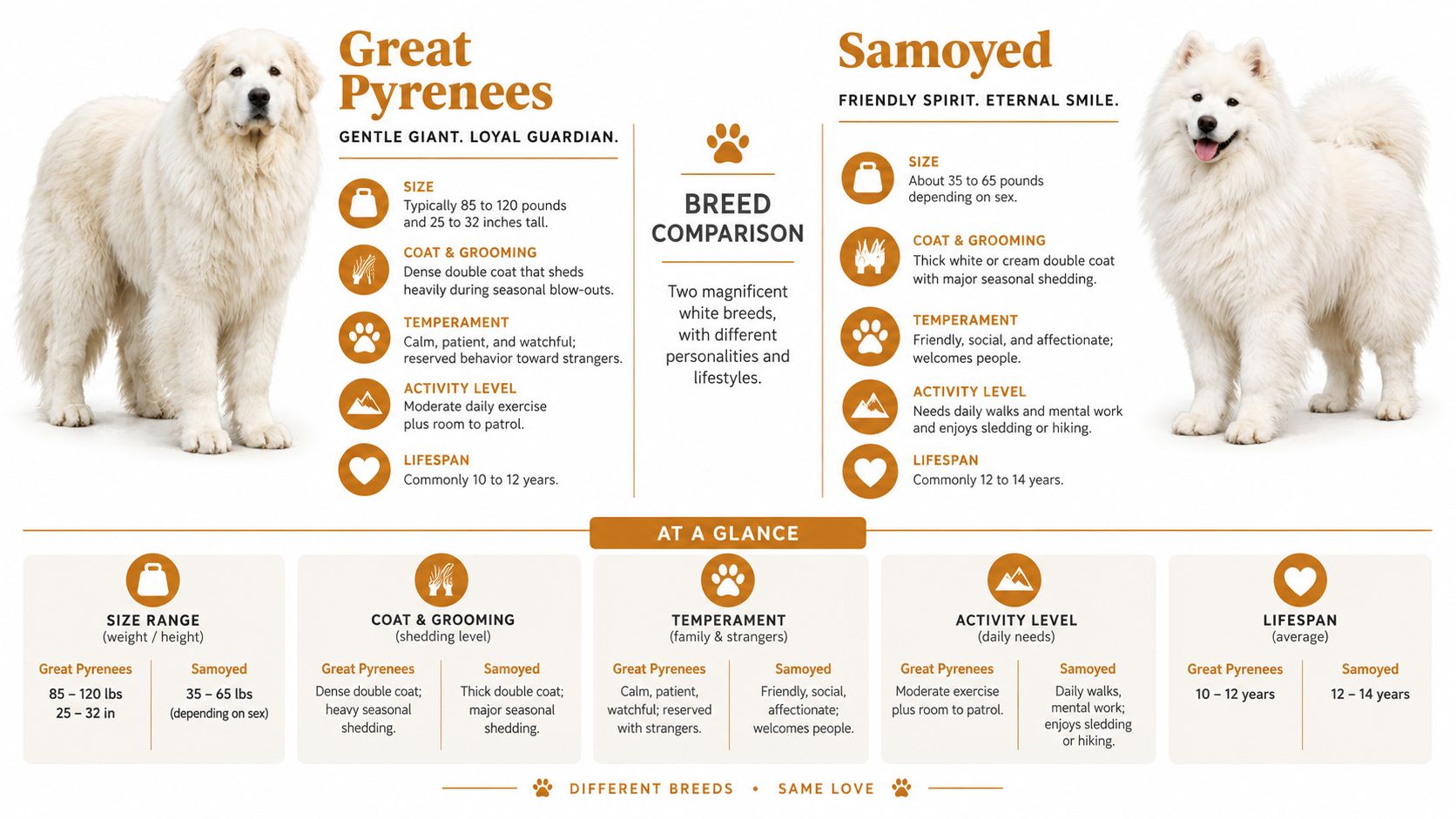
Size provides the first useful comparison. A Samoyed's documented standard range is 45 to 65 pounds for males and 35 to 50 pounds for females, while a Great Pyrenees may weigh approximately 85 to 120 pounds and stand about 25 to 32 inches at the shoulder, according to PetMD's breed reference. Those differences affect food, medication, transport, equipment, grooming, and emergency planning.
Table of Contents
- 1. Great Pyrenees
- 2. Samoyed
- 3. Komondor
- 4. Kuvasz
- 5. Standard Poodle
- 6. American Eskimo Dog
- 7. Puli
- 8. Polish Lowland Sheepdog
- Big Fluffy White Dog Breeds, Size, Temperament, Grooming & Suitability
- Matching a Big White Dog to Your Daily Routine
1. Great Pyrenees
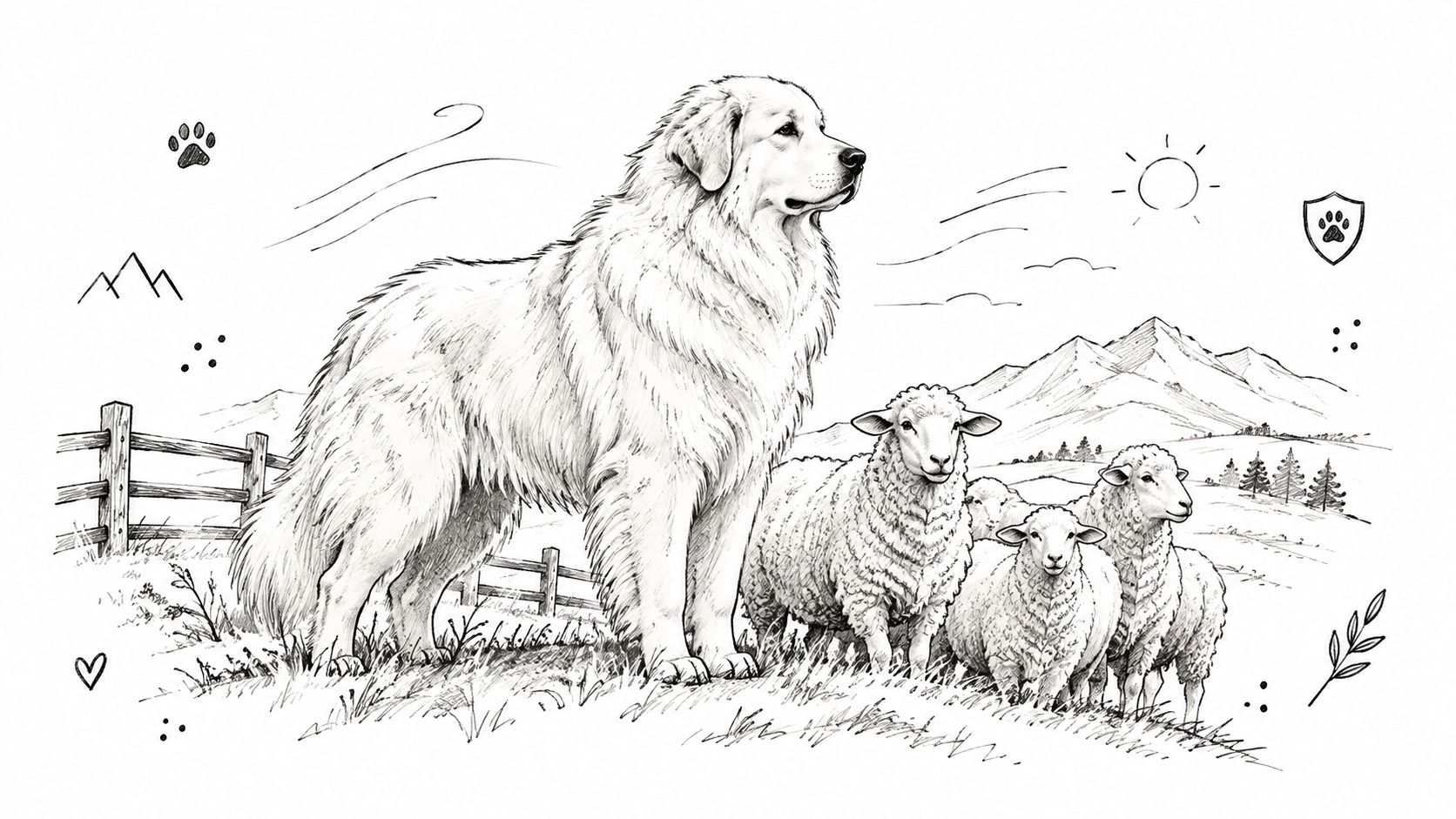
The Great Pyrenees turns the phrase big fluffy white dog into a working-dog decision. Bred in the Pyrenees mountains to guard livestock from wolves and bears, it assesses threats and acts without constant direction. Its independence is a working trait, not a training flaw.
The AKC educational material places the breed at approximately 85 to 120 pounds and 25 to 32 inches at the shoulder. That size affects daily logistics. Crates, vehicles, beds, food storage, medication quantities, and veterinary procedures must accommodate a very large dog.
Practical rule: Secure the property before bringing this breed home. The Great Pyrenees Club of America's AKC educational material specifies fencing at least 6 feet high, secure gate locks, and leash use outside the fenced area.
Coat, health, and daily management
The dense, weather-resistant double coat needs at least weekly brushing. Heavy shedding periods call for more frequent undercoat removal to reduce mats, trapped debris, and indoor hair. Daily walks or play suit the breed, but its exercise needs are generally moderate rather than extreme. Structured movement matters more than endurance training. Hill's guidance for Great Pyrenees owners covers these care demands.
Health planning should address hips, elbows, knees, spine, eyes, weight control, and gastric dilatation-volvulus, commonly called bloat. Eye changes also deserve prompt attention. Sudden tear staining, redness, pain, cloudiness, or discharge can reflect infection, allergies, corneal injury, glaucoma, eyelid problems, abnormal eyelashes, or blocked tear ducts, according to WebMD's tear-stain guidance.
This breed suits owners with secure land, patient training habits, and respect for guardian behavior. It places less emphasis on constant handler direction than a highly deferential companion breed.
For comparison with another herding breed, review the Pyrenean Shepherd breed profile. PetCostEngine's calculator can help model food, grooming, and veterinary needs for a large-breed dog in your state, alongside its large-breed planning guides.
2. Samoyed
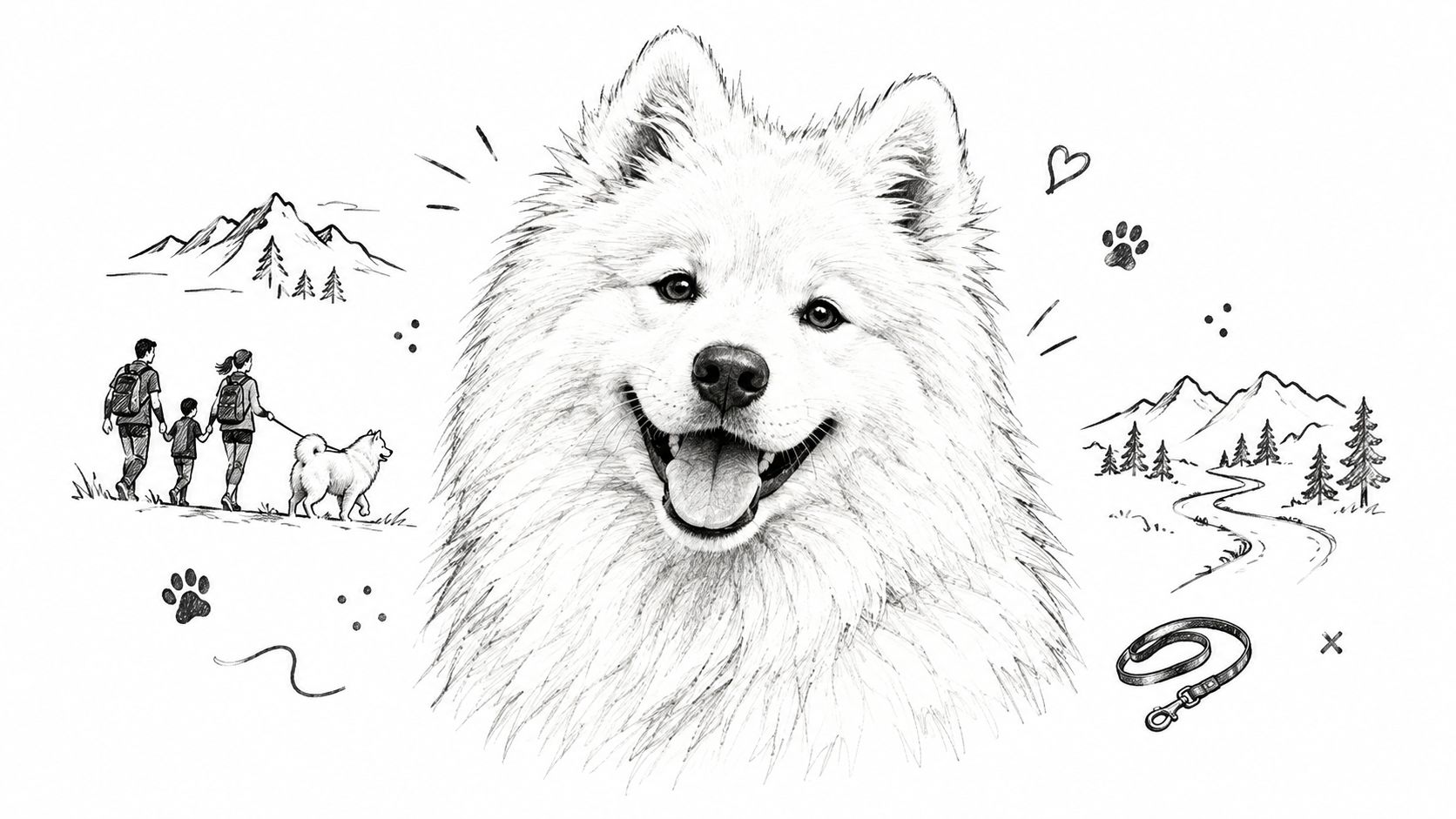
The Samoyed trades guardian size for a more interactive workload. It is smaller than a Great Pyrenees, yet its dense coat, stamina, and need for human company can make ownership demanding for active households.
The Samoyed breed documentation lists males at 45 to 65 pounds and 21 to 23.5 inches at the shoulder. Females are 35 to 50 pounds and 19 to 21 inches. The breed originated in northern Siberia, where the Samoyed people used these dogs to herd reindeer, pull sledges, hunt, guard families, and provide warmth in severe winter conditions.
That history helps explain the breed's friendliness, alertness, stamina, and desire for company. Samoyeds often suit households that can provide training, exploration, and regular interaction. Long periods alone may lead to barking, boredom, or destructive behavior. The ownership decision is clear: choose engagement and activity over a low-contact routine.
The coat is a recurring commitment
Samoyeds have a soft, woolly undercoat beneath a harsher outer coat. The American Kennel Club's Samoyed guidance recommends daily brushing, especially during heavy seasonal shedding. The same guidance states that nails generally need trimming every 3 to 4 weeks.
The coat sheds dirt naturally, but it still requires regular work. Owners need suitable brushing tools, time for undercoat care, and a plan for managing loose hair. A Samoyed with little training or mental activity can become difficult to live with, even though its smaller frame makes housing and transport easier than with a giant guardian breed.
Health screening should be specific. Breeders should document registered eye examinations, hip evaluation through OFA, OVC, or PennHIP, XL-PRA and RD/OSD DNA testing, and an OFA congenital cardiac evaluation under the Samoyed CHIC health testing requirements. A general statement that a bloodline is healthy does not replace those records.
Competitive obedience, rally, sledding, and other performance activities provide practical outlets. The Alaskan Malamute breed profile offers a useful comparison, while PetCostEngine's breed pages and guides support state-based planning for Samoyed health, grooming, and routine care.
3. Komondor
The Komondor makes coat maintenance a technical ownership decision. Its long white cords develop over time and protect the dog from weather and predator contact. They can also retain moisture, debris, and odor if owners do not manage them correctly.
Komondors commonly weigh 80 to 130 pounds, according to the AKC Komondor breed page. The breed originated in Hungary as a livestock guardian. Its white cords helped it blend with sheep, serving a working purpose rather than a decorative one.
Independent judgment defines the Komondor's temperament. This powerful guardian needs early socialization, clear household rules, secure property, and an owner who can manage suspicion toward unfamiliar people. Visitors, animal movement, and neighborhood activity may all trigger protective responses without careful training and supervision.
Coat care and emergency awareness
Cord separation differs from brushing. Owners should learn the process from an experienced Komondor breeder or groomer before bathing the dog. Each cord must dry thoroughly, because careless washing or drying can leave moisture close to the skin.
Large, deep-chested dogs can develop bloat, a life-threatening emergency. Follow a feeding routine your veterinarian considers appropriate, avoid vigorous exercise immediately after meals, and learn warning signs such as unproductive retching and a swollen abdomen. These symptoms require immediate emergency veterinary care.
The Komondor is a working guardian, not a decorative white dog with an unusual haircut. Its coat and behavior both reflect a breed developed for independent protection.
A farm owner may value the breed's vigilance. A suburban household with frequent visitors may find the same trait difficult to manage. The Bergamasco Sheepdog profile provides a useful comparison for owners considering another corded guardian type. PetCostEngine's breed comparison tool and emergency-planning guides can help contrast large-dog care requirements.
4. Kuvasz
The Kuvasz is not just a smaller Great Pyrenees. It is a deliberate, observant livestock guardian with a strong bond to its household. Family members may receive an easy welcome, while strangers and unfamiliar situations can trigger caution.
According to the AKC Kuvasz breed standard, males weigh approximately 100 to 115 pounds, females approximately 70 to 90 pounds, and height ranges from about 26 to 30 inches. Those dimensions place the Kuvasz firmly among large guardian breeds. Its size and protective instincts call for structured handling, not only a fenced yard and occasional obedience work.
The breed historically guarded livestock and estates in Hungary. Modern owners should direct that working heritage through planned activity, controlled social exposure, and consistent household rules. Puppies need measured introductions to visitors, children, animals, household sounds, and public places. Socialization does not erase guarding behavior. It gives the dog more information for judging ordinary events.
A guardian with a different coat pattern
The Kuvasz has a double coat, with a straight outer layer and dense undercoat. Seasonal shedding can be heavy even when the coat shows few tangles, so regular maintenance remains part of ownership. Keeping the dog lean also matters because extra weight increases stress on joints and makes movement more difficult.
Reward-based training and clear rules should begin on the first day. Do not reinforce uncontrolled suspicion or use defensive behavior in place of training. The suitable owner is calm, consistent, and prepared to manage a powerful dog around guests.
Rural property and experienced handling generally suit the Kuvasz better than apartment-centered living. Compare the Kuvasz with the Great Pyrenees profile above, then use PetCostEngine's lifetime calculator to model how food and veterinary costs may differ between a 70 to 90 pound Kuvasz and a Great Pyrenees weighing 85 to 120 pounds. Its breed health profiles can also support review of orthopedic concerns.
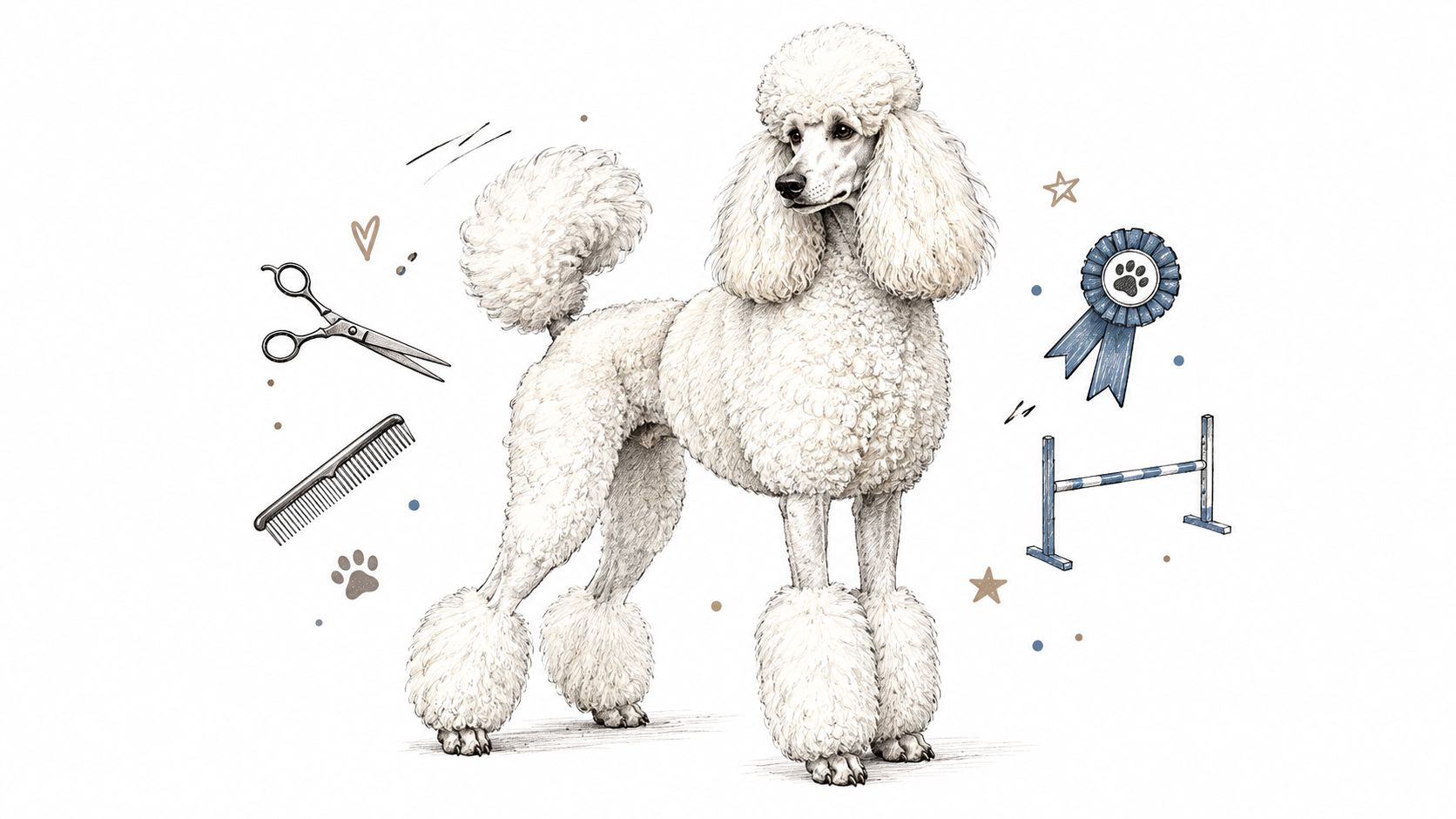
5. Standard Poodle
The Standard Poodle ranks highest here for owners who want a white dog with strong trainability and limited guardian behavior. It is athletic, people-oriented, and responsive to instruction. Its ownership demands center on coat care, daily activity, and sustained mental engagement.
The AKC Standard Poodle breed standard places adults above 15 inches at the shoulder and typically between 45 and 70 pounds. The breed may have a white, curly, or corded coat. This size supports demanding activities while remaining easier to handle in many homes than a giant guardian breed.
Poodles compete in obedience, agility, and conformation. Their trainability also supports service and assistance work. That intelligence requires direction. Without exercise, training, and social contact, a Standard Poodle may create its own activities, including noisy or destructive behavior.
Grooming replaces shedding
Loose hair can remain inside the coat and form mats. Plan on brushing several times weekly plus professional grooming every 4 to 6 weeks. Waiting until the coat tangles makes the process harder for both the dog and the groomer.
Grooming reality: Home brushing and professional appointments belong in the ownership budget from the start.
Ask breeders about Addison's disease and eye testing. Include those questions with temperament, structure, and training goals when evaluating a litter. A white Standard Poodle may resemble other big fluffy white dog breeds, yet its ownership profile is closer to an athletic companion with a specialist coat.
The Poodle breed page provides a comparison point for related needs. Add grooming frequency to a state-adjusted PetCostEngine projection, then review the guides library for routine care planning.
6. American Eskimo Dog
The American Eskimo Dog is a compact spitz, not a giant-breed substitute. The standard variety is the relevant comparison for this list. Toy and miniature varieties also exist, so adult size and equipment needs depend on the variety chosen.
The AKC American Eskimo Dog standard places the standard variety at roughly 25 to 35 pounds and 15 to 19 inches tall. That is substantially smaller than a Great Pyrenees, Samoyed, Komondor, or Kuvasz. Owners generally face simpler transport, housing, equipment, and daily handling decisions.
The breed remains active and alert. American Eskimo Dogs often perform well in obedience and agility because they respond quickly and stay engaged with a handler. Their alert barking is part of the ownership decision. Breed clubs commonly recommend “talk training,” teaching the dog to vocalize on cue and then respond to a quiet cue, rather than relying on exercise alone.
A compact coat with a seasonal workload
The double coat sheds its undercoat heavily twice a year. During those coat-blowing periods, loose hair can accumulate quickly and requires more intensive removal than routine maintenance suggests. Outside those periods, regular brushing still helps prevent packed undercoat and keeps the white outer coat manageable.
Short training sessions, puzzle toys, scent games, and performance activities give the breed useful outlets. These activities address its need for engagement while reinforcing control around household sounds and visitors.
The American Eskimo Dog suits owners who want a fluffy white dog with an active spitz temperament, without the territory-management demands of a livestock guardian. It can fit an urban or suburban home more easily, provided the household accepts alert barking, seasonal coat work, and daily activity.
Compare the standard variety with other medium and large breeds in PetCostEngine's breed comparison tool. The guides library can support first-year planning and grooming routines. The main choice is a compact dog with substantial personality and coat responsibility.
7. Puli
The Puli is a boundary case for a big fluffy white dog list. It can have a white coat and a striking corded outline, yet its adult size remains closer to a medium herding breed. That makes it relevant for owners who want distinctive coat texture without the space and equipment demands of a giant dog.
The AKC Puli breed standard lists adults at approximately 25 to 35 pounds and 16 to 17 inches tall. Puli cords form naturally over roughly 8–10 months, creating the breed's mop-like silhouette. Owners can maintain that corded coat or choose a brushed coat instead. Each option changes the grooming routine.
Puli ownership also requires regular inspection. Debris can collect in the coat, while incomplete drying can leave the skin uncomfortable. The corded style therefore demands technique, patience, and a routine suited to the individual dog.
Pulis are energetic, intelligent, and attentive. Their herding background appears in their responsiveness, quick movement, and tendency to monitor activity around them. Daily exercise should include more than a short walk. Training games, agility, herding work, and problem-solving activities give the dog a practical outlet.
Coat technique matters more than coat volume
Prospective owners should decide early between cords and brushing, then learn the chosen method from a breeder or experienced groomer. A puppy's coat changes as the cords develop, so the routine must adapt over time. Owners also need to check for debris, keep the coat dry, and monitor the skin beneath it.
This commitment differs from brushing a Samoyed or arranging trims for a Poodle. The Puli may suit someone who enjoys hands-on coat care and structured activity. It is a poor fit for an owner seeking a white dog that can remain ungroomed because its coat looks unusual.
Pulis compete in herding, agility, and obedience. Education from the Puli Club of America can help prospective owners assess the coat and working temperament. PetCostEngine's breed pages and grooming guides offer another way to compare routine care and health planning for medium herding breeds.
8. Polish Lowland Sheepdog
The Polish Lowland Sheepdog sits between the compact Puli and the larger guardian breeds, but its ownership demands remain substantial. This medium-sized herding dog has a long, wavy to curly coat that may be white or mostly white. Its manageable frame does not remove the need for daily structure, purposeful training, and regular coat work.
The AKC Polish Lowland Sheepdog standard places adults at roughly 30 to 40 pounds and 16 to 20 inches tall, depending on sex. Developed to herd and guard livestock in Poland, the breed is intelligent, hardworking, and closely connected to its family. Those traits can make it responsive at home, while also creating problems when its day lacks direction.
Coat maintenance needs a schedule. Brush several times weekly and check behind the ears, under the legs, and wherever the coat rubs or tangles. Long hair can conceal mats and debris until they cause discomfort. White or mostly white hair also shows dirt and tear staining quickly.
Purposeful activity prevents drift
A Polish Lowland Sheepdog usually benefits from a routine that gives its energy a job. Herding exercises, agility, scent work, and obedience practice can provide more useful outlets than basic commands alone. The breed was developed to monitor movement and make decisions around livestock, so repetitive exercise may leave its intelligence underused.
Choose this breed only if you can combine coat care with structured activity. A loosely planned household may see barking, restlessness, or unwanted attempts to control movement.
Because the breed is less common in the United States, ask breeders about health-screening practices and request documentation. Performance events and education from the Polish Lowland Sheepdog Club of America can help prospective owners assess working temperament before committing.
Compare it with the Bearded Collie breed profile. PetCostEngine's comparison tool can help contrast medium herding breeds, while its guides address grooming routines and first-year planning.
Big Fluffy White Dog Breeds, Size, Temperament, Grooming & Suitability
| Breed | Size & Lifespan ⭐ | Maintenance Complexity 🔄 | Resource Needs ⚡ | Temperament & Training 💡 | Ideal Use Cases & Expected Outcomes 📊 |
|---|---|---|---|---|---|
| Great Pyrenees | Very large (85–120 lb; 25–32 in); lifespan ~10–12 yrs | High, heavy seasonal shedding; weekly brush, daily in blow‑outs | Very high, secure fenced yard, space to patrol; moderate daily exercise | Independent, protective, calm with family; needs early socialization and firm, consistent training | Livestock guardian / rural family protector; reliable guardian but can bark and roam |
| Samoyed | Medium–large (35–65 lb; 21–23.5 in); lifespan ~12–14 yrs | High, heavy year‑round shedding with seasonal blow‑outs; brush 2–3× weekly, daily when blowing | High, daily walks, mental work; prefers cooler climates | Friendly, social, affectionate; responds well to positive training; struggles when left alone | Active family companion, sledding/companion work; high engagement, risk of separation vocalization |
| Komondor | Very large (80–130 lb); lifespan ~10–12 yrs | Very high, long corded coat requires careful separation and lifelong maintenance | Very high, secure property, space to patrol; feeding/management to reduce bloat risk | Strongly protective and independent; needs experienced owner, early socialization | Livestock guardian on farms; distinctive look, low loose‑shedding but intensive coat care |
| Kuvasz | Large (70–115 lb; 26–30 in); lifespan ~10–12 yrs | Moderate–High, seasonal shedding; regular brushing and grooming manageable at home | High, secure area, daily walks; requires firm leadership and joint/bloat precautions | Devoted, alert, sometimes stubborn; needs consistent training and socialization | Rural property guardian for experienced owners; loyal protector requiring structure |
| Standard Poodle | Medium–large (45–70 lb; >15 in); lifespan ~12–15 yrs | High, non‑shedding but needs professional grooming every 4–6 weeks and frequent brushing | Moderate, adaptable to apartments with sufficient exercise and mental stimulation | Highly intelligent, eager to please; excels with training and activities | Families, service/work, agility; low loose shedding, high grooming/time cost |
| American Eskimo Dog | Standard ~25–35 lb (toy/mini sizes exist); lifespan ~12–15 yrs | High, heavy seasonal shedding; brush 2–3× weekly, more in blow‑outs | Moderate, daily exercise and play; easier to manage in smaller homes | Alert, lively, trainable; can be vocal without enrichment | Companion and performance sports; manageable standard size, responsive but vocal tendencies |
| Puli | Medium (25–35 lb; 16–17 in); lifespan ~12–15 yrs | Very high, corded coat needs specialist care; cords form over time and cannot be brushed out | High, daily high‑energy exercise; coat requires careful drying/cleaning | Energetic, intelligent, devoted; suits committed, active owners | Herding and agility; striking appearance, low loose shedding but intensive maintenance |
| Polish Lowland Sheepdog | Medium (30–40 lb; 16–20 in); lifespan ~12–14 yrs | High, long wavy/curly coat needs frequent brushing and occasional trimming | Moderate, daily exercise and mental stimulation; suitable for active homes | Intelligent, loyal, energetic; herding instincts need redirection | Herding/performance sports and active family pet; moderate size with grooming commitment |
Matching a Big White Dog to Your Daily Routine
Start with property, not appearance. A Great Pyrenees or Kuvasz may need secure fencing because guarding breeds can patrol beyond the area you intended to provide. The Great Pyrenees Club of America's guidance calls for fencing at least 6 feet high, secure locks, and leash use outside the fenced area. That isn't a minor accessory decision. It can determine whether a particular breed is viable for your home.
Next, separate coat volume from coat technique. A Samoyed needs frequent brushing and heavy shedding management. A Standard Poodle needs regular brushing and professional grooming even though its coat doesn't shed in the usual way. A Komondor or Puli requires owners to understand cord formation, drying, and separation. A Great Pyrenees or Kuvasz needs undercoat care and seasonal shedding control. These are different labor patterns, so “fluffy” isn't a useful maintenance estimate by itself.
Then assess interaction and purpose. Samoyeds often need substantial companionship, training, and activity. Standard Poodles usually reward structured learning and athletic work. American Eskimo Dogs can fit smaller homes physically, but their alertness and barking still require training. Pulis and Polish Lowland Sheepdogs need daily mental work tied to their herding background. Guardian breeds add another layer because socialization must support safe judgment around visitors, animals, and unfamiliar situations.
Health screening should follow the shortlist. For Samoyeds, ask about registered eye examinations, hip evaluation through recognized programs, XL-PRA and RD/OSD DNA testing, and congenital cardiac evaluation, as outlined by AKC's Canine Health Information Center. For a Great Pyrenees, Kuvasz, or another large guardian breed, discuss hips, elbows, knees, spine, eyes, weight control, and bloat with a veterinarian. New or worsening tear staining, especially with redness, pain, cloudiness, or discharge, deserves medical assessment rather than cosmetic treatment. Never use hydrogen peroxide near the eyes, as WebMD's veterinary guidance warns.
Finally, model the dog you can sustain rather than the dog you admire. Choose a giant guardian only if your property, handling skills, and household routine support its independence. Choose a Samoyed only if daily interaction and coat work fit your schedule. Choose a Poodle, American Eskimo Dog, Puli, or Polish Lowland Sheepdog when you want a more compact profile but still accept regular training and grooming.
PetCostEngine lets U.S. owners model lifetime ownership by breed, state, and age, with categories for food, veterinary care, grooming, training, boarding, gear, and insurance. Use the calculator after narrowing the breed list, then review the relevant health profile and guides before speaking with breeders or rescues.
Use PetCostEngine to compare breed-specific ownership projections by U.S. state, including grooming, food, veterinary care, and supplies for a large fluffy white dog. Select your shortlisted breed and review its health profile before you commit, then use the results to plan a home and routine that fit the dog you'll live with.
Estimated lifetime and yearly costs for a Pyrenean Shepherd, state by state, plus whether pet insurance breaks even for the breed.
See Pyrenean Shepherd costs →
Is insurance worth it for a Pyrenean Shepherd? →
Joint supplement → Puzzle toys → No-pull harness →
As an Amazon Associate, PetCostEngine earns from qualifying purchases.