

You leave for work, come home, and find the door scratched or a cushion torn apart. Maybe your dog has been quiet, and you're wondering whether that means they're coping or hiding their stress. What happens while you're gone can be hard to know from the evidence left behind.
The most useful clue isn't one damaged object or a neighbor's report of barking. It's whether your dog shows a pattern of distress connected to your absence. A camera can reveal signs that are easy to miss, including pacing, trembling, refusing food, or staying frozen in one place.
Table of Contents
- What Separation Anxiety Actually Looks Like
- The Most Common Behavioral Signs
- The Quiet Signs Owners Miss
- Separation Anxiety vs Boredom and Other Causes
- How to Confirm the Pattern at Home
- Basic Management Strategies That Help
- When to Consult a Vet or Trainer
What Separation Anxiety Actually Looks Like
You walk in to find a chewed doorframe. Your dog greets you excitedly, and it's tempting to conclude they got bored or acted out. But that scene alone can't tell you why the damage happened. The important question is whether your dog's distress starts when you prepare to leave or after you're gone.
Separation anxiety is a pattern of distress specifically linked to a caregiver's absence or inaccessibility, not one behavior in isolation. A dog might bark, pace, soil the house, or damage an exit point, but no single sign proves the cause. Veterinary guidance describes a wider pattern that can include restlessness, excessive salivation, inability to settle, appetite loss, and repetitive behavior. The RSPCA's guidance on leaving dogs alone also notes that signs commonly begin during the first 15–30 minutes after departure.
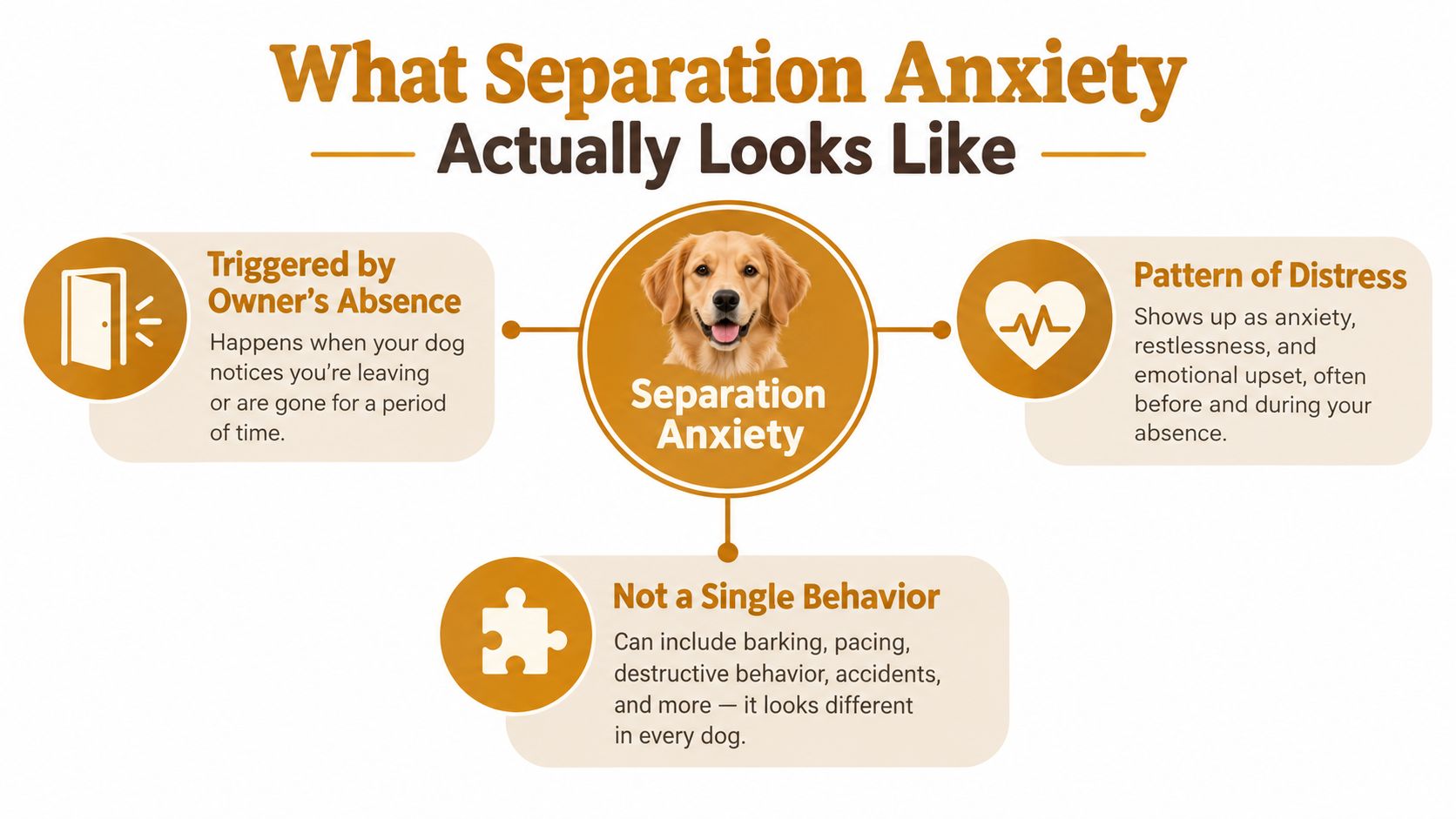
Some dogs show anticipatory anxiety before you leave. They may follow you closely, tremble, pant, salivate, or become restless as you pick up your keys or put on your shoes. Those behaviors matter because the distress may be tied to the cues that predict your departure, not only to the moment the door closes.
Distress doesn't always look dramatic
A dog doesn't need to destroy furniture or howl for hours to be struggling. Quiet pacing, refusing a food toy, trembling, or remaining immobile for a prolonged period can also point to distress. A dog who appears still may be unable to relax, rather than calmly choosing to nap.
Think of the difference between a dog who chews a toy while alone and one who scans the door, pants, and won't touch the toy after you leave. The second pattern gives you more reason to investigate separation-related distress. It isn't spite, laziness, or a deliberate attempt to punish you. It's a fear response, and treating it as misbehavior can lead to the wrong response.
The Most Common Behavioral Signs
Some separation-related signs are easy to spot, while others are visible only if you watch your dog after leaving. The behavior's timing, location, and connection to your absence help make sense of it. A chewed chair leg, for example, has a different meaning if your dog also paces and vocalizes as you walk out than if it happens during play while you're home.
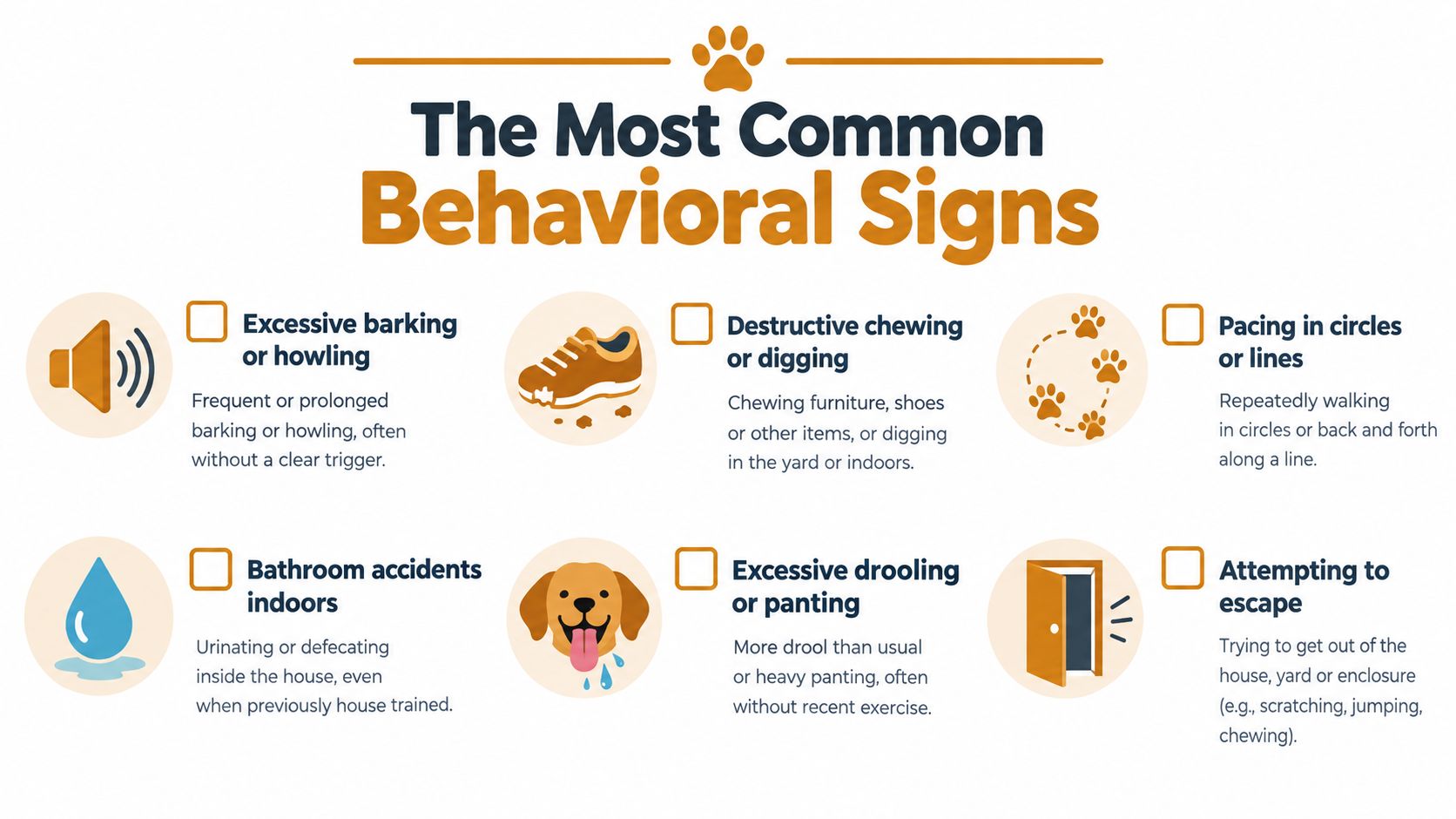
The Merck Veterinary Manual's overview of dog behavior problems describes signs that can occur together:
- Vocalizing: Repeated barking, whining, or howling may begin shortly after you leave.
- Destruction: Chewing, scratching, or digging may be concentrated at doors, windows, exits, or your possessions.
- Indoor accidents: A dog who's house-trained may urinate or defecate during a distress episode.
- Pacing and restlessness: Your dog may walk in repeated loops or along the same path without settling.
- Physical signs: Salivation, panting, or loss of appetite can accompany behavioral changes.
- Repetitive behavior: Repeated actions that seem difficult to interrupt may also be part of the picture.
Why the timing matters
A dog who barks at a delivery truck may be reacting to that sound, not to being alone. A dog who scratches at a door, paces, and vocalizes soon after you leave may be showing a more connected pattern. Signs that occur at random times, including when you're home, need a different interpretation.
Notice what happens before and after each behavior. Does your dog start pacing when you reach for your keys? Do they settle after a while, or keep trying to reach the exit? Is there an accident during the episode, or at an unrelated time? Those details can help a veterinarian assess the pattern.
The video below offers a visual introduction to common signs:
The Quiet Signs Owners Miss
A quiet dog isn't automatically a relaxed dog. Some dogs show distress without barking, destroying anything, or leaving a mess. They may freeze, watch the entrance closely, or stay in one place without resting comfortably.
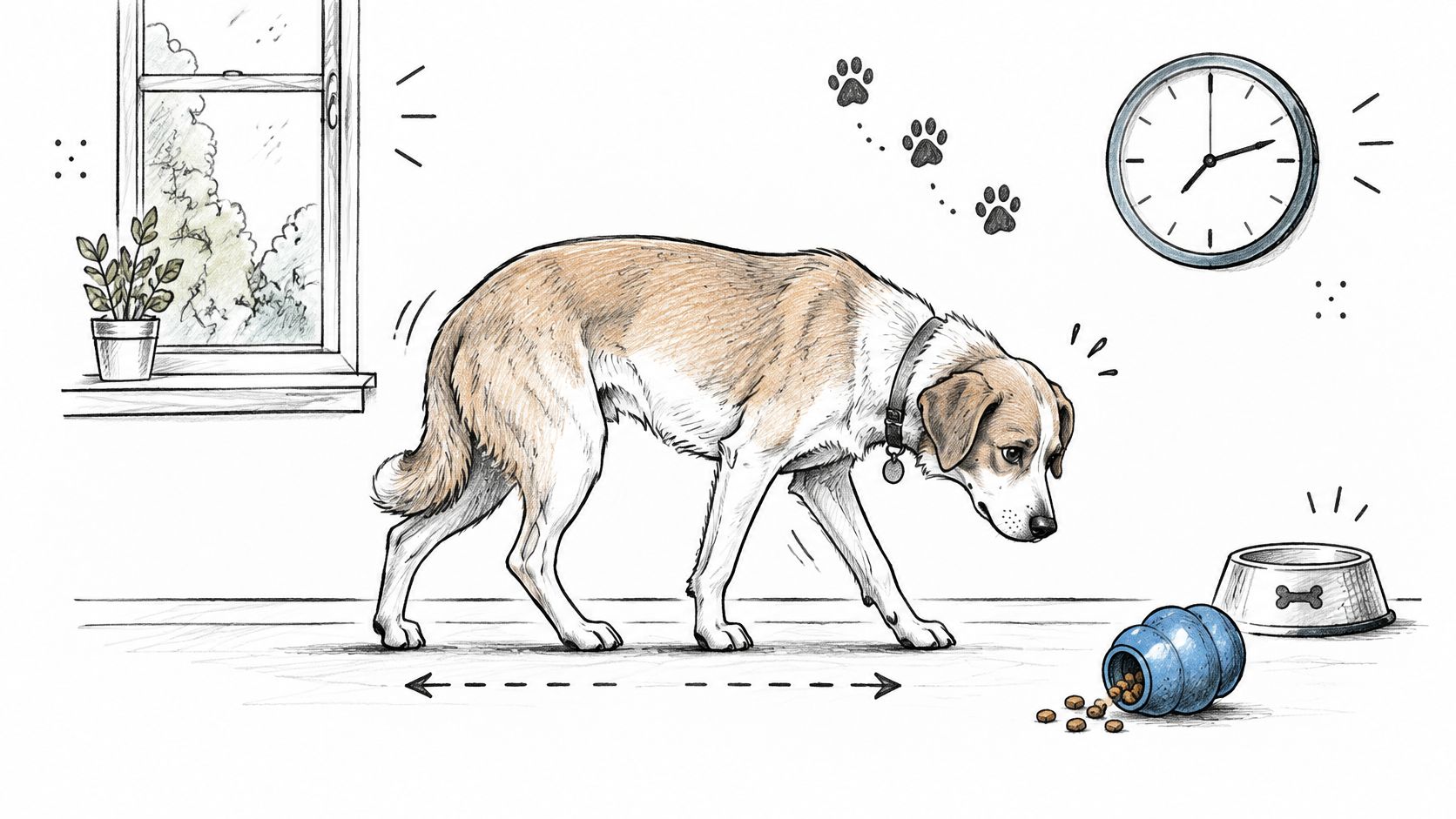
Pay attention to small changes in behavior around departure cues. Your dog might shadow you from room to room, pant when you pick up your keys, yawn repeatedly, lick their lips, or scan the doorway. After you leave, they might ignore a food toy they usually enjoy or move restlessly between spots without lying down.
The Royal Veterinary College's report on puppy separation stress discusses passive stress indicators, including panting and lip-licking, as well as resting behavior during supervised separation. The findings don't mean that every quiet or still dog has separation anxiety. They do support looking beyond barking and destruction when you're trying to understand what your dog experiences alone.
Look for changes, not just noise. A dog who normally eats a treat but refuses it when you leave may be telling you something, even if the room looks untouched when you return.
Note what your dog does and how long it continues. A single yawn could mean little; a series of stress signals that appear around departures deserves closer attention. Video can help you see whether your dog is resting, monitoring the door, or unable to settle. That distinction is more useful than labeling the dog as calm or anxious.
Separation Anxiety vs Boredom and Other Causes
Barking, chewing, and house-soiling can have several explanations. The most useful distinction is whether the behavior tracks your dog's absence or happens in other situations too. Veterinary behavior guidance stresses that separation-related distress is specifically linked to being away from, or unable to reach, the owner. This veterinary behavior discussion of separation anxiety and diagnosis also describes how departure cues can trigger signs before the owner leaves.
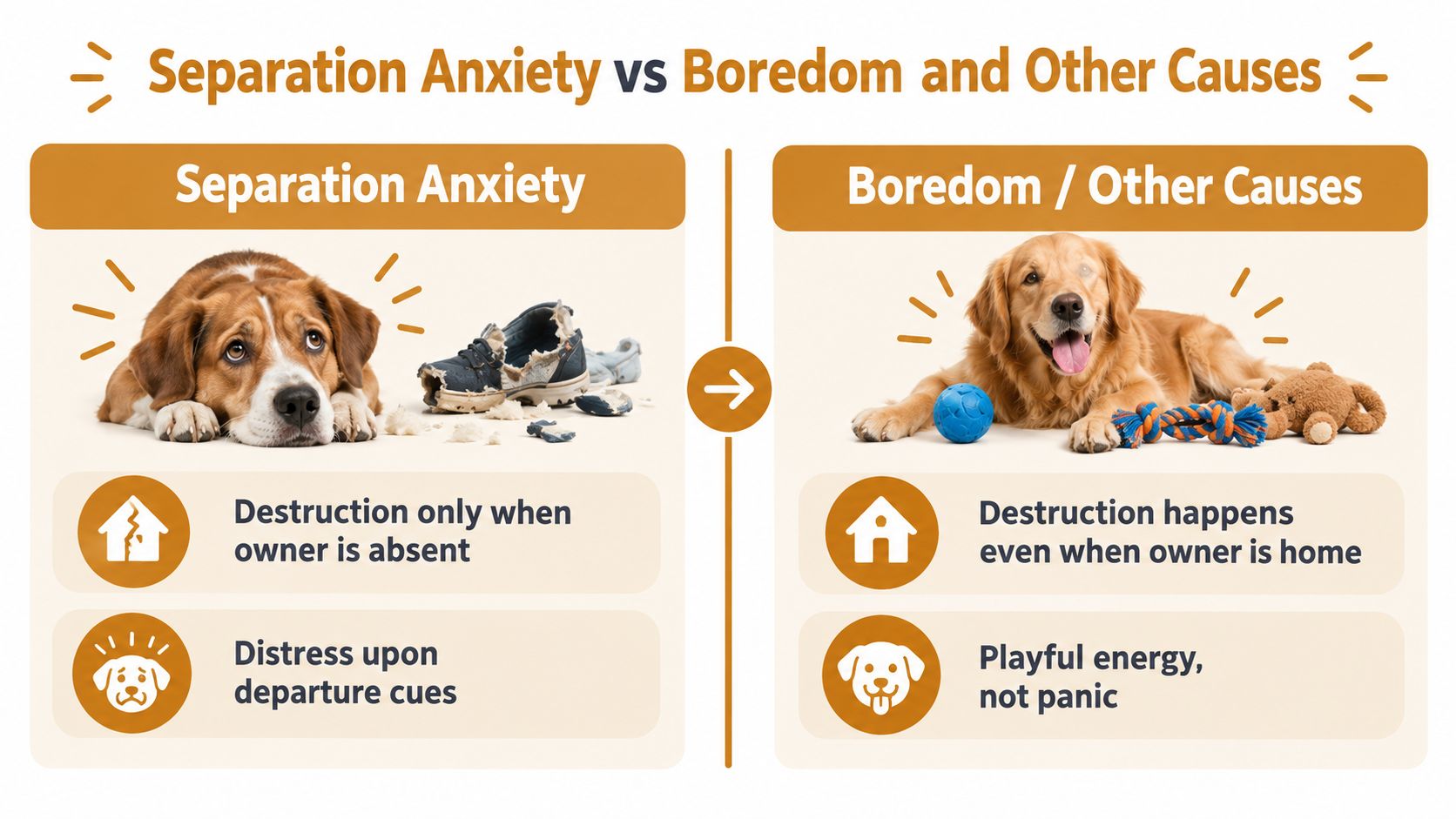
| Behavior | Separation Anxiety | Boredom or Other Cause |
|---|---|---|
| Chewing or destruction | May begin around departure and focus on exits or your belongings | May occur during play or exploration, including when you're home |
| Barking | May follow departure cues or continue while your dog is alone | May occur in response to a sound, person, or activity outside |
| Restlessness | May include pacing and difficulty settling when you're away | May improve with activity, play, or attention |
| Indoor accidents | May occur during a distress episode | May reflect incomplete house-training or a medical issue |
| Crate or room distress | May happen when separation is the trigger | May point to confinement distress, even when you're nearby |
Boredom or inadequate exercise can contribute to unwanted behavior, but don't assume that more activity will resolve a panic response. Noise fear may be tied to a particular sound. Confinement distress may happen when your dog is restricted, even if you're still in the house. Medical problems can also cause changes such as new accidents, vomiting, or excess salivation, so a behavior explanation shouldn't replace a veterinary check when symptoms are concerning.
Breed can be part of a broader ownership picture, but it can't confirm why an individual dog behaves a certain way. For a breed-specific example, see the American Water Spaniel profile.
Don't punish your dog for damage or accidents. Punishment won't establish what caused the behavior and may add fear to an already stressful situation. First look for the pattern, then discuss the evidence with a veterinarian.
How to Confirm the Pattern at Home
A continuous video can show what happened between your departure and your return, rather than leaving you to infer the cause from a damaged object. The American Veterinary Medical Association's discussion of separation-anxiety diagnosis and treatment recommends observing departure preparation and the time your dog spends alone, while noting when signs start, how long they last, and how intense they are.
Set up a useful recording
Use a phone or home camera positioned to show where your dog spends time and, if possible, the main exit. Make sure the camera is stable and the view isn't blocked. Record your departure preparation and the first half-hour alone, when signs may be easiest to spot.
Try these steps:
- Record your usual routine. Include cues such as putting on shoes or picking up keys, then continue filming after you leave.
- Write down the first sign. Note when your dog first paces, pants, vocalizes, salivates, or stops engaging with a toy.
- Describe what you see. Record the behavior, its intensity, whether it repeats, and how long it lasts. Note whether your dog settles or continues to show distress.
- Compare departures. Repeat the observation on separate occasions and look for a similar sequence, rather than drawing a conclusion from a single clip.
- Compare access to you. When it's safe and practical, observe your dog behind a barrier while you remain at home. If the distress appears when access is blocked, that's useful context for a professional.
Score the whole episode
A simple “anxious” or “not anxious” label can miss important details. Describe whether your dog briefly checks the door and then lies down, or stays alert, pants, and can't settle. Include recovery time: does your dog return to normal behavior while alone, or remain distressed until you come back?
Don't create a separation that you already know could put your dog at risk. If your dog has injured themselves, attempted to escape, or becomes severely distressed, stop testing and contact your veterinarian. Bring the recordings and notes to the appointment.
Basic Management Strategies That Help
While you arrange a professional assessment, focus on keeping your dog safe and avoiding departures that repeatedly trigger severe distress where you have a practical alternative. Management doesn't replace treatment, but it can help you make better decisions while you learn what your dog can handle.
Build alone time gradually. Start with a separation short enough that your dog remains comfortable, then increase it carefully. If your dog begins to panic, make the next practice easier rather than pushing through the distress.
Make departure cues less alarming. Pick up your keys or put on your shoes at times when you aren't leaving. This can help those cues become less predictive of a difficult separation. Keep your actual departures as calm and consistent as you can.
Offer enrichment, but watch the response. A long-lasting treat or food toy may help if your dog can engage with it. If your dog ignores it once you leave, don't assume that offering a different toy will solve the underlying distress. Note whether the food is used on video.
Avoid punishment. Scolding your dog for a mess or damaged item after you return won't teach them what to do during the earlier episode. It may increase fear without addressing the trigger.
Use the video as your guide. If your dog stays relaxed with a toy, that's useful information. If they abandon it as soon as you leave, adjust the plan and share that observation with your veterinarian or trainer.
Gradual practice and enrichment can support a broader behavior plan, but they aren't guaranteed to resolve clinically significant separation-related distress. Keep notes on what helps, what makes things harder, and how your dog recovers.
When to Consult a Vet or Trainer
Contact a veterinarian if the behavior is sudden, severe, or getting worse, especially if your dog vomits, injures themselves, or has a major change in appetite. These signs need assessment, not guesswork. A veterinarian can consider medical causes of symptoms such as elimination changes, vomiting, or salivation, and help determine whether separation-related distress is likely.
Professional help is also worthwhile when your dog repeatedly panics, tries to escape, or can't settle during absences. Bring your recordings, departure notes, and a description of what happens when you're home. A veterinary team can assess the dog's health and discuss whether a trainer or veterinary behavior professional should help with a structured plan.
You're not alone in facing this problem. A veterinary review reports prevalence estimates ranging from about 6% to 17.2% in general dog populations, and 14.4% in one tertiary behavior-hospital population of dogs presented for behavior problems. These figures vary because studies use different definitions, samples, and questionnaires, so they aren't direct comparisons. The veterinary review in the Journal of the American Veterinary Medical Association discusses those differences and why milder or less visible signs may be missed.
Early guidance can help you avoid relying on guesswork or punishment and give your dog a plan suited to the behavior you observe. Separation-related distress is serious, but it can be addressed with veterinary assessment and individualized behavior support. If you're seeing a repeated pattern, share your videos with your vet and ask what kind of behavior professional would be appropriate.
PetCostEngine offers tools for exploring dog ownership by breed and state, alongside reference guides for current and prospective owners. If you're planning for your dog's wider care needs while addressing separation distress, visit PetCostEngine.
Estimated lifetime and yearly costs for a American Water Spaniel, state by state, plus whether pet insurance breaks even for the breed.
See American Water Spaniel costs →
Is insurance worth it for a American Water Spaniel? →
Joint supplement → Puzzle toys → No-pull harness →
As an Amazon Associate, PetCostEngine earns from qualifying purchases.