

You're ready for bed, but your dog has other plans. She circles the blanket, paws at the cushion, pushes the bedding into a heap, then steps away and starts over. Sometimes she settles within moments. Other times, the same routine continues long enough to make you wonder whether she's uncomfortable, anxious, or trying to tell you something.
This pattern is usually called dog nesting behavior. It can be a harmless part of getting comfortable, a sign of pregnancy or false pregnancy, or a response to stress and physical discomfort. The behavior itself doesn't provide a diagnosis. Its meaning depends on your dog's age, sex, reproductive status, timing, intensity, and other signs.
Table of Contents
- Introduction to Dog Nesting Behavior
- Understanding the Core Concept of Nesting Behavior
- Common Causes of Nesting Behavior
- Nesting Behavior Across Life Stages and Breeds
- Practical Guidance for Managing Nesting Behavior
- Conclusion and When to Seek Help
Introduction to Dog Nesting Behavior
Nesting behavior includes circling, pawing, digging, trampling, scratching, and rearranging bedding before resting. A dog may perform the routine on a bed, blanket, carpet, couch, or even a patch of grass. The actions often look purposeful because they are. Your dog is adjusting a resting place and responding to the surroundings.
A dog using a new bed may investigate it more than a familiar one. One online report suggests that dogs averaged 4.2 circling bouts on unfamiliar surfaces compared with 1.8 on familiar beds, although the observation comes from a secondary account and shouldn't be treated as a universal rate or a test for illness (the reported comparison of circling on familiar and unfamiliar surfaces).
The important distinction is between a brief settling ritual and a sudden change that prevents rest. A dog who circles once or twice and relaxes is different from a dog who repeatedly digs, pants, paces, cries, or appears painful. Breed, age, and body shape also influence how dogs interact with bedding, so comparing your dog with another dog, including dogs shown on breed information pages, can be misleading.
Understanding the Core Concept of Nesting Behavior
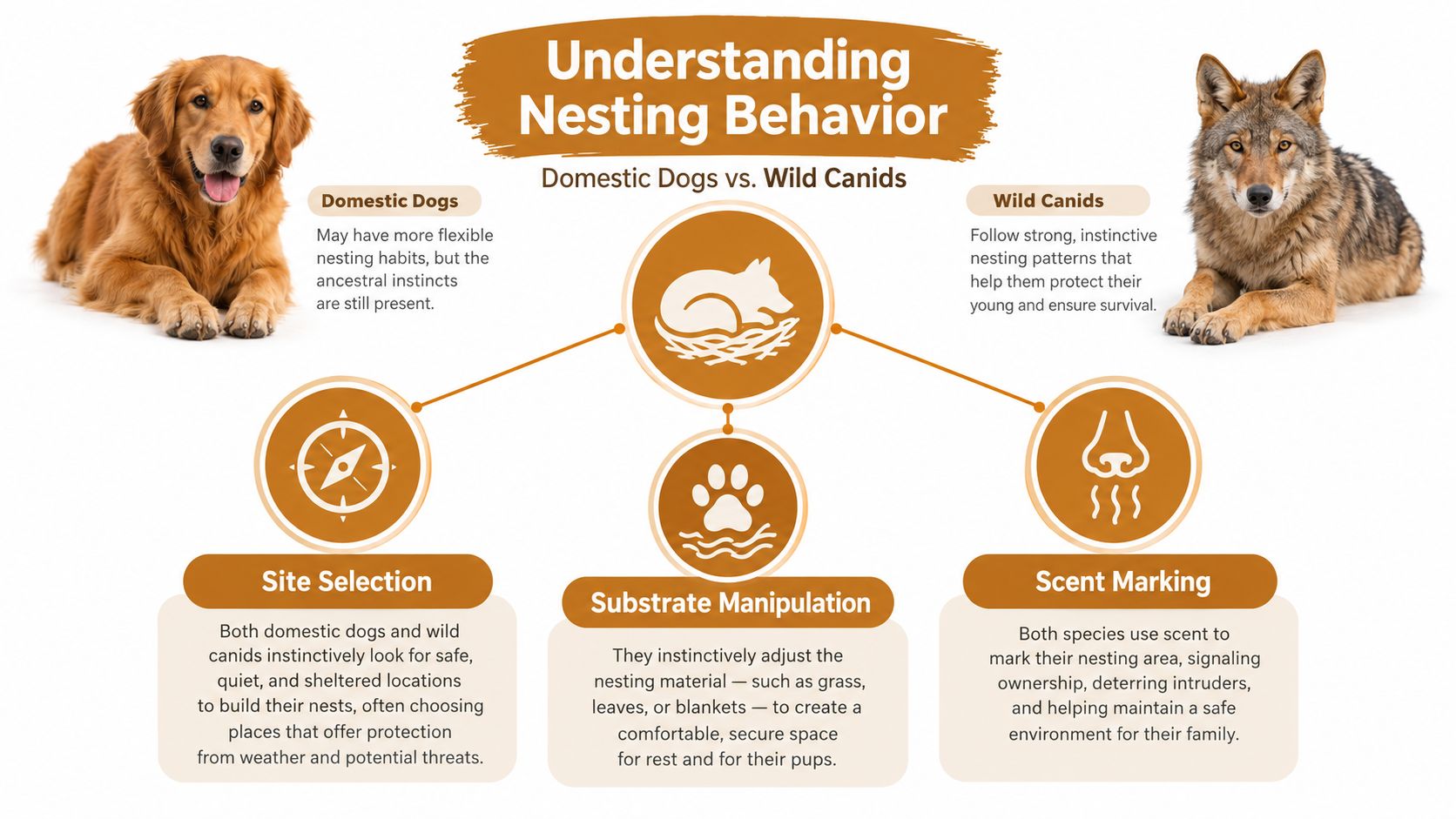
A dog choosing a corner, circling on a blanket, and finally settling is following a sequence with several purposes:
- Site selection: She looks for a place that feels protected, comfortable, and practical.
- Substrate manipulation: She paws, digs, flattens, pushes, or circles to adjust the surface.
- Security and familiarity: Contact with the bedding can spread her scent and make the area feel predictable.
Wild canids shape vegetation, soil, and other materials into resting or denning places. A domestic dog may express the same inherited pattern with household items. A blanket stands in for leaves, a bed resembles a shallow den, and carpet provides something to paw when outdoor digging is unavailable.
A 2016 field study of 148 free-ranging dogs in India found that proximity to resources influenced den choice, while human activity did not stop dogs from using useful areas near people (the field study of den selection in free-ranging dogs). The study included 15 pregnant females, which assessed possible denning sites and rejected intermediate locations before choosing a final den.
For owners, the lesson is practical. A dog may select the corner beside your bed, a crate, or a familiar blanket because it offers warmth, access to people, protection, or a surface she can alter. Comparing breed tendencies side by side can add context through this dog breed comparison tool, though individual habits still matter more than a breed label alone.
What the behavior accomplishes
Pawing and circling can move uncomfortable material, flatten a surface, and help a dog find a stable resting position. Rearranged bedding may also carry a familiar scent, which can provide reassurance after a household change or during adjustment to a new environment.
Use the dog's baseline as your first guide. A brief routine followed by relaxed sleep usually reflects ordinary nesting. Repeated effort, inability to settle, or nesting combined with panting, crying, pain, or other illness signs calls for closer attention. This decision point helps separate a normal settling ritual from maternal preparation, false pregnancy, anxiety, or a medical problem.
Common Causes of Nesting Behavior
The same outward behavior can arise from very different causes. Start by asking four questions: Is the dog intact or spayed? Could she be pregnant? Did the behavior begin after a stressful change? Does she show signs of pain or illness?
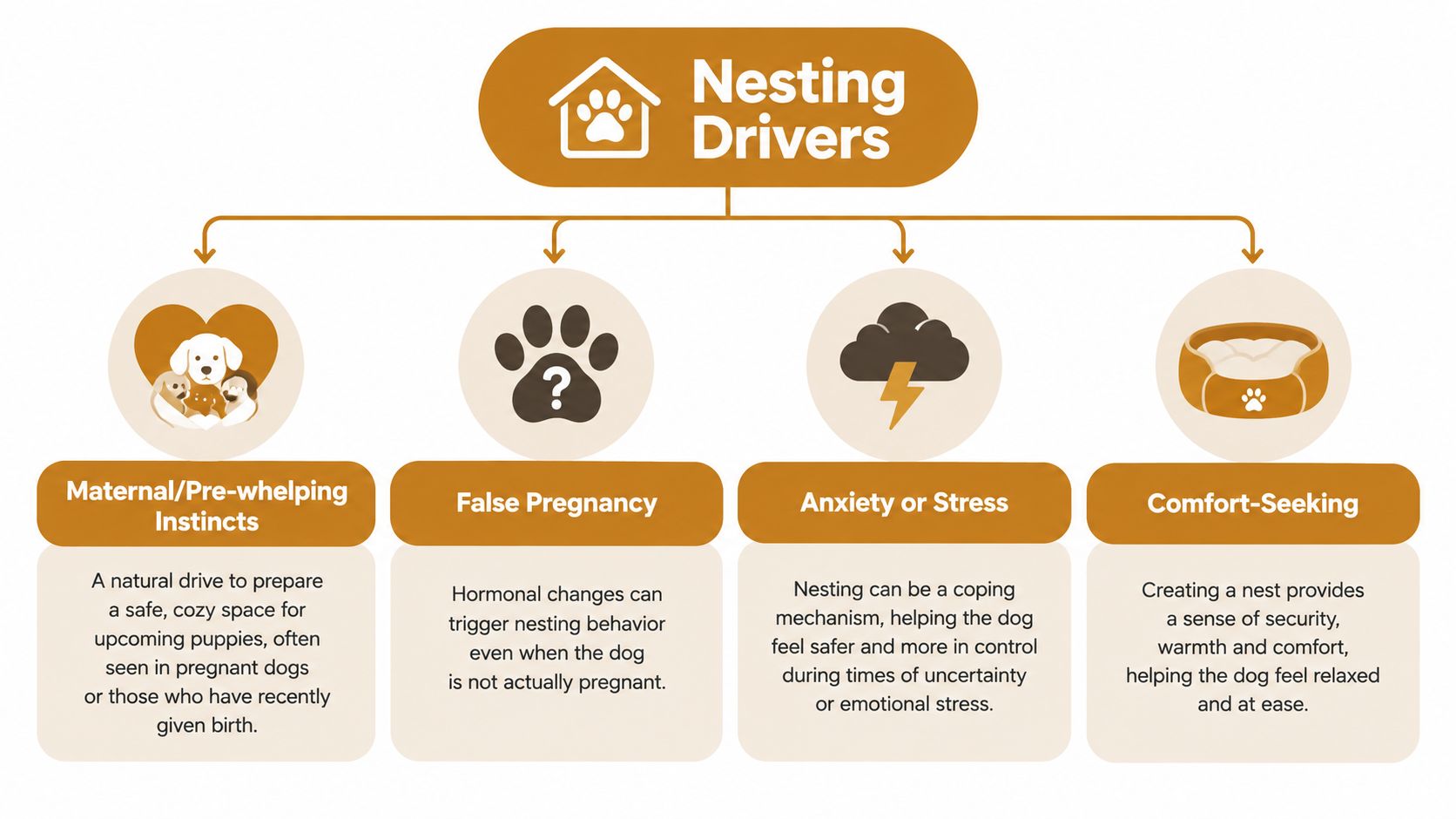
Maternal and pre-whelping behavior
In a pregnant dog, nesting can be part of preparing for birth. The American Kennel Club's responsible breeding guidance notes that pregnant females may stop eating and begin gathering bedding in a prepared whelping box several days before delivery.
This pattern often looks more intense than ordinary bedtime circling. A pregnant female may repeatedly return to one area, shred blankets, dig, become restless, or seek privacy. Provide a quiet, cleanable whelping area rather than allowing her to choose an unsafe corner.
False pregnancy after a heat cycle
An unspayed female can show nesting even when mating never occurred. According to VCA's overview of false pregnancy in dogs, signs commonly begin four to nine weeks after the previous heat and may include nesting, mothering toys, mammary enlargement, milk production, restlessness, reduced activity, lethargy, vomiting, or occasional aggression.
The hormonal sequence explains why the behavior can seem to appear unexpectedly. After estrus, progesterone eventually falls while prolactin rises, and the hormonal shift can stimulate milk production and maternal behaviors such as nesting and protecting toys (the AKC explanation of false-pregnancy hormones).
Anxiety or environmental stress
A dog may create a nest when she's trying to feel secure. Moving furniture, introducing a new pet, welcoming a baby, changing work schedules, hearing construction noise, or moving homes can all alter the environment. An anxious dog may nest alongside pacing, panting, vocalizing, hiding, clinginess, destructive behavior, or difficulty being alone.
Comfort-seeking is less alarming when the dog remains relaxed and can stop when invited to another activity. Offer a predictable resting place, maintain a consistent routine, and use calm enrichment such as a food puzzle or a familiar chew.
Pain and medical problems
Pain can imitate nesting because a dog may repeatedly adjust bedding while trying to find a tolerable position. Joint disease, abdominal discomfort, skin irritation, breathing difficulty, or another illness can make ordinary settling impossible. Small dogs may also struggle to find supportive bedding, so choose materials and firmness appropriate for the dog's body and sleeping habits. A small-breed reference page can help you compare body-size considerations, but it can't replace veterinary evaluation.
Nesting Behavior Across Life Stages and Breeds
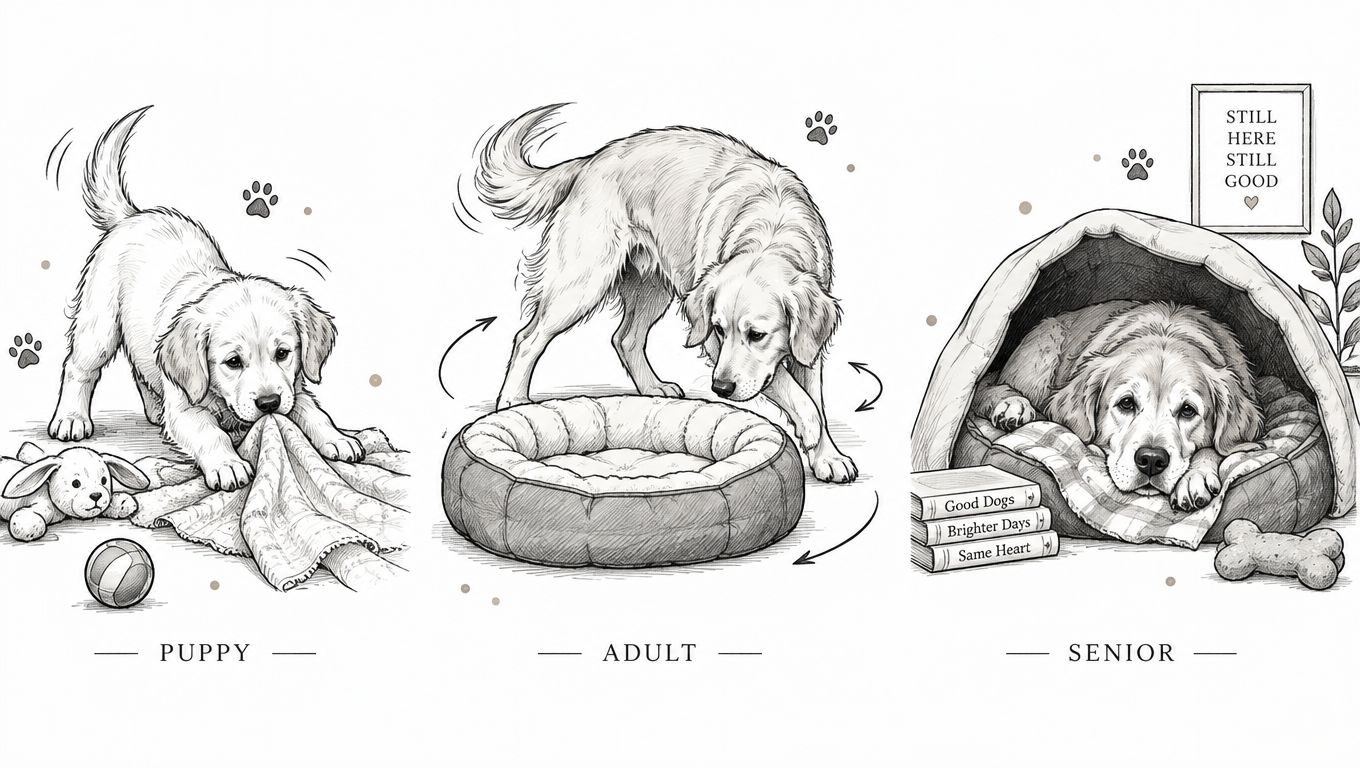
A puppy may paw at a blanket because she's exploring texture and learning how a sleeping place works. She might dig briefly, turn in a circle, and fall asleep without distress. Puppies also copy household routines, so a familiar bedtime sequence can become a comforting cue.
Adult dogs often show the clearest distinction between ordinary nesting and a new problem. A healthy adult may rearrange a bed before resting, while an intact female may develop a sudden maternal pattern after a heat cycle. A senior dog may change position repeatedly because her joints, spine, vision, or cognitive function makes settling harder. A new pattern in an older dog deserves more attention than a long-standing bedtime ritual.
Breed traits can influence the form of nesting without explaining every episode. Terriers may show enthusiasm for digging. Dogs with thick coats may prefer cooler, flatter surfaces, while short-coated dogs may seek soft insulation. Brachycephalic dogs can have special comfort and breathing needs, so heavy blankets or poorly ventilated enclosed spaces may create a hazard rather than a refuge.
Practical rule: Compare your dog with her own normal behavior first. Breed tendencies can provide context, but a sudden shift matters more than a breed stereotype.
Maternal nesting follows a different timeline from ordinary sleep preparation. Veterinary literature reports that it can begin before parturition and continue from birth through roughly 5–10 weeks postpartum, in association with hormonal and uterine activity in female dogs (veterinary literature on maternal behavior around parturition).
A dog's individual preferences also matter. A water-loving, active breed may prefer a durable, washable mat, while a dog that likes to burrow may need supervised bedding that won't wrap around her body. Learn more about breed-specific behavior and care considerations through the American Water Spaniel breed guide.
For a visual explanation of how nesting can change with age, breed, and context, use this short educational video:
Practical Guidance for Managing Nesting Behavior
Start with observation, not correction. Record when nesting happens, where it occurs, how long it lasts, and what your dog does immediately afterward. Also note appetite, drinking, bowel movements, mobility, breathing, vaginal discharge, mammary changes, and whether she can relax.
Create a safe place
Choose a quiet location away from heavy foot traffic, household hazards, and direct drafts. The area should have easy access so your dog doesn't need to climb or squeeze through a narrow opening. If pregnancy is possible, prepare a separate whelping space that's easy to clean and large enough for the mother to turn around comfortably.
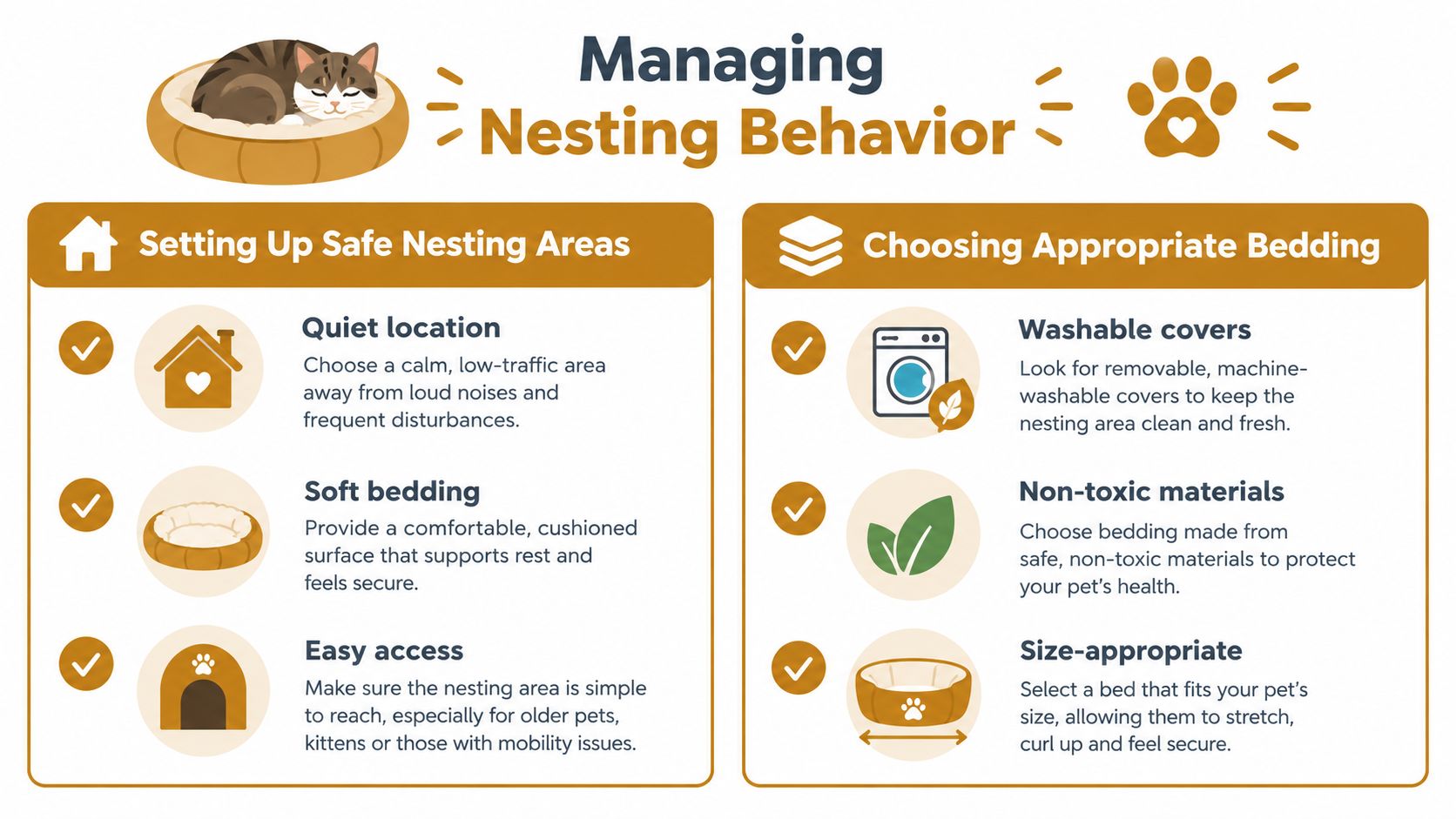
Select bedding based on safety and function:
- Washable covers: Use removable fabrics that can be cleaned after digging, accidents, or discharge.
- Non-toxic materials: Avoid bedding that sheds dangerous pieces or contains loose filling your dog may swallow.
- Appropriate support: Match firmness and thickness to your dog's size, age, mobility, and preferred sleeping position.
- Supervised nesting materials: Remove blankets that become tangled, overheated, or aggressively shredded.
Redirect without punishment
If the behavior is brief and harmless, let your dog complete it. Interrupting every paw movement can add frustration. If she digs at furniture or destroys bedding, calmly guide her to an approved mat, reward her for settling, and provide exercise or enrichment earlier in the day.
Don't forcibly remove a toy or approach a guarded corner. Dogs experiencing pseudopregnancy may protect nesting areas or stuffed toys aggressively, and VCA guidance on guarding associated with pseudopregnancy advises giving the dog space and seeking veterinary help if guarding escalates.
Keep children and other pets away from a guarded nest. A dog who has never shown aggression can react defensively when hormonal, frightened, or painful, so management should come before training exercises. If the dog's behavior is intense, sudden, or accompanied by physical symptoms, arrange a veterinary appointment rather than trying to solve the problem with bedding changes alone. A breed-specific Labrador Retriever care reference can offer general context, but it won't determine why an individual dog is nesting.
Conclusion and When to Seek Help
Normal nesting is usually brief, familiar, and followed by comfortable rest. Maternal behavior, false pregnancy, anxiety, pain, and illness can look similar, so interpret nesting alongside reproductive history, age, timing, and physical signs. Contact a veterinarian for sudden or persistent nesting, repeated inability to settle, weakness, vomiting, fever, a swollen abdomen, breathing difficulty, painful straining, or abnormal vaginal discharge. Early assessment is especially important when an intact female may be pregnant or experiencing pseudopregnancy.
PetCostEngine helps US dog owners compare breed-specific health information and plan for the practical responsibilities of care. Visit the site to explore breed guides, personalized ownership estimates, and insurance resources that can support better decisions when your dog's behavior signals a broader health or care question.
Estimated lifetime and yearly costs for a Compare, state by state, plus whether pet insurance breaks even for the breed.
See Compare costs →
Is insurance worth it for a Compare? →
Joint supplement → Puzzle toys → No-pull harness →
As an Amazon Associate, PetCostEngine earns from qualifying purchases.