
A puppy has just finished eating, settled beside you, and started making a soft, rhythmic “hic” sound. Its belly moves with each episode, but the puppy otherwise looks comfortable, alert, and ready to play. For many first-time owners, the sudden sound is alarming. In most healthy dogs, though, hiccups are a temporary reflex rather than a sign of illness.
The useful distinction isn't whether dogs get hiccups. They do. The important question is whether the episode looks like an ordinary hiccup pattern or whether it comes with signs that suggest a gastrointestinal, respiratory, cardiac, or neurological problem.
Table of Contents
- Why Dogs Get Hiccups
- The Puppy Hiccup Pattern
- When Hiccups Signal a Problem
- Practical Prevention Strategies
- Distinguishing Hiccups from Respiratory Distress
- Owner Action Plan and Summary
Why Dogs Get Hiccups
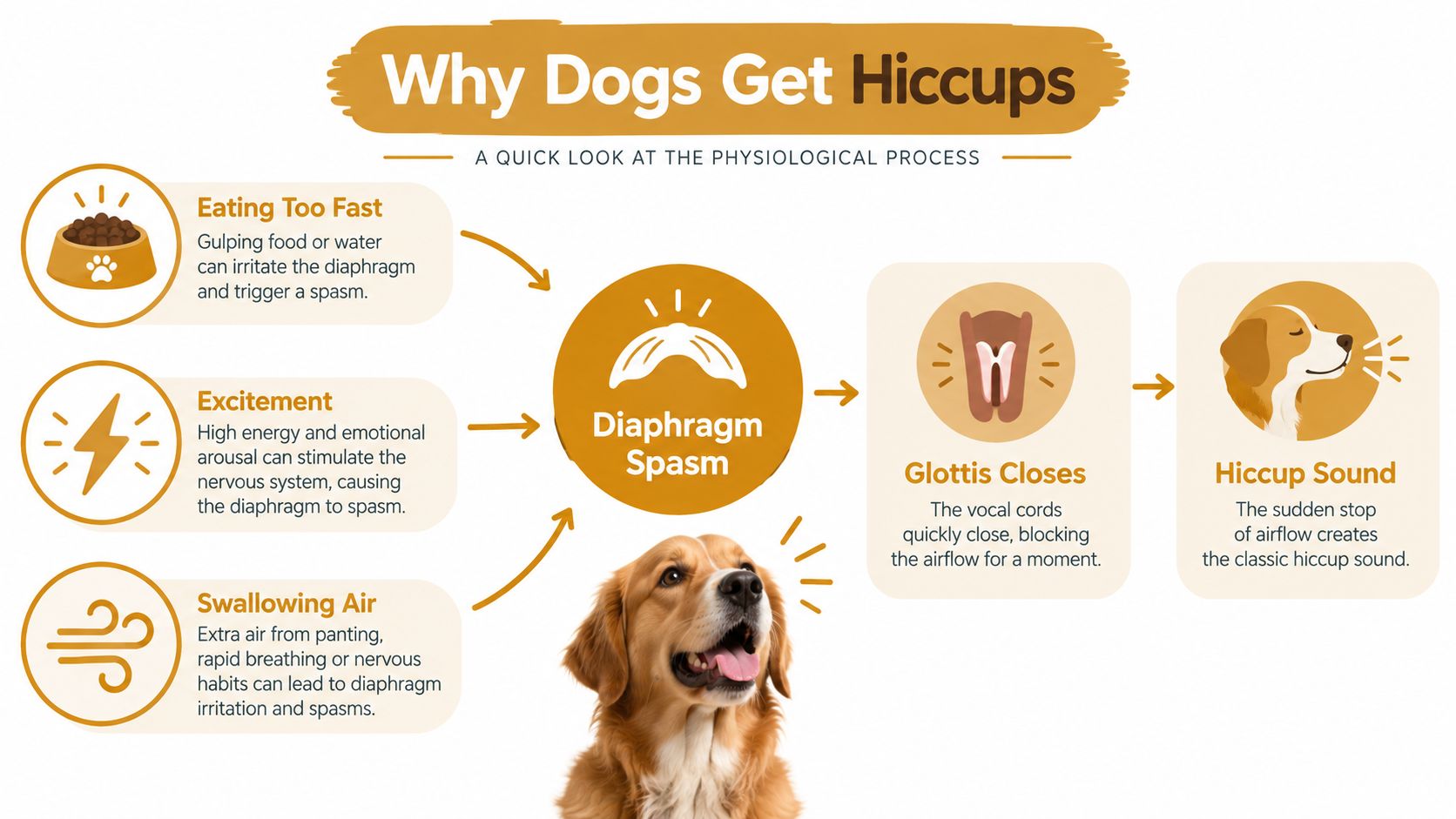
A dog's diaphragm is the muscle beneath the lungs that helps drive breathing. During a hiccup, the diaphragm contracts involuntarily, then the glottis, the opening between the vocal cords, closes abruptly. That closure creates the familiar sound. The American Kennel Club's explanation of dog hiccups describes this basic sequence and notes that the biological purpose of hiccupping remains unknown.
The process is easier to understand as a brief mechanical reflex. A puppy gulps food, drinks quickly, swallows air, or becomes excited. Those events can irritate or stretch structures around the stomach and airway. Reflex pathways involving the vagus and phrenic nerves can then trigger the diaphragm to contract, followed by glottic closure and the audible “hic.”
What the sound does and does not mean
A normal hiccup usually follows a regular rhythm. You may see the abdomen or chest make a small repeated movement, with the dog remaining comfortable between episodes. The reflex is considered normal and self-limiting in most dogs, and it can occur across breeds, sizes, and ages, although puppies experience it more often than adults, according to veterinary guidance on canine hiccups.
Common triggers include rapid eating or drinking, swallowed air, overeating, excitement, stress, vigorous play, and sudden temperature changes. A dog that hiccups after rushing through a meal may just have a temporarily distended stomach that irritates the diaphragm. That explanation is more reassuring than assuming every rhythmic sound represents a respiratory disease.
Practical rule: If the movement is rhythmic, brief, and isolated, watch the dog rather than trying to force the hiccups to stop.
An occasional episode doesn't indicate that a particular breed is unhealthy. Owners can still explore breed-specific information, such as the American Water Spaniel breed profile, but hiccups themselves aren't an established breed-health risk.
The Puppy Hiccup Pattern
Puppies are the group most likely to hiccup because several developing systems overlap. Their feeding control is still immature, so they may gulp food or water instead of pacing themselves. Excitement can produce the same result, especially when a puppy moves rapidly from sleep to play, eats quickly, pants, and swallows air.
Veterinary education commonly identifies puppyhood, particularly before approximately eight months of age, as the most common window for hiccups. Episodes generally become less frequent as the respiratory, swallowing, digestive, diaphragm, and nervous systems mature. Adults can still hiccup, but an adult dog with a new, persistent, or unusually frequent pattern deserves closer observation than a thriving young puppy with short episodes.
A veterinary practice source characterizes hiccups as something that occurs in nearly all puppies at some point during growth, while other guidance emphasizes that no reliable population percentage exists. That limitation matters. There isn't a standardized incidence rate, average yearly episode count, or dependable breed-by-breed prevalence estimate that owners can use to calculate risk. The evidence supports a developmental pattern, not a precise statistic.
Reading the pattern instead of counting episodes
A puppy's overall condition provides more useful information than the number of times you notice a hiccup. Consider these observations:
- Timing: Episodes that follow fast eating, enthusiastic drinking, vigorous play, or excitement are consistent with common triggers.
- Recovery: A puppy that returns to normal behavior and breathing as the episode passes is less concerning than one that remains weak or distressed.
- Development: Poor growth, reduced appetite, repeated regurgitation, or persistent digestive upset changes the clinical picture.
- Maturity: As a dog grows, the usual expectation is that hiccups become less frequent. A worsening pattern in an adult should not be dismissed as puppy behavior.
The developmental explanation also helps separate hiccups from breed-specific airway risks. Short-nosed dogs may have breathing challenges for anatomical reasons, but a hiccup isn't proof of a problem with a breed's airway. For broader comparison, owners can review breed information across size and type while judging an individual dog by its actual breathing, appetite, energy, and recovery.
A young dog can hiccup often and still be healthy. The concern rises when the pattern stops looking brief, isolated, and comfortable.
Most puppy episodes resolve without treatment. The sensible response is to identify triggers, reduce frantic eating or activity, and observe the puppy's general condition rather than treating a normal reflex as a disease.
When Hiccups Signal a Problem
A short bout in an otherwise healthy dog is usually appropriate to monitor. The clinical concern changes when hiccups persist for roughly an hour or more, recur in an unusual pattern, or appear alongside another symptom. In that setting, the hiccup may be a secondary sign of irritation or disease rather than the main problem.
Use the accompanying signs as your triage guide
Contact a veterinarian promptly if hiccups occur with:
- Breathing difficulty: Gasping, wheezing, unusually noisy breathing, rapid breathing, or visible effort should never be written off as hiccups.
- Digestive symptoms: Vomiting, repeated regurgitation, abdominal swelling, pain, or persistent swallowing can indicate an issue involving the esophagus or stomach.
- Systemic changes: Appetite loss, lethargy, weakness, poor growth, or a dog that seems distinctly unwell requires professional assessment.
- Abnormal gum color: Blue or pale gums, especially with breathing difficulty or weakness, warrant urgent veterinary attention.
- A prolonged episode: Hiccups that don't stop on their own within roughly an hour should be discussed with a veterinarian.
These signs matter because gastrointestinal, respiratory, cardiac, and neurological conditions can stimulate reflex pathways or alter breathing. A veterinarian may need to distinguish uncomplicated hiccups from coughing, gagging, regurgitation, airway disease, heart disease, or another condition that needs targeted treatment. A dog with a short isolated episode may only need observation, while a dog with distress needs an examination.
The Bulldog breed page can provide general breed context, but no breed profile can replace an assessment of active breathing trouble or repeated vomiting. Breed information is background. The dog in front of you determines the urgency.
If the dog is struggling to breathe, has blue or pale gums, collapses, develops marked abdominal swelling, or appears severely weak, seek urgent veterinary care rather than waiting for the hiccup pattern to resolve.
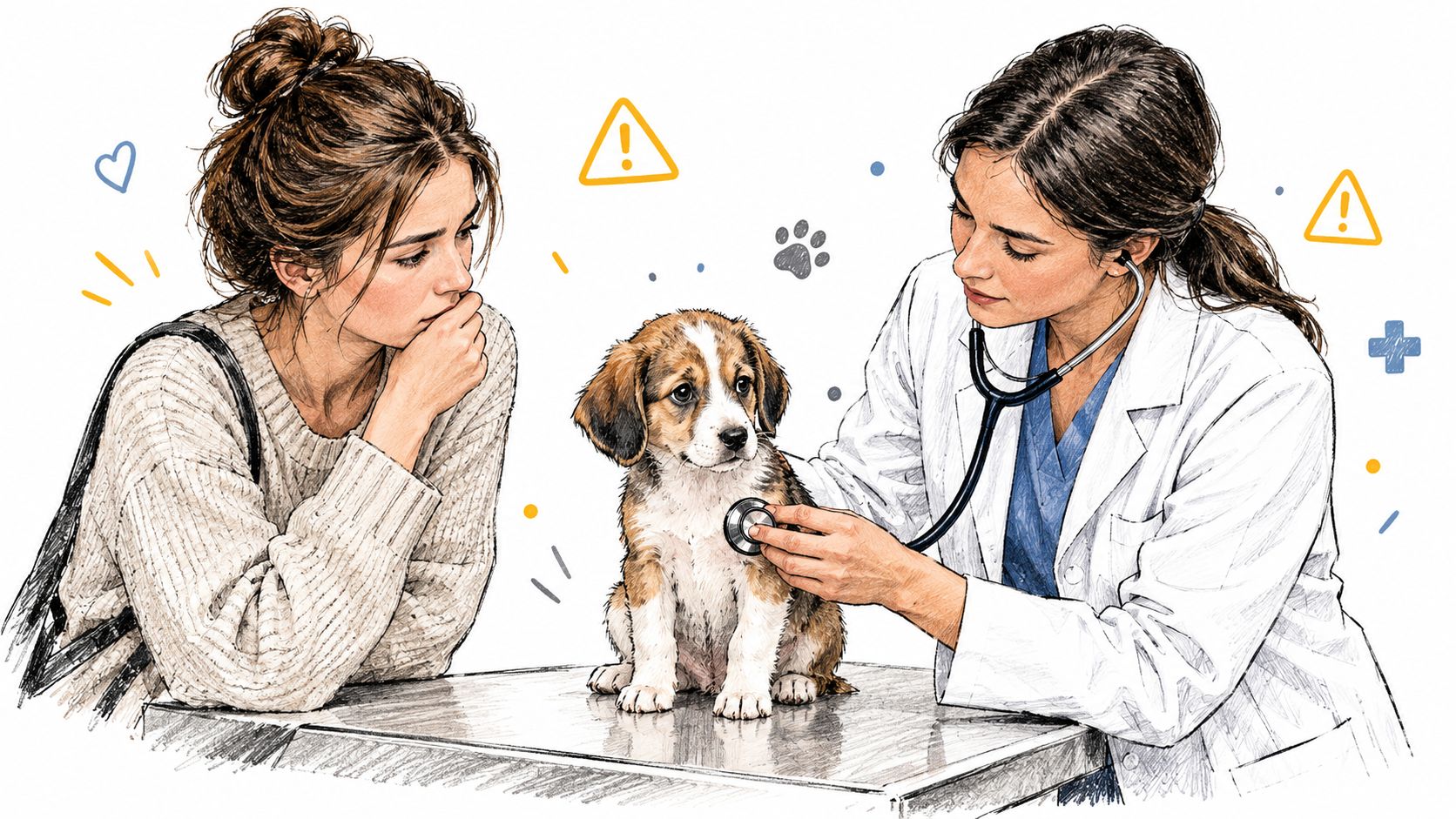
Here's a visual resource that can help owners recognize why a physical examination matters:
Practical Prevention Strategies
Prevention works best when it targets the trigger, not the sound. Hiccups don't usually require medication, and most short episodes resolve on their own. A calmer feeding and activity routine can reduce the air swallowing and sudden stomach filling that often precede them.
Start with the meal itself. Give measured portions at a pace the dog can manage, and consider a slow feeder, food puzzle, or enrichment toy for a puppy that inhales meals. These tools can make eating more deliberate, but they shouldn't frustrate the dog or encourage frantic pawing. If a device makes the puppy more excited, use a simpler setup and supervise the meal.
Adjust the moments around food
After eating, give the puppy a quiet period instead of immediately starting vigorous play. The same principle applies after enthusiastic drinking. A dog that has just gulped water and begun panting may benefit from a calmer environment and time to return to a normal breathing rhythm.
Useful adjustments include:
- Slow the meal: Divide food into a format that discourages gulping, while keeping the total daily portion appropriate for the dog.
- Reduce post-meal excitement: Choose calm interaction after eating and postpone intense play until the dog has settled.
- Watch the trigger sequence: Note whether hiccups follow food, water, play, stress, or a temperature change.
- Offer water normally: Fresh water is reasonable, but never force a dog to drink or syringe water into its mouth.
- Avoid unsafe experiments: Don't induce vomiting, give over-the-counter drugs, pull the tongue, hold the dog's breath, or frighten the animal.
A gentle tummy rub may help some dogs relax, but it isn't a required treatment and shouldn't be used if the abdomen seems painful, swollen, or tense. The same restraint applies to human hiccup cures. Dogs don't understand breath-holding or startling games, and those actions can add stress without addressing the cause.
If your dog regularly gulps food or becomes overexcited during meals, the French Bulldog breed resource offers an example of why owners should consider an individual dog's anatomy and behavior rather than relying on a universal remedy. The practical aim is simple: make eating slower, transitions calmer, and observation more reliable.
Distinguishing Hiccups from Respiratory Distress
Hiccups can sound dramatic, especially in a small puppy, but the pattern is usually distinct from a respiratory emergency. A hiccup is a brief, rhythmic diaphragm contraction followed by glottic closure. The dog may make a repeated “hic” sound, show a small abdominal movement, and remain comfortable between episodes.
Coughing is different. It generally involves a forceful expulsion of air and may sound dry, harsh, moist, or repetitive. Gagging can look like an attempt to clear the throat and may occur with retching, drooling, repeated swallowing, or regurgitation. Those events shouldn't be labeled hiccups just because they happen in a series.
Compare the observable pattern
| What you observe | More consistent with hiccups | More concerning for another problem |
|---|---|---|
| Movement | Small, rhythmic contractions | Forceful cough, retch, gag, or irregular effort |
| Sound | Repeated, recognizable “hic” | Wheeze, harsh cough, choking sound, or noisy breathing |
| Behavior | Comfortable and responsive | Distressed, weak, restless, or unable to settle |
| Breathing | Normal between episodes | Labored, rapid, gasping, or visibly difficult |
| Digestion | No vomiting or repeated regurgitation | Vomiting, drooling, lip licking, or frequent swallowing |
Reverse sneezing can also confuse owners. It may involve rapid inward breaths and repeated snorting, often with the neck extended. Even when reverse sneezing is benign, it doesn't have the same appearance as a simple hiccup. A video recorded from a safe distance can help a veterinarian identify the event, provided the dog isn't in immediate distress.
Short-nosed dogs may make more airway noise for anatomical reasons, but owners still need to judge the individual episode. The Pug breed guide can offer general context, while breathing difficulty, blue or pale gums, collapse, or persistent noisy breathing calls for urgent professional attention.
Owner Action Plan and Summary
When dogs get hiccups, use a simple decision process.
- Observe first. If the episode is brief, rhythmic, and isolated, and your dog is breathing normally and acting well, allow it to pass without forceful intervention.
- Review the trigger. If it followed rapid eating, fast drinking, excitement, stress, vigorous play, or a temperature change, adjust that routine next time.
- Support calm behavior. Offer normal access to fresh water, reduce stimulation, and let the dog rest. Don't force water, induce vomiting, or use human medication.
- Escalate for warning signs. Contact a veterinarian when hiccups last roughly an hour or more, recur unusually often, or accompany vomiting, regurgitation, coughing, wheezing, appetite loss, lethargy, weakness, abdominal swelling, pain, or breathing difficulty.
- Treat emergencies as emergencies. Blue or pale gums, collapse, severe weakness, or obvious respiratory distress shouldn't wait for observation at home.
Ordinary hiccups are generally a benign reflex, not a routine medical condition. The owner's job is to recognize the normal pattern, reduce avoidable triggers, and notice when the dog's overall health no longer fits that pattern.
PetCostEngine helps US dog owners estimate lifetime ownership needs with breed- and state-adjusted projections, health-risk information, and planning tools. Visit PetCostEngine to explore practical data for your dog and prepare for the broader responsibilities of ownership.
Estimated lifetime and yearly costs for a American Water Spaniel, state by state, plus whether pet insurance breaks even for the breed.
See American Water Spaniel costs →
Is insurance worth it for a American Water Spaniel? →
Digestive support → Slow-feeder bowl → Premium dry food →
As an Amazon Associate, PetCostEngine earns from qualifying purchases.