
I wrestled a 60-inch gate across my living room once and learned the hard way that the number on the box is only half the story. The other half is whether your walls, trim, and dog cooperate.
Table of Contents
- When a Standard Gate Is Not Going to Cut It
- Measure the Opening the Way Installers Do
- Match the Mount Type to the Layout
- Installing an Extra Long Gate Without the Flex
- Size the Gate to the Dog, Not the Doorway
- Why Top of Stairs Changes the Whole Decision
- Pre-Purchase Checklist and the Inspection Habit
When a Standard Gate Is Not Going to Cut It
The first clue usually comes when you stand in a hallway with a tape measure and realize a normal gate disappears into the opening like it was built for the wrong house. Open-plan living rooms, wide archways, fireplace hearths, and the gap between a kitchen island and a wall all create the same problem, the space is wider than the usual doorway barrier and the dog knows it.
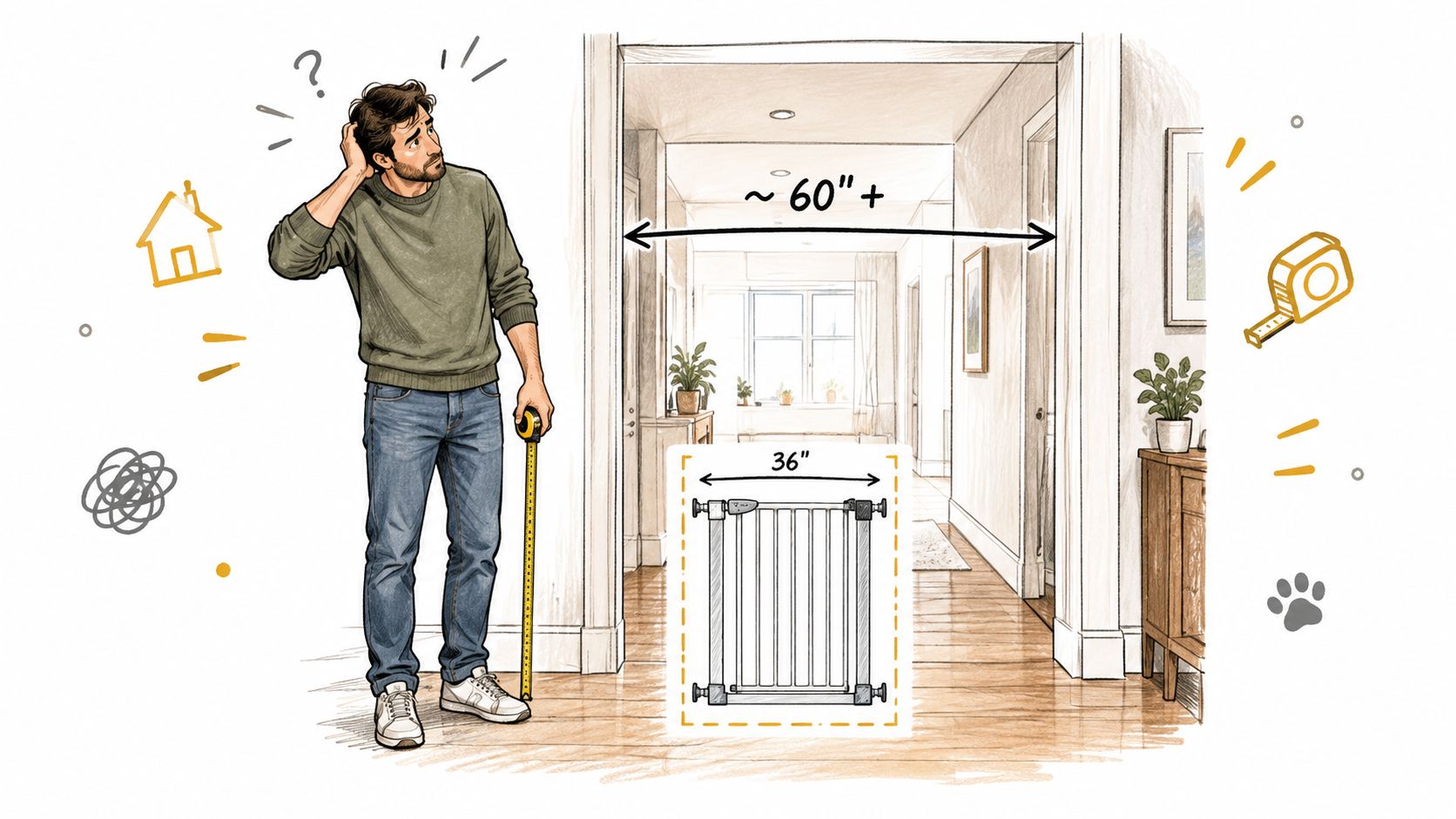
What people miss is that extra long pet gates are not one neat product category. They are a family of fit problems, some are about span, some are about stability, and some are about whether the gate can survive a dog who leans, jumps, or slams into the middle panel.
A giant-breed owner has a different headache than someone blocking a cat from the laundry room. If your dog is big, strong, or persistent, the gate has to stay rigid across the whole opening, not just look long enough from across the room. A gate stretched to its limit moves more, flexes more, and gives the latch more chances to drift out of alignment.
Practical rule: If the opening is weird, wide, or slightly crooked, start by thinking like an installer, not a shopper.
That's why the widest catalog number is often the wrong starting point. Walls are rarely parallel, trim eats usable width, and a gate that fits “on paper” can still leave gaps at the side or bottom once it's mounted. For giant dogs and wide openings, I'd rather see a shorter, sturdier setup that fits properly than a giant span running at the ragged edge of its range. For breed-specific layout context, the giant-dog page at giant size dogs is a useful way to think about how much force your gate may need to handle.
Measure the Opening the Way Installers Do
Measure the opening at the top, middle, and bottom, then use the smallest number as your working width. That sounds fussy until you meet a wall that bows, a doorway that flares, or trim that steals just enough space to make a latch bind.
The usable span is the number that matters, not the sales label. A gate-plus-extension setup has to fall inside the manufacturer's approved range, because clearing the raw opening is not the same thing as fitting securely once the hardware is attached. Leave yourself a little margin so the latch closes cleanly and doesn't scrape every time the frame flexes.
What to account for while measuring
- Baseboards and molding: These reduce usable space, especially when the lower rail sits lower than the trim.
- Out-of-plumb walls: A wall that leans slightly can make the top measurement lie to you.
- Angled or arched openings: These change where the gate touches, so the widest part is not always the actual working span.
- Extension joints: Every added connector is another place for flex, so the final assembly matters more than the box size.
Measure twice, but measure at three heights first.
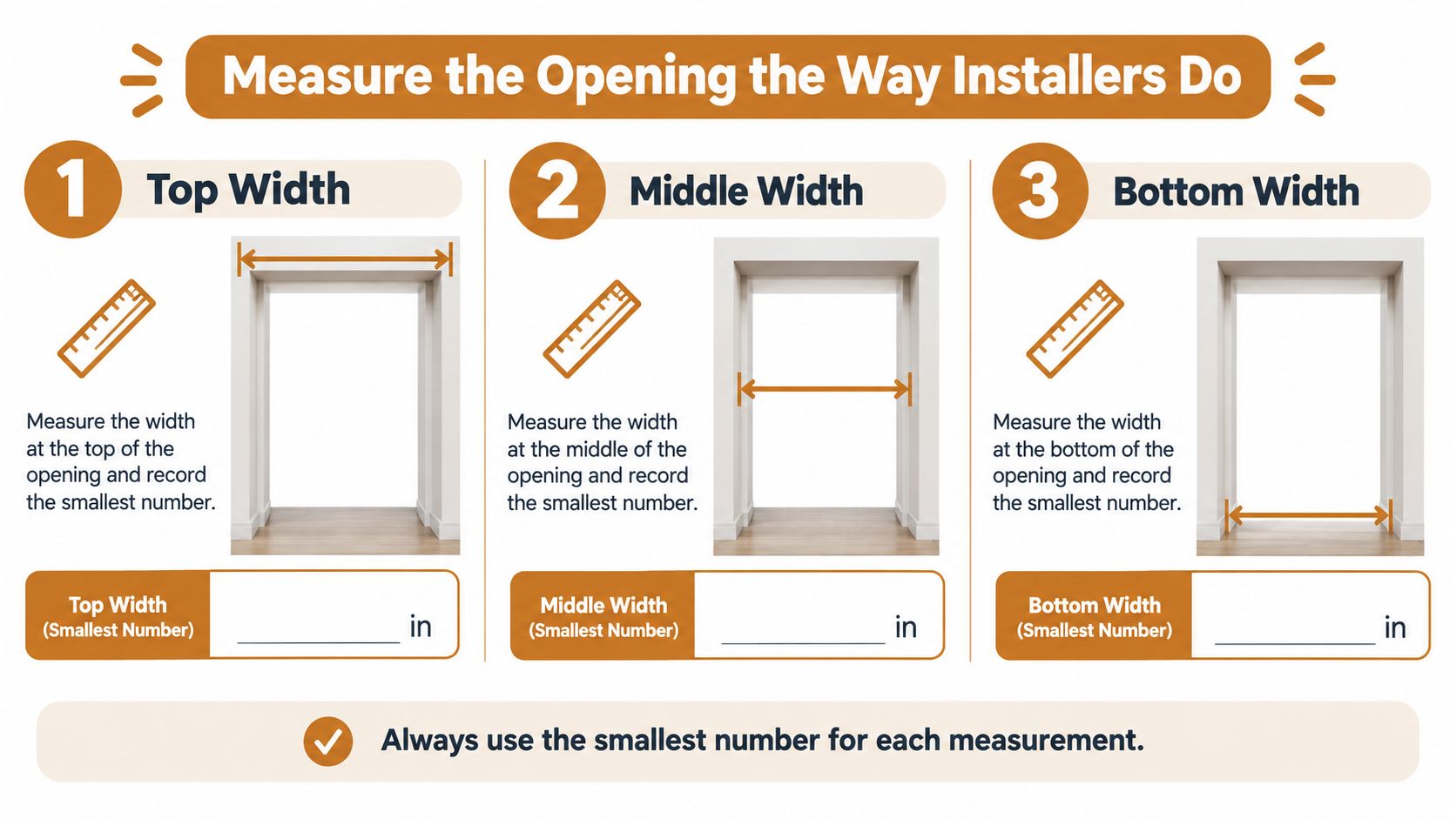
The point is to plan around the tightest part of the opening. If the gate sits even slightly proud of the trim or pinches against an uneven wall, the latch can start binding long before the dog ever touches it. For a quick way to sanity-check the numbers before buying, the opening calculator is the kind of tool that saves you from guessing wrong and returning hardware on a Sunday.
Match the Mount Type to the Layout
The right mount type depends on where the gate is going and how much force it needs to absorb. A pressure-mounted gate can be fine in a doorway, but that same setup becomes a bad idea the moment you ask it to behave like a barrier at the top of stairs.
| Gate Mount Types and Where Each One Works | ||||
|---|---|---|---|---|
| Mount type | Best for | Not suitable for | Stability under a large dog | Wall damage |
| Pressure-mount | Doorways, hallways, temporary room blocking | Top of stairs, uneven surfaces, forceful chargers | Fair to poor | Low |
| Hardware-mount | Stairs, high-traffic openings, strong or persistent dogs | Rentals where drilling is not allowed without approval | Strong | Higher |
| Freestanding | Short-term containment in open rooms | Stairs, dogs that lean or push hard | Low | Low |
| Extra-tall hardware gate | Climbers and jumpers who also need a rigid barrier | Loose, temporary setups | Strong | Higher |
Pressure-mounted gates are fast and renter-friendly, but they depend on tension staying consistent. That works in a flat doorway with light use, then falls apart faster when a big dog leans into the center or the wall surface isn't perfectly square. Hardware-mounted gates, by contrast, screw into studs or solid framing and handle stairs and heavy traffic with much more confidence.
Freestanding gates solve a different problem. They're useful when you just need to section off part of a room and don't want to drill, but they tip more easily under a large dog. Extra-tall gates are about jump control, not width, and they're only worth it if the mounting method is sturdy enough to support that extra height.
For a side-by-side breed and layout look, breed comparison pages help frame the problem the right way. A wide doorway in a calm home does not need the same setup as a stair landing where a dog barrels through every morning.
Installing an Extra Long Gate Without the Flex
Start by finding solid framing or studs before you touch a drill. Long assemblies put more stress on the anchors, and if the gate-plus-extension combination isn't inside the manufacturer's approved range, you should not force it into place just because the opening is close enough.
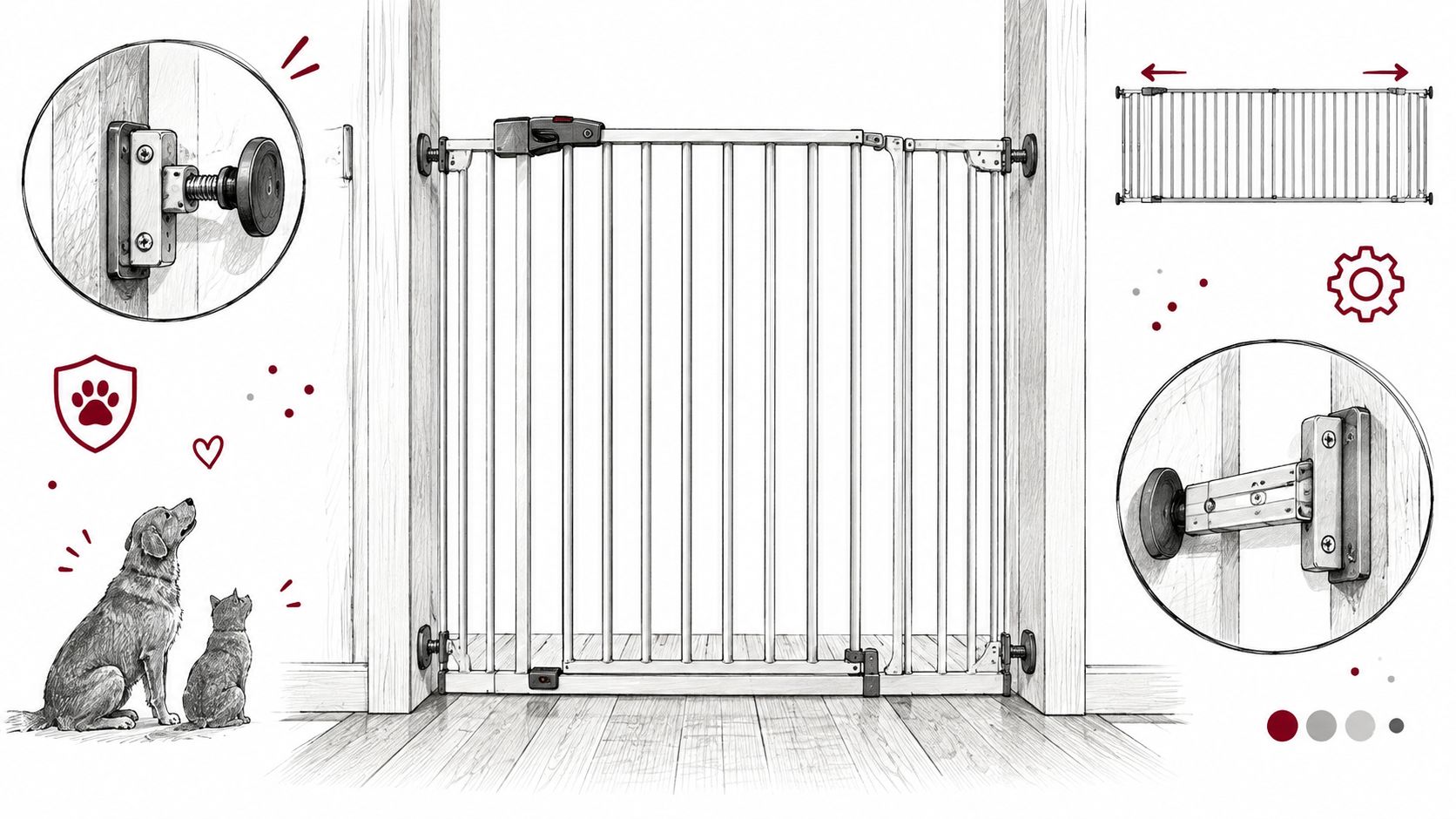
Dry-fit the panels first. Then attach wall cups or brackets loosely, square the frame, and only after that tighten everything down. That order matters because a long span will telegraph every tiny mistake, and even a small twist can throw off the latch or leave a bypass gap against an uneven wall.
The best quick test is brutally simple. Close the gate, push firmly at mid-height for 10 seconds, then do the same at the center and each extension joint. If the frame shifts, rattles, or opens the latch even slightly, it's not ready.
A few failure modes show up again and again with wide assemblies:
Common install problems
- Latch misalignment: One side carries more load, so the latch stops lining up cleanly.
- Bypass gaps: The gate meets an out-of-plumb wall and leaves a space a pet can squeeze through.
- Loose tension: Pressure-fit hardware settles over time, which means what felt solid on day one can drift.
- Bad surface choice: Drywall alone is not a proper anchor point for a permanent install.
Recheck fastener tightness, alignment, and floor clearance after the first day, after any impact, and at regular intervals. If you're using a pressure-mounted setup, repeat the mid-height pressure test weekly, because a long span has more opportunity to flex than a standard doorway gate.
The same install can feel rock solid or annoyingly sloppy depending on how well the brackets meet the wall. I'd rather spend an extra 15 minutes getting the frame square than live with a gate that squeaks, drifts, and never quite closes right.
Size the Gate to the Dog, Not the Doorway
The doorway sets the span, but the dog sets the true spec. A tiny dog, a climber, and a hard-charging retriever all need different answers, even if they're trying to go through the same opening.
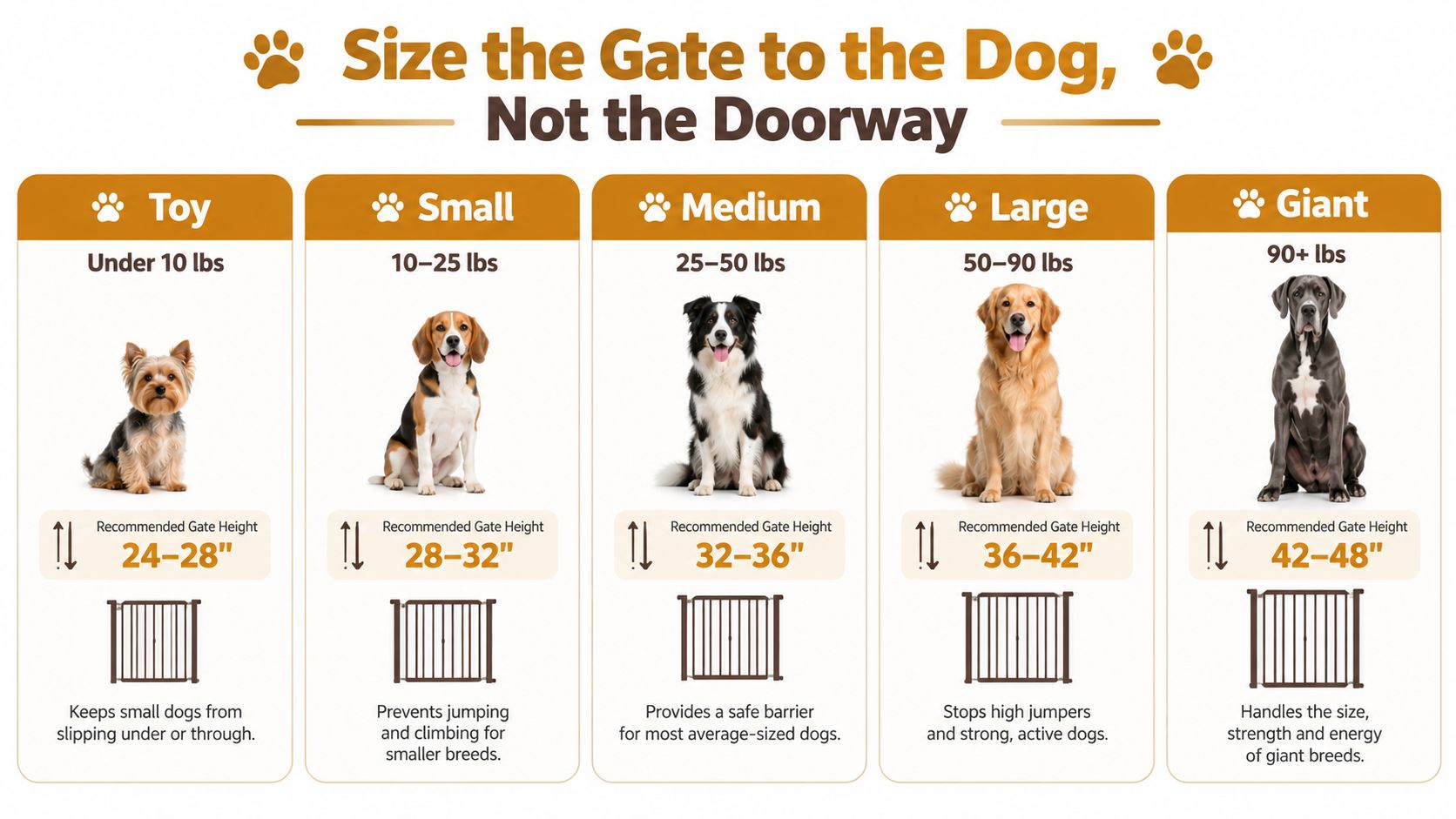
Toy and small dogs need tighter spacing so a head or shoulder can't slip through an opening that looks harmless to you. Medium and large dogs push the conversation toward latch height, jump resistance, and whether the gate can stay upright when a body hits the center instead of just the end. Giant dogs are where flimsy hardware gets exposed fast, because a little flex turns into a lot of motion very quickly.
Chew behavior matters just as much. AKC says metal gates are usually the most durable and chew-resistant choice for persistent chewers, while wood gates need pet-safe finishes. If your dog gnaws, scrapes, or mouths the bars, I'd treat metal as the default and wood as the exception.
Read the dog before you pick the gate
- Chewers: Choose metal first, because softer materials give in.
- Climbers: Go for the most vertical gate you can find, and if mounting allows, angle it slightly inward at the top.
- Pushers: Focus on frame rigidity and latch quality, not just gate height.
- Tiny escape artists: Pay attention to bar spacing and bottom clearance, because a wide gate that blocks a Lab can still fail a small dog.
The body shape and behavior matter as much as breed label. A calm dog that never tests boundaries can live with a simpler barrier, while a charged-up climber needs a gate that resists effort from the first shove. For larger breeds, the large dog breed page is a good reference point for thinking about how much structure you need.
Why Top of Stairs Changes the Whole Decision
At the top of stairs, the gate is not just about containment. It is a fall-prevention barrier, and that changes the standard completely.
Pressure-mounted gates do not belong there. The threshold bar becomes a trip hazard, and any looseness can create a gap that a child or pet could fall through. Convenience does not cancel gravity, and a wide span makes the consequences of a bad choice worse.
Hardware-mounted gates are the right answer because they anchor into studs or solid framing and stay put under load. Use the fasteners made for the wall material, and choose a latch that a dog cannot pop open with one paw or a shoulder bump. Bottom-of-stair setups are different, because they're usually about containing movement rather than preventing a fall, so a pressure-mounted gate can sometimes be acceptable there if the surface is square and the install is stable.
Hard line: If the opening is at the top of the stairs, drill the gate in.
That's the clean way to describe the need. Don't call it a hallway gate if it sits at a stair landing, and don't accept a pressure-fit shortcut because it feels easier that afternoon. A stair landing needs a barrier that behaves like part of the house, not a tension device hoping the wall keeps cooperating.
Pre-Purchase Checklist and the Inspection Habit
Before you buy, run the same three-part check every time. First, confirm the opening at the top, middle, and bottom, and use the smallest number. Second, decide whether the site is a doorway, hallway, or stair landing, because that tells you whether pressure-mount or hardware-mount belongs there. Third, match the gate to the dog's size, jumping habit, chew strength, and push behavior.
Quick buy-or-skip checklist
- Fits the usable span: Not just the marketing width, the actual opening with trim and irregularities counted in.
- Matches the mount type: Pressure-fit for simple level openings, hardware for stairs and strong dogs.
- Closes cleanly: The latch should engage without forcing.
- Blocks the dog's body: Bar spacing, height, and bottom clearance should fit the animal you actually own.
- Survives a shove: If the frame flexes in a test push, keep shopping.
The inspection habit is what keeps the gate useful after the honeymoon period. Test the closed gate weekly with firm pressure at mid-height, and check the latch and fasteners on a regular schedule. If the gate gets hit, bumped, or shifted, inspect it right away instead of waiting for the next planned check.
That's especially true with extra-long pet gates, because long spans carry more ways to fail than a standard doorway panel. A little attention buys you a lot of safety, and a sloppy install turns a good gate into a nuisance fast. For breed-specific planning that goes beyond the hardware itself, American Water Spaniel breed guidance can help you think about fit and behavior before you order anything.
PetCostEngine helps dog owners make better decisions by connecting breed, state, and age to the costs and risks that shape life with a dog. If you're weighing a wide gate, a jumpy dog, or a whole-home setup, visit PetCostEngine for tools that turn guesswork into a clearer plan.
Estimated lifetime and yearly costs for a Compare, state by state, plus whether pet insurance breaks even for the breed.
See Compare costs →
Is insurance worth it for a Compare? →
Joint supplement → Puzzle toys → No-pull harness →
As an Amazon Associate, PetCostEngine earns from qualifying purchases.