A healthy puppy generally needs a full bath only every 4 to 12 weeks, while puppies under 8 weeks old should be spot-cleaned with a warm, damp cloth to reduce the risk of chilling. The right schedule depends on the puppy's coat, activity, contamination, and skin health, not on a rigid weekly calendar.
The popular advice that every puppy needs a weekly scrub confuses human grooming habits with canine skin care. A clean-smelling coat isn't automatically a healthy coat, and repeated shampooing can create the dryness, itching, or irritation that makes owners wash even more often. The better question isn't just how often should you wash a puppy. It's whether the puppy needs a whole-body bath at all.
Table of Contents
- Establishing a Safe Baseline for Puppy Baths
- Adjusting the Schedule for Coat and Lifestyle
- Executing a Stress-Free Bathing Technique
- Recognizing When Odor Requires Veterinary Triage
- Post-Bath Drying and Ear Care Essentials
Establishing a Safe Baseline for Puppy Baths
Why young puppies need extra caution
Puppies younger than approximately 8 weeks generally shouldn't receive routine full baths because their temperature regulation is still immature. Getting chilled can become a serious problem, especially when a very young puppy stays wet for too long. For a small mess on the paws, belly, or rear, use a warm, damp cloth and dry the area promptly.
After about 8 weeks, you can introduce a short bath when one is necessary. Use lukewarm water and a shampoo formulated for dogs. Early exposure can be as simple as handling the paws, touching the coat with a wet washcloth, or allowing the puppy to stand briefly on a secure, nonslip surface. The aim is calm familiarity, not a long cleansing session.
The Royal Veterinary College's puppy care guidance also emphasizes that puppies don't need regular bathing and that gentle pet shampoo should be used when bathing is necessary. That advice matters because normal puppy odor isn't the same as contamination. A puppy who smells mildly like a dog but has a clean, comfortable coat usually doesn't need immediate washing.
A practical interval for healthy puppies
For a healthy puppy, veterinary guidance places the usual full-bath interval at roughly every 4 to 12 weeks, with coat type, outdoor activity, dirt exposure, odor, and skin condition determining the exact timing (Virginia-Maryland College of Veterinary Medicine). A practical baseline for many indoor puppies is about once every four weeks. A puppy who stays clean and odor-free may need a bath only every one to three months.
Practical rule: Treat the calendar as a planning aid, not a command. Treat visible contamination and skin health as the deciding factors.
Mud, feces, urine, grease, or an irritating substance can justify cleaning sooner. Normal dust, a slightly dull coat, or ordinary puppy smell often responds better to brushing or a localized wipe-down. Repeated detergent exposure can remove protective oils and contribute to dry, brittle hair or itchy skin, which is one reason a less frequent routine often works better.
Breed-specific grooming information can help you anticipate coat-management needs, but it shouldn't replace an assessment of the individual puppy. You can compare coat and health characteristics through PetCostEngine's breed reference pages.
Adjusting the Schedule for Coat and Lifestyle
A monthly bath may suit one puppy and be excessive for another. Coat texture, oil production, time outdoors, swimming, mud exposure, and climate all change how quickly a coat becomes dirty. Brushing also changes the equation because it removes loose hair and surface debris without repeatedly exposing the skin to shampoo.
Oily-coated dogs may tolerate or require more frequent bathing than puppies with dry skin. Thick double coats generally benefit more from consistent brushing than from frequent full baths. A double coat can hold moisture close to the skin, so washing without thorough drying creates its own problems.
Use the coat as part of the decision
The table below gives a starting point, not a substitute for veterinary advice. The ASPCA notes that most dogs are bathed at least once every three months, while dogs that spend substantial time outdoors or have skin problems may need more frequent bathing (ASPCA dog grooming guidance). The AKC also notes that some dogs can tolerate weekly bathing with a gentle dog shampoo, depending on the individual coat and condition (AKC bathing guidance).
| Coat / Lifestyle Profile | Recommended Interval | Primary Maintenance Tool |
|---|---|---|
| Healthy indoor puppy with a typical coat | About every 4–6 weeks, or monthly | Brushing and spot-cleaning between baths |
| Clean, low-activity puppy with little odor | Every one to three months | Regular brushing and a warm damp cloth for minor messes |
| Oily-coated puppy | As often as weekly when the coat genuinely requires it | Gentle dog shampoo and frequent coat checks |
| Thick double-coated puppy | Less often than an oily-coated dog | Thorough brushing and complete drying |
| Puppy frequently outdoors or exposed to mud | Based on contamination, with rinsing or spot-cleaning when possible | Brush-out, warm-water rinse, and localized cleaning |
| Puppy in a humid environment | Two to four baths monthly may be tolerated more readily when needed | Careful drying and coat maintenance |
| Puppy in a dry environment | Monthly or less often is often preferable when clean | Brushing and limited detergent exposure |
Climate affects tolerance, but it doesn't automatically create permission for frequent shampooing. Veterinary dermatology guidance notes that humid conditions may allow bathing two to four times monthly more readily than dry conditions, while drier environments favor monthly or less often when the puppy remains clean (veterinary dermatology review). A dry home, heated indoor air, or naturally sensitive skin can make over-washing noticeable sooner.
Swimming deserves separate attention. Clean water exposure isn't necessarily a shampoo event, but lake, pool, or salt water should be rinsed from the coat with clean water. If the puppy comes home covered in mud or another contaminant, clean the affected areas promptly rather than waiting for the next scheduled bath.
A breed with an active, water-loving profile, such as an American Water Spaniel, may need a different maintenance rhythm from a sedentary puppy. The coat still gets the final say. If it's clean, comfortable, and free of persistent odor, more shampoo usually isn't the answer.
Executing a Stress-Free Bathing Technique
The quality of the bath matters as much as the interval. A rushed wash with cold water, slippery footing, or shampoo left in the coat can teach a puppy to fear bathing and can irritate the skin. Prepare everything before the puppy enters the tub so you aren't reaching for supplies with a wet, unsettled dog.
Prepare before adding water
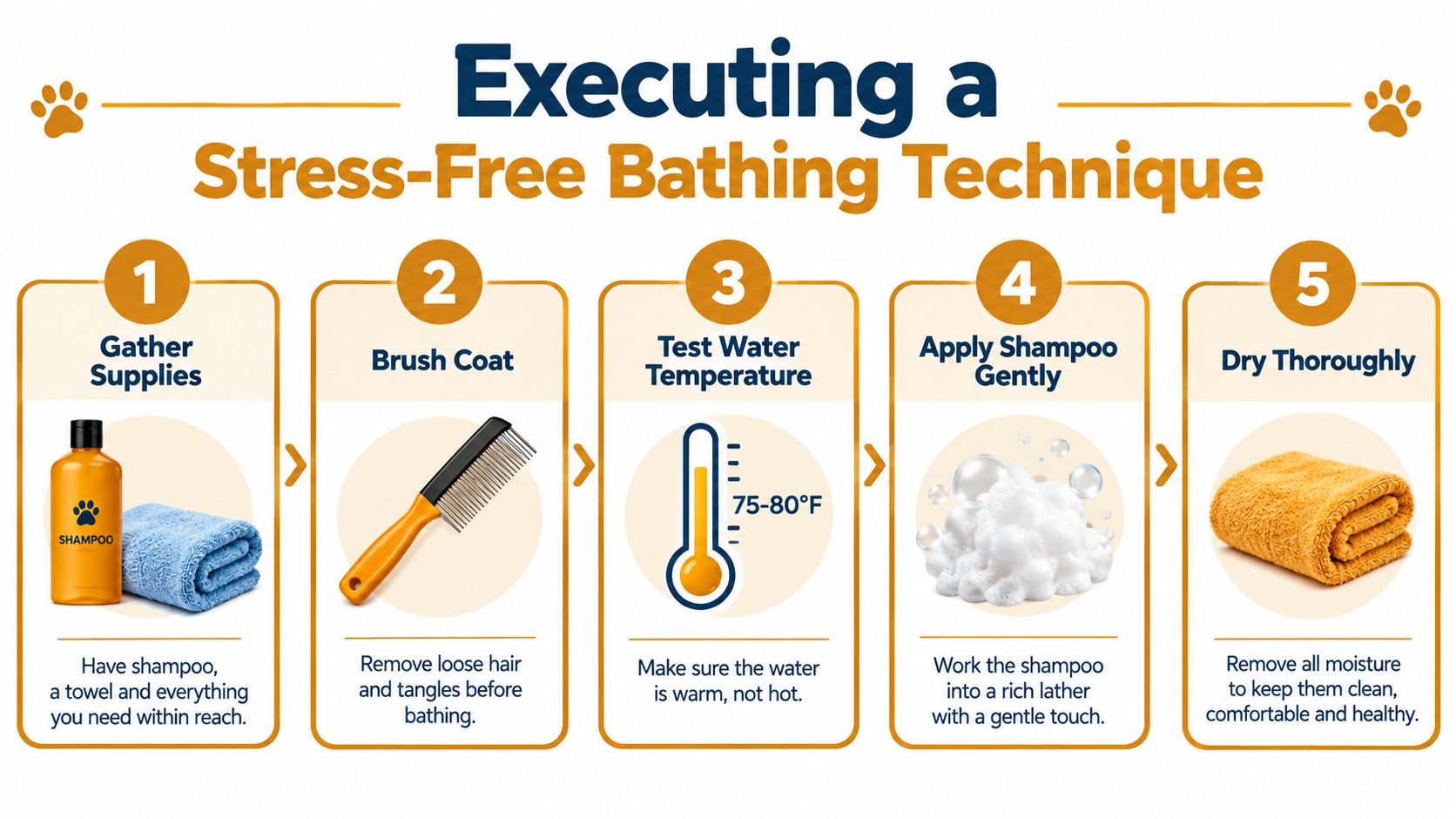
Brush first. Remove loose dirt, debris, and mats before wetting the coat. Water tightens mats and makes them harder to remove without pulling the skin.
Secure the area. Use a nonslip mat or towel on the tub floor. Place shampoo, towels, a cup or sprayer, and treats within reach. A stable surface helps the puppy focus on you instead of struggling to stand.
Test the water. Use lukewarm water, never hot. The infographic shows a range of 75–80°F, but your hand should still confirm that the water feels comfortably mild before it touches the puppy.
Wet gradually. Start at the shoulders and work toward the body. Avoid spraying directly into the eyes and ear canals. Use a washcloth around the face instead of aiming water at the head.
Apply dog shampoo carefully. Use a puppy-formulated product and follow the label. If dilution is directed, dilute it. Massage gently through the coat rather than scrubbing aggressively, especially over irritated skin.
Rinse longer than you think. Lift and separate the coat so water reaches the skin. Continue until no slippery residue remains. Incomplete rinsing is a common cause of post-bath irritation because leftover product stays against the skin.
Keep the session calm. Speak normally, reward cooperation, and stop if the puppy becomes chilled, panicked, or overly tired. Short, successful sessions build tolerance more effectively than forcing a long bath.
A puppy with a dense or curly coat, such as a Poodle, may require extra attention during wetting and rinsing because water and product can hide beneath the surface. The coat must be thoroughly saturated and thoroughly rinsed, not merely dampened on top.
For a visual demonstration of handling and bathing flow, watch this bathing guide:
Recognizing When Odor Requires Veterinary Triage
A dirty puppy needs a bath. A puppy who smells bad again right after bathing needs a different response. That difference matters, because repeated washing can mask a skin problem for a few days while irritation, infection, or inflammation keeps building underneath.
Treat odor as a clue, not a schedule trigger. Mud, urine, or feces on the coat is a grooming problem. A stale, greasy, yeasty, or sour smell that comes back fast, especially with scratching or redness, is a medical pattern until proven otherwise.
Watch for odor that shows up with other skin changes:
- Persistent itching: Scratching, chewing, licking, or rubbing continues after the coat is clean.
- Greasy skin: The coat feels oily, sticks together, or gets slick again soon after a bath.
- Scaling or dandruff: Flakes, crusts, redness, or visible irritation remain.
- Hair loss: Thinning, bald spots, broken hairs, or repeated coat damage appear.
- Recurring debris or discharge: Material keeps collecting on the skin, in folds, or around the ears.
- Frequent bathing needs: You feel like the puppy needs another bath in less than two weeks just to control odor or discomfort.
That last point is one I tell owners to take seriously. Guidance from Virginia-Maryland College of Veterinary Medicine recommends veterinary evaluation when odor, greasiness, itching, or scaling leads to bathing more often than every two weeks (veterinary bathing guidance). At that stage, more shampoo does not answer the underlying question. The cause may be allergies, parasites, infection, seborrhea, or another skin disorder.
Medicated baths follow different rules
Medicated bathing is treatment, not routine cleanup. The product, how long it stays on the skin, how often it is used, and when it should be stopped all depend on the diagnosis. A veterinary dermatology review describes leaving an indicated shampoo in contact with the coat for about 5–10 minutes and then rinsing very thoroughly (dermatology treatment review).
That protocol can look very different from normal puppy bathing. Some diagnosed skin conditions need bathing every 1–2 weeks, while severe cases may briefly need daily treatment under veterinary direction. Seborrhea may start with weekly baths, and severe oily seborrhea may initially need baths every 3–4 days before the schedule is reduced. Those frequencies belong to a medical plan for a diagnosed problem, not to a healthy puppy with ordinary dirt.
Research also shows why diagnosis and technique matter more than blindly washing more often. A 2024 randomized controlled study in dogs with atopic dermatitis found that weekly bathing over four weeks had different effects depending on the method used, with fine-bubble bathing improving lesion scores and shampoo bathing causing a slight increase in measured water loss (the 2024 atopic dermatitis study).
Breed can add another layer. A puppy with facial folds or heavier skin folds, such as a Basset Hound, may develop odor in tucked-away areas that need inspection, not just another bath. If the smell is persistent, greasy, itchy, or paired with discharge, call your veterinarian before changing shampoos or increasing bathing frequency.
Post-Bath Drying and Ear Care Essentials
The bath isn't finished when the water stops. A damp puppy can become chilled, and moisture trapped in a dense coat or floppy ear can keep irritating the skin after the visible surface looks dry. Move directly from rinsing to controlled drying.
Dry the coat without overheating
Use towels to press and squeeze water from the coat rather than rubbing hard, which can tangle hair and agitate the skin. Keep the puppy in a warm, draft-free area until fully dry. A human hair dryer on high heat can burn sensitive skin and frighten a young dog. If a dryer is necessary and the puppy tolerates it, use low heat, keep it moving, and stop if the puppy shows distress.
Check beneath the chest, around the armpits, between the legs, and under the collar. These areas hold moisture easily. A thick-coated puppy may feel dry on the surface while remaining damp near the skin, so use your fingers to assess the coat instead of relying only on appearance.
Protect the ears and end positively
Dry the outer ear gently with a soft towel. Don't push cotton swabs into the ear canal, and don't pour water into the ears. If your veterinarian has recommended a canine ear cleaner, follow that product's directions. Don't use household products or improvise a cleaning solution, especially if the puppy has pain, redness, odor, or discharge.
Floppy-eared breeds, including the Bichon Frise, may need careful attention to moisture around the ear leather and surrounding coat. Ear shape alone doesn't diagnose an infection, so persistent odor, head shaking, scratching, or tenderness warrants a veterinary check.
Finish with a high-value treat, calm praise, and a short play session if the puppy is comfortable. The reward should follow cooperation and drying, not panic. Over several brief sessions, that predictable ending can make future bathing easier.
PetCostEngine provides breed- and state-based ownership projections that include grooming and veterinary categories, which can help you plan broader care alongside your puppy's bathing routine. Visit PetCostEngine to explore the calculator, breed health references, and planning tools for your dog.
Estimated lifetime and yearly costs for a American Water Spaniel, state by state, plus whether pet insurance breaks even for the breed.
See American Water Spaniel costs →
Is insurance worth it for a American Water Spaniel? →
Crate and bedding → Durable chews → Premium dry food →
As an Amazon Associate, PetCostEngine earns from qualifying purchases.