

You've brushed the dog, filled the vacuum, and found another layer of hair on the couch before the day is over. That's normal for many dogs, especially when a seasonal coat change loosens the undercoat. The practical answer isn't finding a brush that stops shedding forever. It's learning how to deshed a dog at home safely, using a tool that fits the coat and a routine you can repeat.
The most important decision comes before brushing. Normal shedding calls for controlled maintenance, while sudden hair loss, skin irritation, or bald areas may call for veterinary care first. Once the coat passes that check, the right combination of preparation, technique, and timing can remove loose hair without scraping the skin or turning grooming into a struggle.
Table of Contents
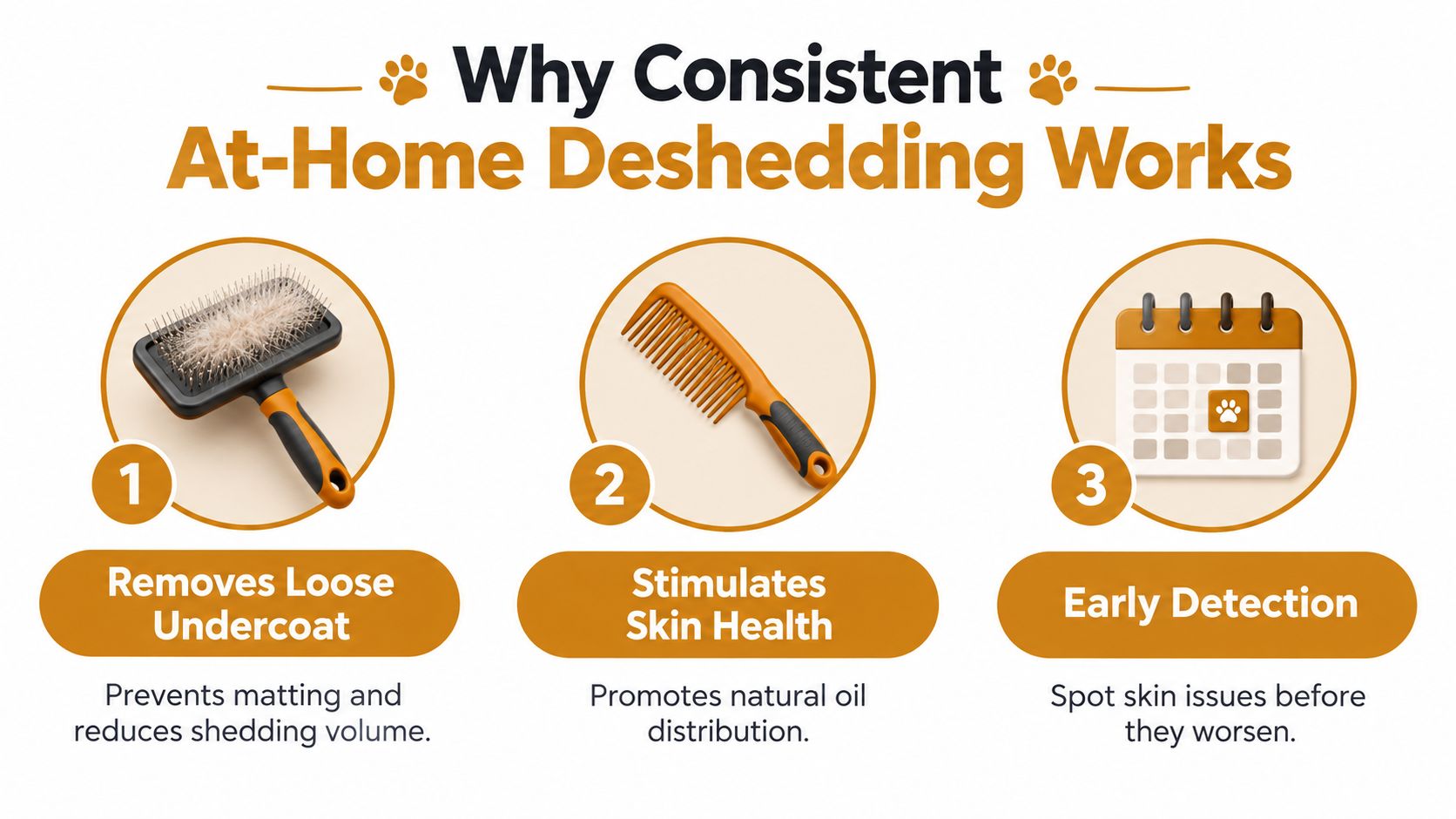
- Why a Consistent At-Home Deshedding Routine Works
- Choosing the Right Deshedding Tools for Your Dog's Coat Type
- How to Deshed a Dog at Home Step by Step
- Frequency, Timing, and Skin Care Tips for Ongoing Shedding Control
- When Shedding Signals a Problem and You Should Consult a Groomer or Vet
- Key Takeaways for Successful At-Home Dog Deshedding
Why a Consistent At-Home Deshedding Routine Works
A dog's coat is always changing. Old hair loosens as new hair grows, and the amount released depends on breed, coat structure, season, and health. Brushing cannot stop that process. It can collect loose hair before it settles on floors, clothing, and furniture, while keeping the coat easier to inspect and manage. Texas A&M Veterinary Medicine recommends brushing at least three to four times per week for five to ten minutes, with extra attention during heavier spring and fall shedding.
The routine should match the coat, not just the amount of hair on the floor. A dense double coat may need patient work through the undercoat, while a short, smooth coat often responds better to gentler surface brushing. Long or curly coats can hold loose hair in tangles, so forcing a tool through resistance creates more risk than benefit. Coat characteristics vary by breed, and the PetCostEngine breed reference can provide background when you are assessing what kind of coat your dog has.
Short, repeated sessions are usually easier for the dog and the handler than an occasional aggressive “blowout.” Regular handling also creates useful inspection time. You may notice mats, parasites, sores, dandruff, or a change in skin texture before the problem becomes harder to address. The objective is controlled maintenance, not removing every loose hair in one sitting.
Normal shedding versus a warning sign
Seasonal shedding usually means more hair on the brush without a change in the dog's comfort, behavior, or skin. The coat should remain reasonably even, and the skin should not look inflamed or painful. The ASPCA's dog grooming guidance notes that shedding varies with breed, season, and health, and that normal shedding can be reduced but not stopped.
Pause grooming and arrange professional advice if shedding comes with itching, redness, sores, bald patches, unusual scratching, or visible skin changes. Those signs can point to a skin or health problem that brushing will not solve. A veterinarian should assess abnormal hair loss before you increase grooming pressure or frequency.
Why intensity is the wrong goal
A brush full of hair does not prove that the session was effective. Pressing harder, dragging repeatedly over one patch, or forcing a tool through tangles can irritate skin and break healthy coat hair. Work in small areas, clear the tool regularly, and stop when the coat releases hair without resistance. Good deshedding leaves the dog comfortable and the coat functional.
Choosing the Right Deshedding Tools for Your Dog's Coat Type
A popular deshedding tool isn't automatically the right tool for your dog. Short coats, double coats, long coats, and curly coats hold loose hair differently, so the safest setup often combines a surface brush with a comb or undercoat tool.
For a short-haired dog, a rubber grooming mitt, soft bristle brush, or rounded-tip brush can collect surface hair without the aggressive scraping that some metal tools create. A short coat can still shed heavily, so coat length alone doesn't tell you how much hair will come out. For a dense double coat, an undercoat rake or purpose-built deShedding tool can reach loose hair beneath the guard coat, but it needs a light hand.
Long coats need preparation before deshedding. A slicker brush can separate and loosen hair, while a metal comb checks whether the brush has reached through the coat. If the comb catches, don't keep pulling with a rake. Work out the tangle with a comb or dematter, or ask a groomer to handle severe matting.
Curly coats call for a different mindset. A slicker brush can separate curls and locate tangles, while a metal comb helps confirm that the coat is clear. Heavy rakes and blades can remove or break the wrong hair and may be difficult to control close to the skin.
| Tool Type | Best For | Main Strength | Key Caution |
|---|---|---|---|
| Rubber grooming mitt | Short, smooth coats | Collects surface hair with gentle contact | May not reach a dense undercoat |
| Slicker brush | Curly, long, or moderately dense coats | Separates hair and loosens surface tangles | Excessive pressure can irritate skin |
| Pin brush | Short or medium coats, depending on pin length | Smooths the topcoat and distributes loose hair | Pins may skim over a thick undercoat |
| Undercoat rake | Double-coated and heavy-coated dogs | Reaches loose undercoat efficiently | Can pull healthy coat or scrape skin if used forcefully |
| DeShedding blade or tool | Dense coats with substantial loose undercoat | Removes loose hair quickly | Requires careful pressure and correct coat matching |
| Metal comb | Long, curly, or tangled coats | Finds knots and checks whether brushing reached the skin | Pulling through mats can hurt the dog |
The American Kennel Club's guidance on shedding dogs supports brushing heavily shedding dogs several times a week or daily during peak periods. It also describes brushing against the direction of growth before brushing with the direction of growth. Use that sequence gently, and adjust it to your dog's tolerance rather than treating it as a contest.
A breed with a dense, water-resistant coat, such as an American Water Spaniel, may need more than one tool to reach loose hair without damaging the topcoat. The best setup is the one that removes loose hair while your dog remains relaxed and the skin stays normal.
Tool-matching rule: If a tool snags repeatedly, leaves red marks, or makes your dog pull away, stop treating it as the solution. Change the tool, reduce pressure, or get hands-on help.
How to Deshed a Dog at Home Step by Step
Start in a quiet, well-lit area where your dog can stand or sit without slipping. Put the brush, comb, treats, waste container, and a towel within reach so you won't need to leave the dog unattended. A calm introduction matters. Let your dog sniff the tool, touch it to an easy area, and reward relaxed behavior before you begin longer strokes.
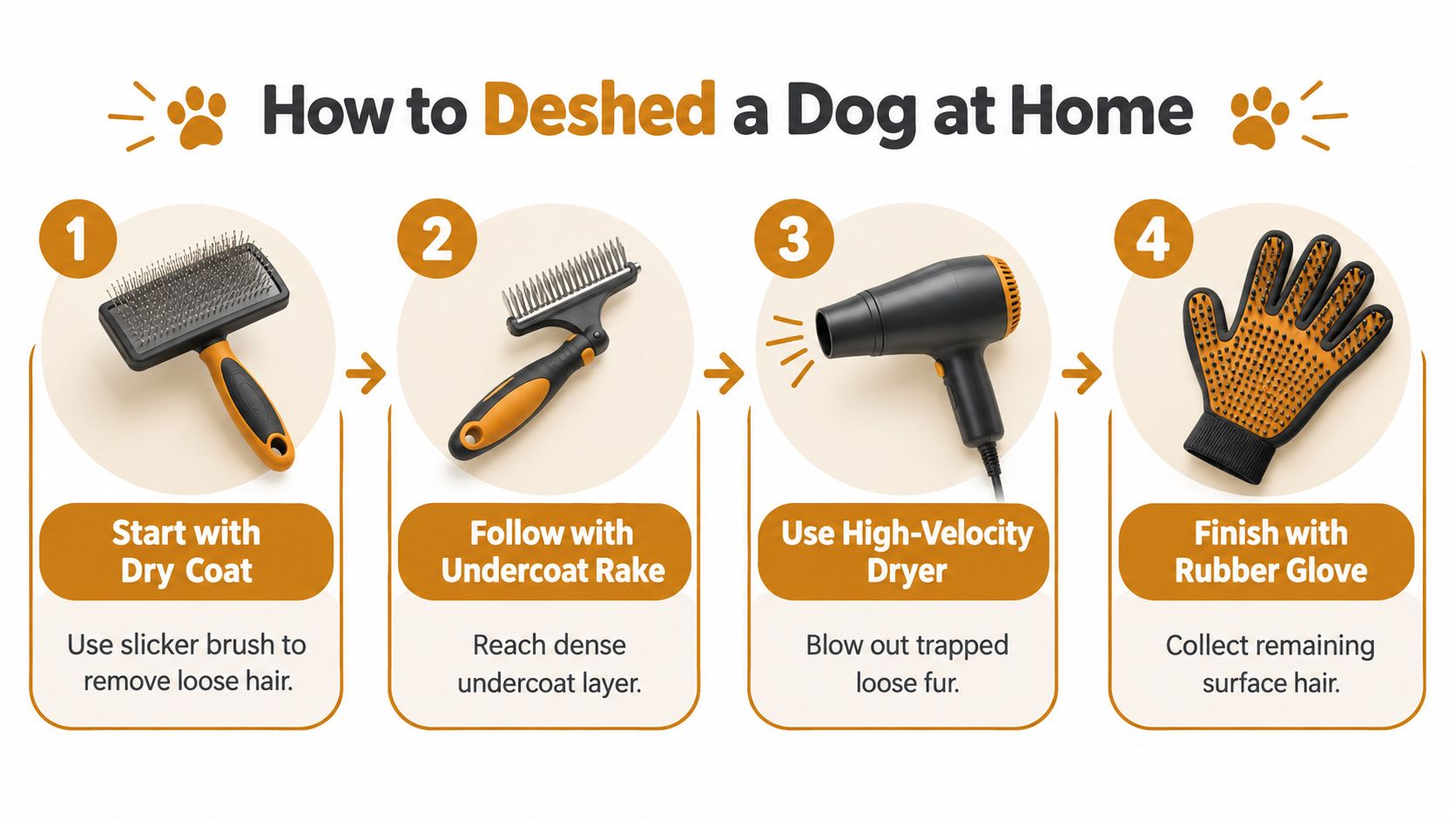
The coat should be clean and dry before serious deshedding. Check the body with your hands and eyes for sores, bruises, mats, scabs, or sensitive areas. PetSmart's deshedding guidance recommends brushing a clean, dry coat and using gentle pressure with long, smooth strokes. If you find a mat, don't bury a deShedding tool in it. Separate the tangle with a comb or dematter, or stop if it resists.
Work in small sections
Begin where your dog is most comfortable, often the shoulder or side, rather than starting at a sensitive area. Hold the coat brush so it contacts the hair without pressing the teeth into the skin. On a dense coat, lift a manageable section and brush through it progressively instead of dragging across the entire body in one pass.
For a double coat, a gentle pass against the direction of hair growth can loosen undercoat. Follow with the direction of growth to smooth the topcoat and carry loosened hair away. Keep strokes long and controlled, and clear the tool frequently. A clogged brush stops collecting hair and encourages you to press harder.
Take extra care behind the ears, beneath the front legs, around the collar, and near the tail base. These areas move, rub, and tangle easily. Use your fingers to keep skin from folding under the tool, slow your strokes, and switch to a comb when the hair becomes compact.
Finish without overworking the skin
After the undercoat work, make a final pass in the direction of growth. This smooths the surface and helps you identify patches you missed. Run a metal comb through long or curly areas if the coat type allows it. The comb should pass through without persistent catching.
Give your dog breaks before the animal becomes restless. A short pause, calm praise, or a small training reward can make the next session easier. If your dog starts twisting, snapping, panting heavily, or trying to escape, stop rather than forcing completion.
A pet dryer may help remove trapped loose hair when used appropriately, but don't aim forceful air at the face, ears, or irritated skin. Never use heat to compensate for poor brushing technique. For owners caring for a dense-coated breed such as an Alaskan Malamute, professional guidance can be useful before attempting a major coat blowout.
If you're considering airflow as part of the process, this visual walkthrough shows the intended sequence:
Clean the brush between passes and remove the collected hair before continuing. When you finish, inspect the skin and coat again, then clean and store the tools dry. The session is successful when your dog remains comfortable, the coat looks even, and you haven't needed force.
Frequency, Timing, and Skin Care Tips for Ongoing Shedding Control
A workable routine follows the dog's coat, season, indoor environment, and skin condition. Heavy shedders and double-coated dogs may need regular deShedding sessions, while a smooth-coated dog often needs lighter surface brushing. Start with short sessions and adjust based on how much loose undercoat is coming away, whether the skin stays comfortable, and whether your dog remains relaxed.
Shedding often increases in spring and fall, but indoor dogs may release hair throughout the year. Waiting for a visible seasonal blowout can leave loose undercoat packed into the coat. Regular, moderate maintenance is easier on the dog and usually more manageable than trying to remove a large amount of hair in one session.
Bathing can support coat maintenance when the dog's skin tolerates it and the coat is dried thoroughly afterward. Use a dog-specific shampoo, rinse until no product remains, and avoid bathing just to force out hair from irritated skin. A dirty or damp coat can conceal redness, scabs, parasites, or other changes that should be assessed before brushing continues.
Make the routine easy to repeat
Brief, calm handling gives you more useful information than an occasional prolonged session. Keep the tools in the grooming area, follow the same order each time, and stop while your dog is still cooperative. If the coat tangles between sessions, improve consistency and change the tool or technique before applying more pressure.
Match the routine to the coat rather than relying on breed name alone. Dense undercoats need careful sectioning and controlled passes, while smooth coats may only require a gentle surface tool and a close skin check. Owners caring for a Siberian Husky's dense double coat should expect more undercoat management, but the dog's actual coat condition determines the approach.
Protect the high-friction zones
Behind the ears, under the armpits, around the collar, and at the base of the tail need slower work. Movement and friction can compact hair in these areas, making a rake uncomfortable. A detangling spray or comb may give you better control than forcing a deShedding tool through a tangle.
Never use a deShedding tool to cut through a mat. If hair sits close to the skin, the mat cannot be separated safely, or the dog reacts painfully, stop and arrange professional grooming. Before resuming any home routine, pause for veterinary advice if you notice bald areas, sores, marked redness, persistent scratching, or a sudden change in tolerance.
Skin check: Irritation or unusual hair loss calls for assessment, not harder brushing.
Brush a clean, dry coat when possible, avoid repeated passes over one patch, and inspect the skin after grooming. If the coat becomes thin or the skin looks irritated, reassess the schedule, pressure, and tool.
When Shedding Signals a Problem and You Should Consult a Groomer or Vet
A heavier coat on the brush does not automatically mean something is wrong. Normal shedding usually leaves the coat fairly even, with comfortable skin and a dog that accepts gentle brushing. Pause before choosing a tool if hair loss appears suddenly or comes with bald patches, persistent itching, scabs, redness, unusual dandruff, foul odor, or a change in behavior during brushing. Excessive licking, flinching, or guarding one area also needs attention.
Skin disease, allergies, parasites, and other health problems can look like an intense seasonal shed. A deShedding tool removes loose hair, but it cannot identify or treat the cause. Raking an irritated patch can increase discomfort, remove hair that is still protecting the skin, and make a veterinary examination harder.

Use the right professional first
Contact a veterinarian before continuing home deshedding when your dog has sores, bald patches, marked redness, unusual scratching, or a clear change in behavior. A vet can decide whether the hair loss reflects normal turnover, irritation, or a condition that needs treatment. The ASPCA's dog grooming recommendations also advise checking the dog's health rather than treating every increase in shedding as routine.
A groomer is usually the better first call for severe matting, coat damage, or difficult detangling when the skin shows no obvious medical problem. The groomer can remove compacted hair safely and demonstrate a maintenance method suited to the dog's coat. Inflamed skin, sores, or unexplained hair loss shift the priority to veterinary care.
Owners comparing professional grooming with home care can use the PetCostEngine grooming cost calculator for breed- and state-specific projections before deciding how much work to handle themselves.
A sensible schedule is still conditional
Guidance from the deshedding tool manufacturer describes heavier seasonal shedding in spring and autumn, with possible year-round shedding in warm indoor homes. It recommends checking for sores, bruises, mats, and skin conditions first, loosening tangles with a dematter or comb, and then using a deShedding tool. For heavy shedders and double-coated breeds, it gives once- or twice-weekly sessions of ten to twenty minutes as a practical benchmark. This deshedding guidance explains that sequence in detail.
Use that schedule only when the skin and coat look healthy. If your dog resists brushing, reacts painfully, or has matting beyond your skill level, stop and arrange professional help rather than increasing pressure.
Key Takeaways for Successful At-Home Dog Deshedding
Successful deshedding is less about collecting a huge pile of hair in one session and more about making each session safe and repeatable. Start with a clean, dry coat, inspect the skin, and choose a tool that matches the coat rather than the product's popularity.
Keep the core checklist simple:
- Match the tool: Use a rubber mitt or soft brush for many short coats, a slicker or comb for long and curly coats, and an undercoat tool only when the coat can safely handle it.
- Use light pressure: Work in small sections with controlled strokes, especially around the ears, armpits, collar, and tail base.
- Stay consistent: Follow a manageable weekly routine and adjust during heavier seasonal shedding.
- Watch the skin: Redness, sores, bald patches, persistent itching, and behavior changes call for a pause.
- Know when to outsource: A groomer can handle severe matting, while a veterinarian should assess suspicious skin or hair-loss changes.
Take a close look at your dog today. If the coat is healthy, begin with a gentle brush and a short session. If you see a warning sign, put the tool down and arrange professional advice before trying to remove more hair.
PetCostEngine offers breed- and state-specific ownership projections that include grooming considerations, along with breed reference pages and a calculator for planning ongoing care. Visit PetCostEngine to explore the grooming and veterinary factors that may shape your dog's long-term care plan.
Estimated lifetime and yearly costs for a American Water Spaniel, state by state, plus whether pet insurance breaks even for the breed.
See American Water Spaniel costs →
Is insurance worth it for a American Water Spaniel? →
Deshedding brush → Orthopedic bed → Premium dry food →
As an Amazon Associate, PetCostEngine earns from qualifying purchases.