
The accident usually happens after bedtime. Your puppy has one loose stool, then another, and suddenly you're cleaning the floor while watching for vomiting, weakness, or a change in behavior. The safest answer to how to stop puppy diarrhea starts with triage, not a new food or supplement. Young puppies can become dehydrated quickly, so decide first whether home support is reasonable or whether your puppy needs a veterinarian now.
Table of Contents
- Triage and Immediate Red Flags
- Hydration and Fluid Replacement Strategies
- Dietary Rest and Bland Food Reintroduction
- Evaluating Probiotics and Gut Supplements
- Infectious Causes and Veterinary Diagnostics
- Long-Term Prevention and Environmental Safety
Triage and Immediate Red Flags
A puppy may seem comfortable after one loose stool, then deteriorate over the next few hours. Assess energy, hydration, and the stool itself before changing food or giving supplements. An alert puppy that drinks normally, has no blood in the stool, and is not vomiting may have a mild upset, but puppies under 4 months old should be assessed for vomiting or diarrhea according to Cornell's canine diarrhea guidance.
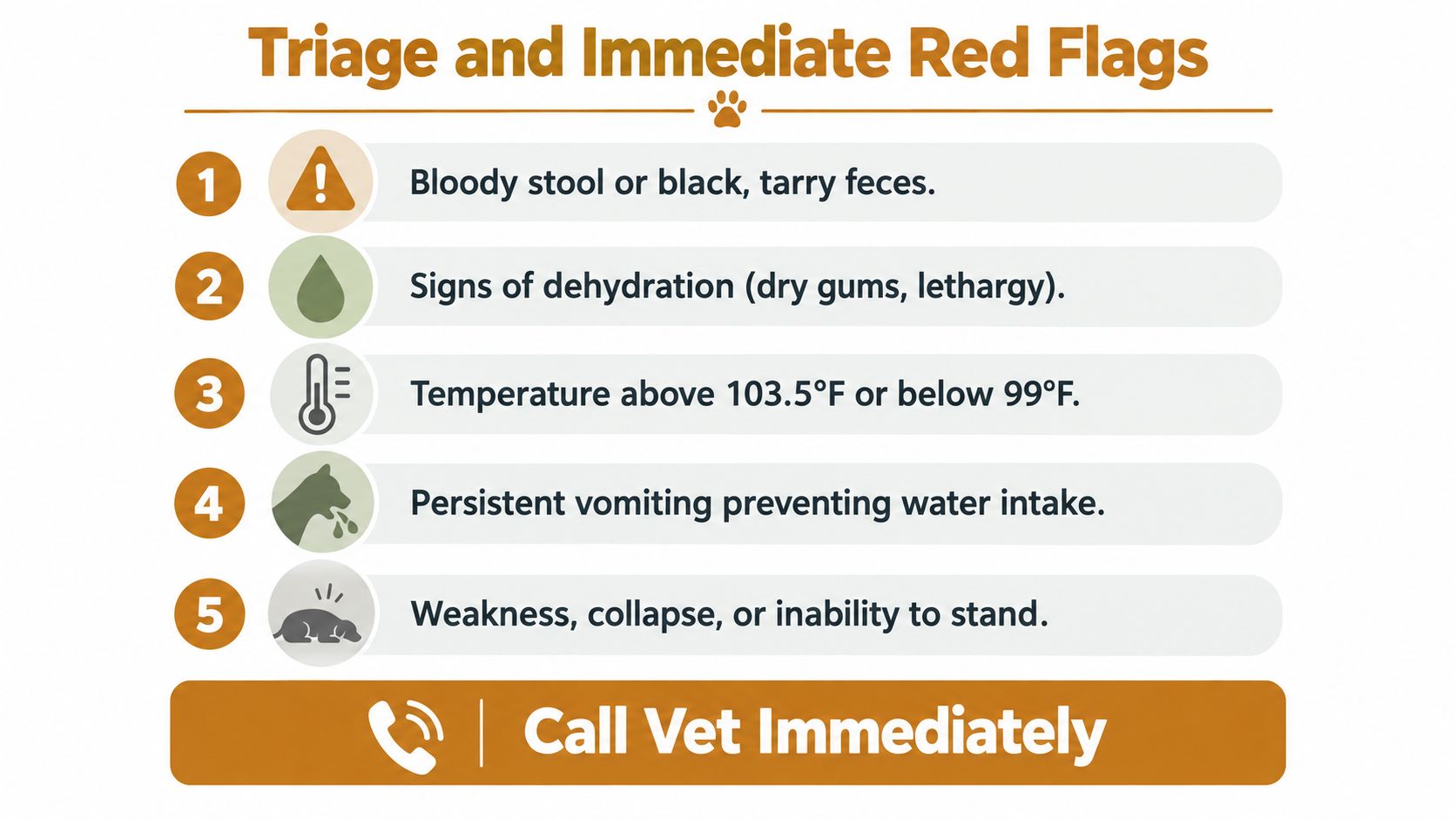
Contact a veterinarian immediately if you notice:
- Blood or black stool: Large amounts of bright red blood or black, tarry feces need urgent care.
- Dehydration signs: Dry or sticky gums, pronounced lethargy, weakness, or reduced responsiveness indicate that fluid loss may be outpacing intake.
- Persistent vomiting: A puppy that cannot keep water down cannot be safely hydrated at home.
- Collapse or inability to stand: Treat either sign as a medical emergency.
- Systemic illness: Pain, pale gums, tremors, seizures, suspected toxin or foreign-object ingestion, or substantial vomiting with diarrhea require prompt veterinary attention.
PetMD's puppy diarrhea guidance also lists liquid diarrhea, repeated vomiting, refusal to eat or drink, coughing or sneezing with eye or nasal discharge, and collapse as reasons for immediate evaluation. AKC advises contacting a veterinarian for bloody diarrhea, black tarry stools, fever, pale gums, pain, suspected toxin or foreign-body ingestion, vomiting, or diarrhea lasting beyond a day (AKC's diarrhea guidance).
If you are uncertain, call your clinic or an emergency hospital rather than delaying care. PetCostEngine can help with general dog-care planning, but it cannot assess dehydration, test for parvovirus, or replace a veterinary examination.
Hydration and Fluid Replacement Strategies
Puppy diarrhea can deplete water and electrolytes quickly. Puppies have fewer reserves than healthy adult dogs, and the risk rises when diarrhea occurs with vomiting, poor appetite, or reluctance to drink. Keep fresh water available, but a puppy that gulps may vomit and lose more fluid.
Check hydration before offering fluids
Examine the gums. They should feel moist rather than dry or sticky. Gently lift the skin over the shoulders and release it. Skin that returns slowly can indicate dehydration, although the test is imperfect and should not outweigh weakness or other warning signs. Missouri's Veterinary Health Center includes slow skin return and dry or sticky gums among useful dehydration checks (Missouri Veterinary Health Center guidance).
If your puppy is alert and has not vomited, offer small amounts frequently instead of permitting rapid, unrestricted drinking. After no vomiting for 6 to 8 hours, Veterinary Partner advises offering clear liquids frequently at approximately 1 teaspoon per pound of body weight every 2 to 3 hours (Veterinary Partner's diarrhea guidance). This approach provides supportive first aid, but it is not adequate treatment for moderate or severe dehydration.
Practical rule: If every offered sip comes back up, stop home fluid management and call a veterinarian.
The required replacement route depends on dehydration severity. VCA notes that fluids may need to be given orally, subcutaneously, or intravenously (VCA's emergency guidance). Do not give human electrolyte drinks, antidiarrheal drugs, or leftover medication unless a veterinarian directs you to do so. For broader veterinary cost planning by breed, age, and state, use the PetCostEngine calculator, but keep that planning separate from urgent medical decisions.
Dietary Rest and Bland Food Reintroduction
Once vomiting has stopped and your puppy is hydrated enough to stay alert, reduce the digestive workload. In a mild case linked to dietary indiscretion, a 12-hour food pause may give the intestine time to settle. Do not extend that pause without veterinary guidance, especially for a very young, underweight, weak, or diabetic puppy. A puppy can lose energy quickly during both diarrhea and fasting.
Reintroduce food cautiously
Start only after your puppy has kept fluids down and shows interest in eating. Offer a small portion of bland, digestible food, such as boiled skinless chicken with white rice or boiled lean hamburger with white rice. Keep meals modest and frequent, then increase portions gradually if stool and energy remain stable. Small meals are appropriate after a tolerated fluid trial, as described in Veterinary Partner's home-care guidance.
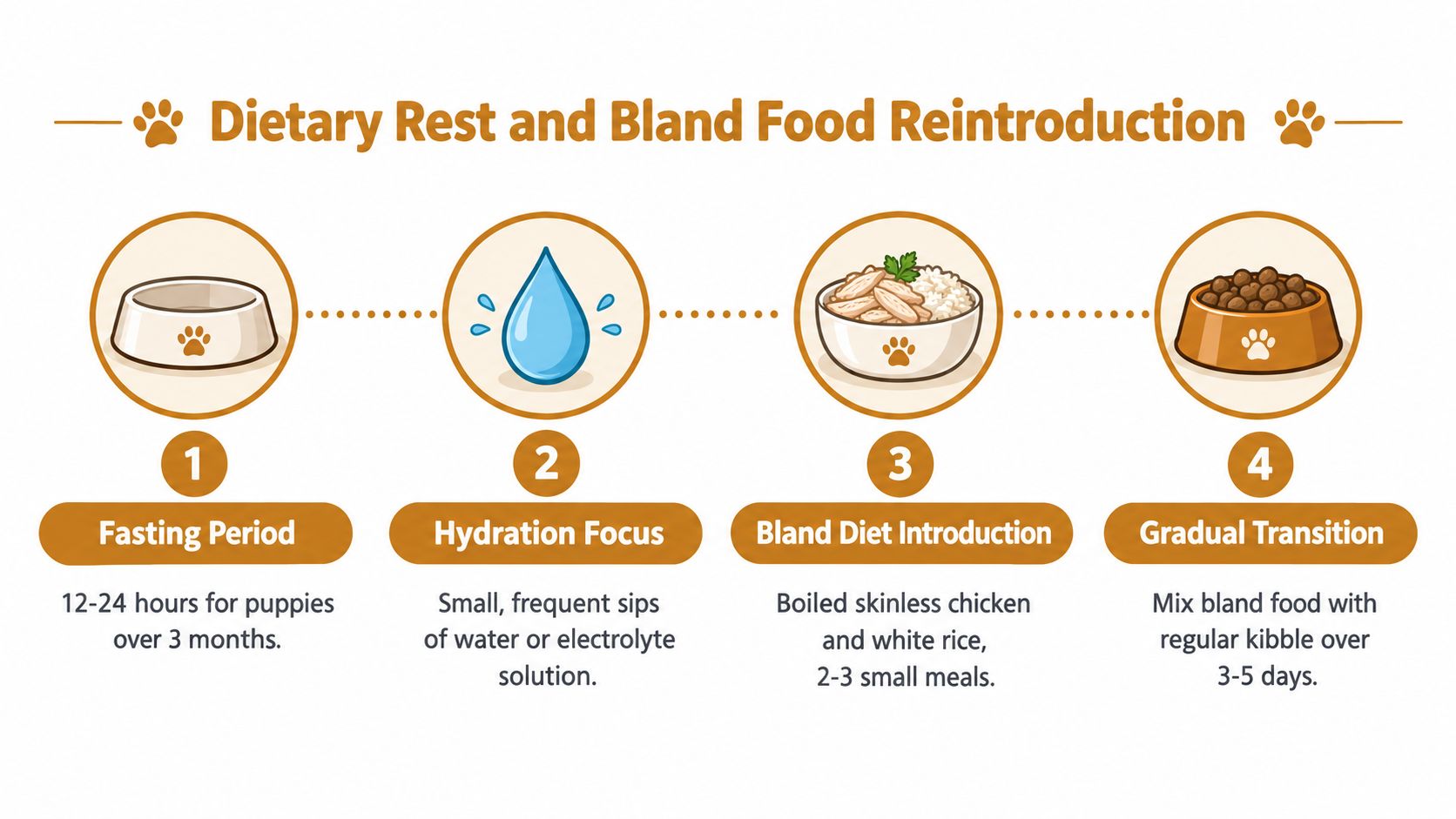
The bland diet is a short-term bridge, not a complete puppy diet. After stools improve and your veterinarian agrees, mix increasing amounts of regular puppy food into the bland food over several days. If loose stool returns, pause the transition and contact the clinic rather than repeatedly changing foods.
Avoid butter, oils, rich treats, table scraps, dairy, and unapproved supplements. Each new ingredient can trigger another intestinal disturbance and obscure whether the original illness is resolving.
The video below demonstrates how to prepare and portion a bland chicken-and-rice meal for a recovering puppy. Confirm that this licensed, on-topic asset is approved before publishing:
Persistent diarrhea after hydration and cautious feeding requires a different plan, not a more elaborate bland diet. Use breed-specific puppy information to review normal feeding needs, while your veterinarian directs care for ongoing illness.
Evaluating Probiotics and Gut Supplements
A probiotic may support recovery in some uncomplicated cases, but it is not a dependable way to stop puppy diarrhea. Fluid management comes first because a young puppy can deteriorate from dehydration while you are waiting for a supplement to work. Probiotics also cannot replace an examination, fecal testing, or treatment for an underlying infection.
The clearest quantified evidence comes from a double-blind, placebo-controlled canine trial. Dogs reached acceptable stool consistency in 3.5 ± 2.2 days with the probiotic, compared with 4.6 ± 2.4 days with oral metronidazole and 4.8 ± 2.9 days with placebo. The difference between groups was not statistically significant, so this trial does not establish probiotics as a reliable cure (the canine probiotic trial).
A separate randomized study reported a median diarrhea duration of 32 hours with a specific antidiarrheal probiotic, compared with 47 hours for placebo. That result applies to the tested formulation and study conditions, not automatically to every puppy or supplement (the evidence review of canine probiotics).
What the newer evidence changes
A 2025 Veterinary Evidence summary reported that its panel could not recommend for or against probiotics for dogs with acute diarrhea. The conclusion reflects uncertainty, not proof that these products are ineffective or routinely useful (Veterinary Evidence's 2025 evidence summary).
A 2024 review described recent reports finding no clinically significant benefit for preventing or treating acute diarrhea in dogs, while older placebo-controlled trials suggested benefit in some cases (the 2024 canine probiotic review).
Use a supplement only after veterinary guidance, particularly if your puppy is vomiting, dehydrated, very young, or may have an infection. Do not delay a clinic visit to try a probiotic, and do not assume yogurt or a human product has the same formulation or evidence as a veterinary product.
Infectious Causes and Veterinary Diagnostics
A puppy with repeated watery stool can lose fluid faster than an adult dog, so diagnosis matters during the early triage window. Sudden food changes and dietary indiscretion may irritate the gut, but parasites and infections are common enough that stool testing is often more useful than judging appearance alone. Bring a fresh sample if your clinic requests one. VCA notes that fecal results may guide deworming or antiparasitic treatment and may prompt environmental-cleaning advice (VCA's puppy diarrhea guidance).
Why testing comes before medication
Possible causes include Giardia, Campylobacter, Clostridium, parvovirus, coronavirus, rotavirus, and other parasites or bacteria. PDSA also lists sudden food changes, worms, Giardia, bacterial gut infections, and parvovirus among important causes (PDSA's dog diarrhea guidance). Parvovirus can cause severe vomiting and diarrhea, sometimes with blood.
| Pathogen | Type | Key indicators |
|---|---|---|
| Canine parvovirus | Virus | Severe gastrointestinal illness, often with vomiting and potentially bloody diarrhea |
| Giardia | Protozoan parasite | Diarrhea requiring fecal testing for confirmation |
| Campylobacter | Bacterium | Antibiotics considered only when an appropriate pathogen is isolated |
| Clostridium | Bacterium | Requires diagnostic interpretation before targeted treatment |
| Coronavirus or rotavirus | Virus | Large-volume watery diarrhea can occur |
Antibiotics are reserved for cases in which an appropriate bacterial or protozoan pathogen, such as Campylobacter, Clostridium, or Giardia, is identified in feces. Leftover medication is therefore a poor shortcut. It may be unnecessary, will not treat a virus or parasite, and can make the clinical picture harder to interpret (the original NIH record for the acute canine diarrhea review).
Record when diarrhea started, how often it occurs, its color, any vomiting, what the puppy ate, and whether vaccinations or deworming are current. Seek veterinary care promptly if the puppy is weak, repeatedly vomiting, unable to drink, or passing blood. For general ownership context alongside a veterinary visit, the American Water Spaniel breed guide may help, but it cannot diagnose active gastrointestinal illness.
Long-Term Prevention and Environmental Safety
Prevention starts with routine veterinary care, controlled feeding, and sanitation. Follow your veterinarian's vaccination and deworming schedule while the puppy completes preventive care. Visible worms are not a reliable check, because some intestinal parasites require fecal testing.
Remove stool and contaminated material promptly, then wash your hands. Clean bowls, bedding, floors, crates, and outdoor areas according to veterinary instructions, especially when testing identifies a parasite or another transmissible cause. Keep an unwell puppy away from shared dog spaces and other dogs until contagious illness has been ruled out.
Build a stable routine
Change food gradually. Limit treats and table scraps, supervise outdoor sniffing, and secure medications, chemicals, toxic foods, trash, strings, toys, and other objects a puppy could swallow. Scavenging-prone dogs may need closer supervision, and this Labrador Retriever breed guide provides relevant ownership context without replacing veterinary advice.
Keep a simple recovery record: stool consistency, appetite, water intake, energy, and any vomiting. Diarrhea that continues for 6 to 12 hours warrants a call to the clinic, with an earlier call if the puppy becomes weak or less responsive. AKC's diarrhea guidance uses a longer puppy-specific threshold of more than a day. Other veterinary guidance supports escalation for prolonged symptoms, blood, vomiting, or inability to keep food or water down. Because puppies can lose fluid quickly, use the earlier threshold when the puppy is very young, worsening, or drinking poorly.
PetCostEngine provides breed-, age-, and state-adjusted dog ownership estimates, along with guides for veterinary care and breed-related health planning. Visit PetCostEngine for routine-care planning, but contact your veterinarian directly about current diarrhea, dehydration, or treatment needs.
Estimated lifetime and yearly costs for a American Water Spaniel, state by state, plus whether pet insurance breaks even for the breed.
See American Water Spaniel costs →
Is insurance worth it for a American Water Spaniel? →
Joint supplement → Puzzle toys → No-pull harness →
As an Amazon Associate, PetCostEngine earns from qualifying purchases.