
Your new puppy squints in the afternoon light, and you notice a sticky patch beneath one eye. You reach for a soft cloth, then hesitate. Is this ordinary eye moisture, or does your puppy need an exam?
Good puppy eye care starts with that pause. Cleaning can remove a little surface crust, but it can't tell you whether an eyelash is rubbing the cornea, a foreign body is trapped under a lid, or an eye has become painful. Pain and changes in sight matter more than discharge color.
Table of Contents
- Healthy Puppy Eyes and How Urgent Each Sign Is
- How a Puppy's Eyes Develop from Birth to Adulthood
- Common Puppy Eye Conditions and What the Vet Will Check
- How to Clean Puppy Eyes Safely at Home
- Flat-Faced and Tear-Prone Breeds Need a Different Routine
- Plan Your Next Eye Visit Before Trouble Starts
Healthy Puppy Eyes and How Urgent Each Sign Is
Healthy puppy eyes look bright and clear, with comfortable blinking and little moisture at the inner corners. Your puppy shouldn't repeatedly rub its face, avoid ordinary light, or keep an eye partly closed.
The American Kennel Club's health guidance identifies thick, yellow-green, discolored, excessive, foul-smelling, or one-sided discharge as warning signs, especially alongside redness, swollen lids, squinting, repeated blinking, light sensitivity, or pawing. These signs need veterinary attention rather than an experiment with human medication or an old prescription.
Puppy eye signs sorted by urgency
Use the most urgent sign you see, not the mildest one.
| Tier | Signs | What to Do | Timing |
|---|---|---|---|
| Routine check | Bright, clear eyes; small amount of clear moisture; no squinting | Wipe with a damp cloth and keep routine vet visits | At scheduled visits |
| Call your vet | Mild redness; thick or yellow-green discharge in one or both eyes; repeated blinking; pawing at the face | Book an exam and don't start leftover eye drops | Call promptly for the clinic's examination deadline |
| Same-day visit | Squinting; swollen or bulging eyelids; marked tearing; light sensitivity; protruding third eyelid | Call the clinic, prevent rubbing, and describe which eye is affected and for how long | Same day |
| Emergency | Eye held shut; cloudiness or blue-white film; visible injury or embedded debris; unequal pupils; sudden change in sight | Prevent rubbing and go to an emergency clinic; gently flush only loose, visible debris with saline | Immediately |
The four tiers are Routine check, Call your vet, Same-day visit, and Emergency. These timing bands are triage guidance, not a diagnosis; the clinic makes the final call. Repeated blinking or pawing that becomes persistent, painful, or accompanied by another warning sign needs faster assessment.
Practical rule: A watery eye that's held shut is more urgent than a comfortable-looking eye with colored discharge.
Breed appearance shouldn't override this rule. Even if you're used to seeing damp fur on a Bichon Frise, new discomfort isn't ordinary tear staining.
For a suspected injury, the AVMA's pet first-aid guidance recommends gently flushing visible dirt or grass with saline, leaving embedded objects alone, and preventing rubbing while arranging immediate veterinary care. A cone can help protect the eye, but don't delay the trip to find one.
How a Puppy's Eyes Develop from Birth to Adulthood
A newborn puppy's closed eyelids are normal. They protect developing eyes, but they also mean you can't inspect the eye surface the way you would in an older puppy.
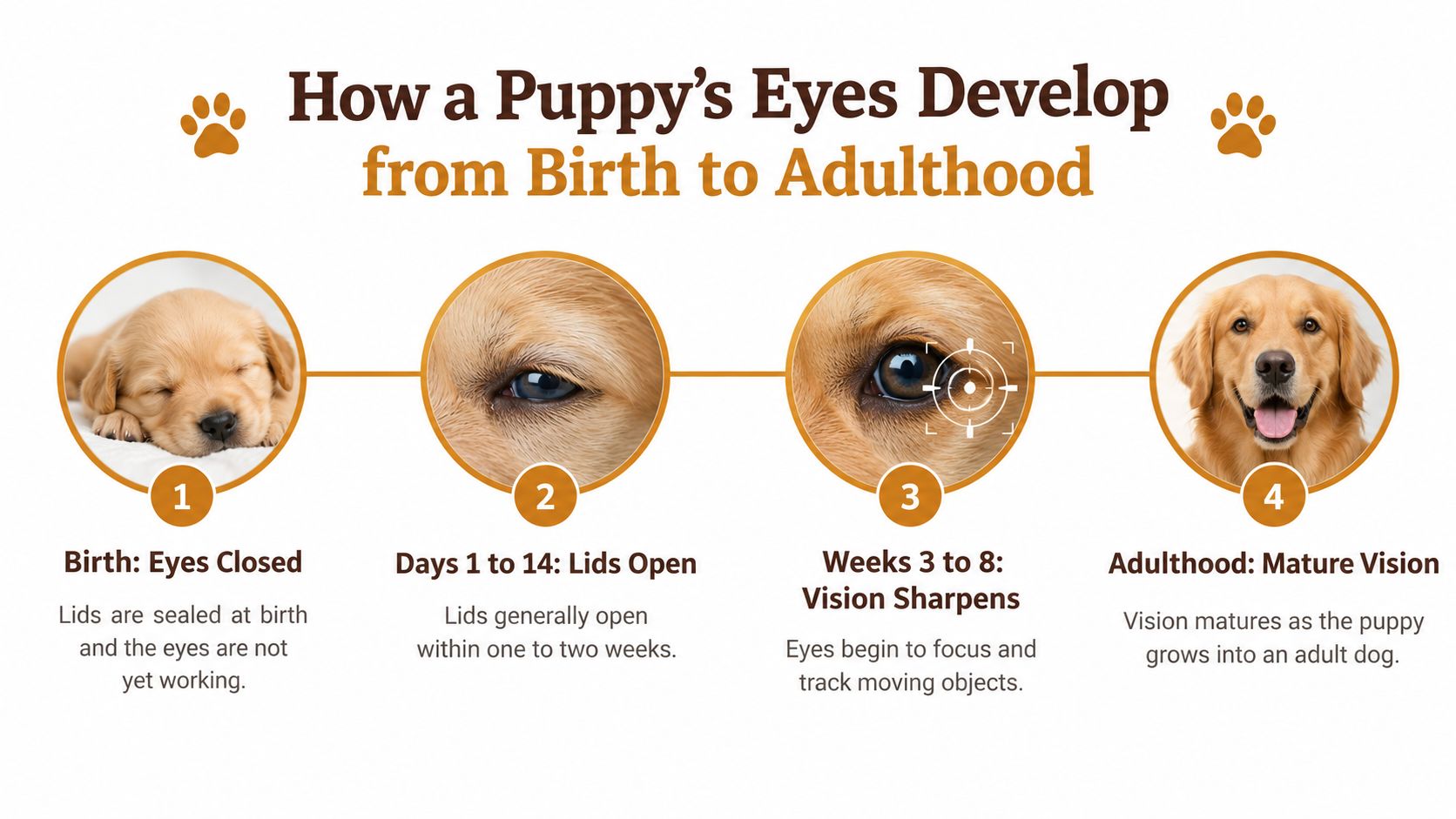
According to VCA Animal Hospitals' newborn-care guidance, puppies are born with their eyes closed, the lids generally open within one to two weeks, and eyes that remain closed at two weeks need immediate veterinary attention. Discharge also warrants immediate care, regardless of whether the lids have opened.
The timeline below illustrates the transition from sealed lids to mature vision.
Closed lids don't mean you should wait
Say you're caring for a litter and notice that one puppy has a puffy eyelid with material collecting along the seam. That isn't just a puppy developing at its own pace. Swelling, bulging beneath the lids, pus, or discharge can indicate infection trapped underneath.
A veterinarian may need to open and flush the lids. Don't force them apart at home. In DVM360's discussion of corneal problems in young puppies, infection beneath closed eyelids, called ophthalmia neonatorum, can progress to corneal ulceration, rupture, or permanent tear-gland damage.
Watch comfort as vision develops
After the eyes open, a puppy gradually becomes more confident following movement and navigating its surroundings. Eye color may change during maturation, but a change in the surface's clarity shouldn't be dismissed as normal development.
The tear film keeps the surface moist, while the third eyelid helps protect it. You don't need to pull the lids back or shine a bright flashlight into the eyes to check their progress.
Young dogs can develop inflammation, abnormal eyelid positioning, injuries, and congenital defects, not just inherited diseases. As your puppy grows, look for comfortable blinking, clear eyes, and an ability to move through familiar surroundings without new hesitation or collisions.
Common Puppy Eye Conditions and What the Vet Will Check
Yellow or green discharge doesn't automatically mean a bacterial infection. It tells you that something is irritating or inflaming the eye, but not what started the problem.
The University of Illinois College of Veterinary Medicine's conjunctivitis guidance explains that canine conjunctivitis is rarely caused by a surface infection, so topical antibiotics are rarely indicated without identifying the underlying cause. Irritants, foreign bodies, eyelid abnormalities, drainage problems, dry eye, corneal ulcers, and glaucoma can produce overlapping signs.
Common puppy eye conditions and first steps
This table is for recognition, not treatment selection. The breed examples indicate reasons to discuss screening with your vet, not a prediction that your puppy will develop the condition.
| Condition | Typical Signs | Higher-Risk Dogs | First Step |
|---|---|---|---|
| Conjunctivitis | Redness, discharge, lid swelling, squinting | Any puppy; often linked to irritants or drainage problems | Vet exam to identify the cause before medication |
| Entropion | Eyelids rolling inward, lashes rubbing the eye, tearing, squinting | Shar-Pei, Chow Chow, Bulldogs, and other loose-skinned breeds | Book an exam; many cases need a corrective procedure |
| Dry eye, or keratoconjunctivitis sicca | Thick mucoid discharge, redness, dull or cloudy cornea | Breeds such as Cocker Spaniel, Pug, and West Highland White Terrier | Veterinary tear testing; treatment is often long-term |
| Cherry eye | Red, swollen mass at the inner corner of the lower lid | Cocker Spaniel, Beagle, Bulldog, Shih Tzu | Vet exam; don't press or squeeze the mass |
| Corneal ulcer | Squinting, pain, cloudiness, watery eye | Any puppy, especially after trauma or rubbing | Same-day exam and dye testing |
| Blocked tear drainage | Constant tearing, moist fur below one eye | Flat-faced breeds and small breeds with shallow sockets | Exam to assess drainage and eyelid position |
| Foreign body | Sudden squinting, pawing, one-sided tearing | Any puppy that explores outdoors | Flush loose, visible debris with saline and get same-day care |
Conjunctivitis means inflammation of the tissue lining the eyelids and covering part of the eyeball. It's a description of the affected tissue, not proof of a particular germ.
Entropion is a mechanical problem: the lid rolls inward so hair contacts the cornea. Dry eye is different again. The surface lacks adequate tear protection, so wiping away discharge doesn't correct the underlying problem.
Cherry eye involves a displaced third-eyelid gland. It isn't a piece of debris you can remove, and squeezing it can cause additional irritation. A veterinarian will assess the gland and discuss treatment that preserves its function.
For breed-specific health context, a Cavalier King Charles Spaniel profile can help you prepare questions. Your puppy's examination and family history still matter more than a breed label alone.
What the examination tests actually tell you
Your vet chooses tests to separate problems that look similar from the outside:
- Schirmer tear test: A small paper strip measures tear production, helping identify dry eye.
- Fluorescein stain: Dye highlights exposed tissue where the cornea's protective surface is damaged. Under cobalt-blue light, defects become easier to see.
- Tonometry: An instrument measures pressure inside the eye to help assess glaucoma and other pressure abnormalities.
- Magnified examination: The vet checks lid edges, hairs, the corneal surface, and structures around the eye. Drainage testing may be needed when tears repeatedly overflow.
Tell the clinic what you've already applied before testing begins. Drops can affect what the veterinarian sees, and their ingredients matter.
Keep leftover drops out of use
An old prescription may have treated a completely different cause. A medication that helped inflammation previously could be inappropriate for an injured cornea today.
Steroid-containing eye products can impair healing and worsen an ulcer that hasn't been ruled out. Don't use human redness-relief drops, another pet's medication, or a previously opened prescription unless your veterinarian specifically approves it for this episode.
Ask what each prescribed product does and how to give it without touching the applicator tip to the eye. Also ask when improvement should occur and what would trigger reassessment. Dry eye often needs continuing management, while entropion commonly requires a procedure rather than repeated courses of drops.
How to Clean Puppy Eyes Safely at Home
Routine cleaning is for a small amount of normal moisture or light crust on the surrounding fur. Thick, colored, foul-smelling, or one-sided discharge needs assessment, not more vigorous wiping.
Keep the task gentle and brief. If your puppy won't comfortably let you touch the area, don't turn cleaning into a restraint contest.
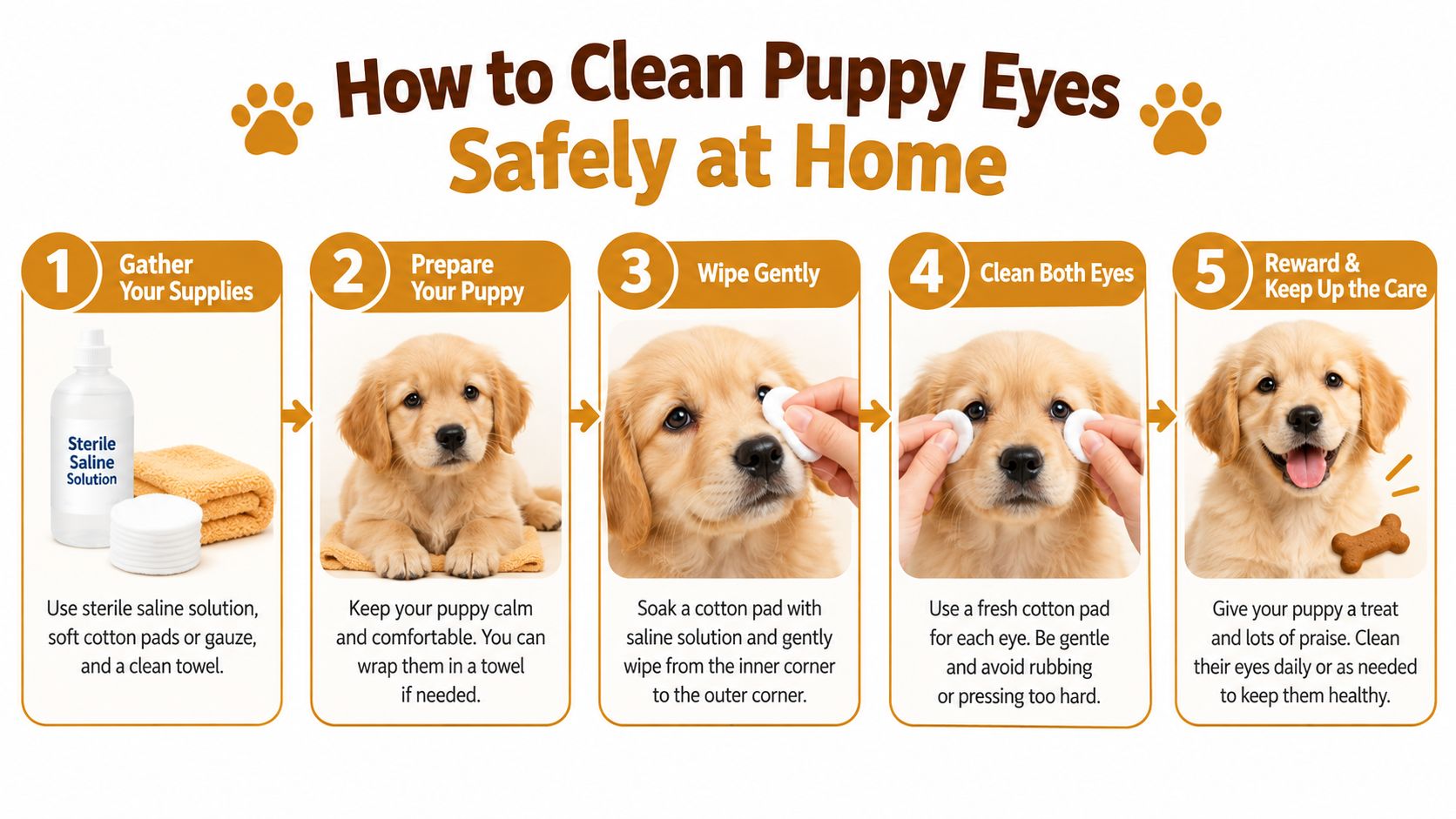
Use this illustration as a reminder of gentle handling.
A gentle cleaning procedure
- Gather suitable supplies. Use veterinarian-recommended eye wipes, sterile saline, or water boiled for at least one minute and then cooled, as described in the AKC's eye-cleaning instructions. Choose saline labeled for eye irrigation, not contact-lens disinfecting solution.
- Wash your hands and settle your puppy somewhere calm with good light. A stable position helps you avoid accidental poking if your puppy moves.
- Dampen a clean, soft cloth or cotton ball. It should glide across the surrounding fur rather than drag against dry crust.
- For dried material, hold the damp cloth gently against the crust briefly. Softening it first reduces pulling on sensitive skin and hair.
- Wipe along the eyelid toward the ear. Work on the outside, without forcing the eye open or pressing on the eyeball.
- Switch to a fresh cloth section or separate cotton ball for the other eye. This avoids carrying discharge and contaminants from one side to the other.
- Stop if your puppy squints, pulls away, or seems painful. New colored discharge or discomfort is a reason to contact the vet, not repeat the procedure with more pressure.
You should be lifting softened material away, not scrubbing the lid margin. If crust doesn't release easily, pause rather than picking it off with your fingernail.
What to leave out of the cleaning kit
Avoid hydrogen peroxide, alcohol-based products, essential oils, soap, rough fabric, cotton swabs, and homemade remedies. A cotton swab can injure the eye if your puppy suddenly turns, while harsh liquids can irritate delicate tissue.
For packaged wipes, look for a clear statement that they're intended for use around dogs' eyes, a disclosed ingredient list, and directions that distinguish external wiping from putting liquid into the eye. Ask your vet whether the product suits your puppy's skin and eye history.
Cleaning should leave the puppy comfortable. It shouldn't require force, rubbing, or repeated attempts to remove every stain.
For a long-haired puppy, such as a Shih Tzu, ask a groomer to manage hair near the eyes safely. Don't approach a moving puppy's eye with pointed scissors.
Wipe during normal grooming, and increase the frequency only if your vet advises it. Persistent staining isn't a reason to keep the skin wet throughout the day.
For a visual demonstration of handling and cleaning, watch the technique below.
Flat-Faced and Tear-Prone Breeds Need a Different Routine
Persistent tearing isn't necessarily poor hygiene. A puppy can have clean fur and still experience irritation because the lids, facial hairs, or tear drainage system aren't working comfortably.
Flat-faced dogs, including Pugs, French Bulldogs, and English Bulldogs, can have shallow sockets, facial folds, and hairs that contact the cornea. The Vet Times clinical discussion of canine conjunctivitis describes why assessment should consider tear-film quantity and quality, eyelid conformation, foreign bodies, drainage, the eye itself, and surrounding skin disease rather than assuming conjunctivitis.
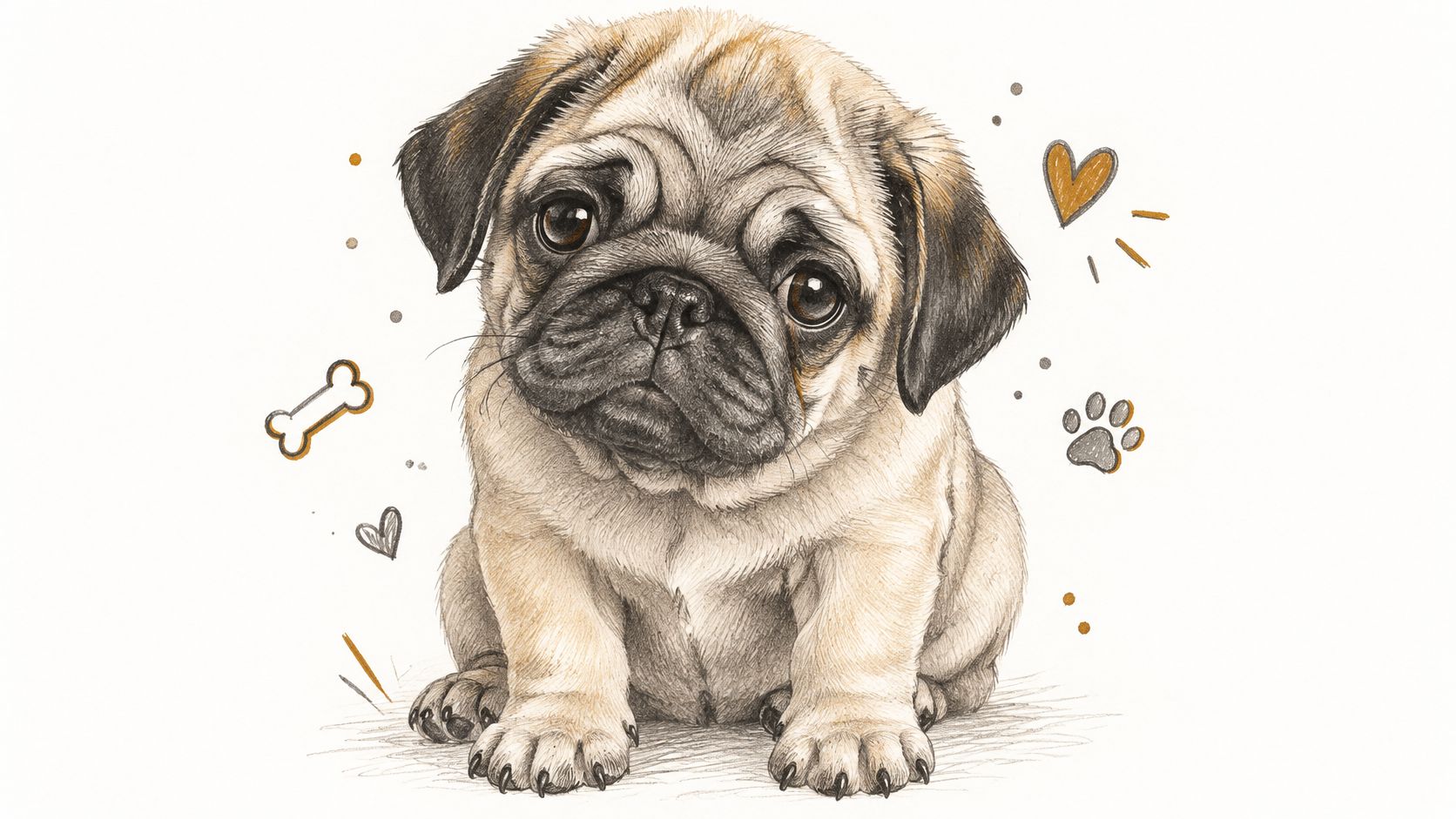
The Pug's facial shape illustrates why the skin and hair around an eye deserve attention along with the eye surface.
Keep a recurrence log instead of changing cleaners
Wind or dust may cause brief irritation, sometimes in both eyes. A persistent problem in the same eye makes a localized foreign body, obstruction, or structural issue more concerning, although the pattern alone can't establish a diagnosis.
Keep a single note on your phone with these details:
- Affected eye: Left, right, or both, including whether episodes switch sides.
- Duration: When the episode began and whether the eye returns fully to normal.
- Possible triggers: Outdoor play, grooming, dusty rooms, or windy walks.
- Comfort: Rubbing, pawing, squinting, or avoiding light.
- Discharge: Watery, stringy, thick, crusted, or otherwise changed.
- Vision: New hesitation, bumping into objects, or trouble finding familiar items.
Add a photograph when you can do so without delaying care. Take it before cleaning so the vet can see the original pattern.
Know when recurrence needs referral
Repeatedly wiping away tears can remove visible evidence without correcting the cause. If the same eye keeps watering, arrange an examination rather than rotating through wipes or stain-removal products.
Breed susceptibility varies. A French Bulldog health profile can help you identify relevant questions, but your veterinarian needs to assess your puppy's actual anatomy.
Referral checkpoint: Ask for a specialist discussion when the diagnosis remains uncertain, episodes keep returning, or treatment may require eye surgery.
Family veterinarians manage many eye conditions. Persistent, complex, or surgical problems may need a board-certified veterinary ophthalmologist, with your recurrence log traveling with the medical records.
Plan Your Next Eye Visit Before Trouble Starts
Save the information you'll need while your puppy is comfortable. It's easier to choose an emergency clinic in advance than while trying to stop a painful puppy from rubbing its face.
Keep an eye-care note on your phone
- Puppy details: Breed, age, relevant family history, and any known eye diagnosis.
- Regular clinic: Veterinarian's name, telephone number, and after-hours instructions.
- Emergency destination: Nearest appropriate emergency clinic and its contact details.
- Episode record: The same recurrence log you use at home, including photographs.
- Products used: Names of wipes, rinses, drops, and ointments, plus when you last applied them.
Bring medication packaging if the ingredients aren't clear. Don't rely on remembering whether a bottle contained an antibiotic, steroid, or combination product.
Ask for a plan you can follow
At the first visit, ask what the most likely cause is and which examination findings support it. Then establish what the initial treatment involves, whether specialist referral is needed, and how soon the vet wants to recheck the eye.
Make the follow-up instructions specific:
- Treatment response: What improvement should I notice, and when should I call if it doesn't happen?
- Failure signs: Which changes mean I should stop waiting and seek urgent reassessment?
- Long-term outlook: Is this likely to resolve, recur, or need ongoing treatment?
- Screening needs: Does this puppy's breed or family history justify a formal ophthalmic examination?
Even if your puppy is an American Water Spaniel or another breed without an obvious flat-faced appearance, ask about individual and inherited risks. Normal-looking eyes don't exclude every hereditary condition.
The Lagotto Romagnolo hereditary-eye-disease study illustrates why breed-specific screening can reveal concerns beyond a routine visual check. Depending on the diagnosis, care may involve repeat examinations, imaging, medication, or surgery.
For longer-term planning, use the lifetime cost calculator and insurance guides available through the dog ownership planning resources. Check policy wording carefully: conditions present before coverage begins may be treated as pre-existing, and hereditary-condition coverage can have restrictions. Never delay an eye examination to arrange coverage.
Book the visit at the urgency tier your puppy's signs warrant. Don't wait for a painful eye to look worse before acting.
PetCostEngine offers breed-specific health references, lifetime ownership estimates, and insurance-planning resources for US dog owners. Visit PetCostEngine to explore your puppy's longer-term care needs and prepare for veterinary follow-up without substituting a calculator for an eye examination.
Estimated lifetime and yearly costs for a Bichon Frise, state by state, plus whether pet insurance breaks even for the breed.
See Bichon Frise costs →
Is insurance worth it for a Bichon Frise? →
Crate and bedding → Durable chews → Premium dry food →
As an Amazon Associate, PetCostEngine earns from qualifying purchases.