

A sleeping dog suddenly lifts its muzzle, opens its mouth, and releases a long, mournful howl into the quiet room. Then, just as quickly, the dog relaxes, rolls onto its side, and keeps sleeping. You're left sitting nearby, wondering whether to wake them, check for pain, or call the veterinarian.
In most cases, brief howling during sleep is connected to REM sleep and dreaming. Dogs can twitch, paddle, whine, bark, or howl while their brains remain active and their bodies stay mostly relaxed. A short episode that ends on its own, followed by normal waking behavior, is usually not a sign that something is wrong. Veterinary guidance on canine sleep describes these vocalizations alongside common REM behaviors such as facial and paw movements.
The answer to why do dogs howl in their sleep has two parts. Dream-related motor activity is the most familiar explanation, but newer research shows that sleeping dogs can still process sounds around them. That means a distant siren, another dog, or a household noise may influence a sleep vocalization without being the whole cause.
The important distinction is not whether your dog makes a sound at all. It's whether the episode is gentle or intense, occasional or repetitive, and followed by normal behavior or signs of illness. The sections below separate ordinary dreaming from sensory processing, then provide a practical checklist for deciding when observation is enough and when a veterinarian should get involved.
Table of Contents
- A Familiar Midnight Howl
- How REM Sleep Produces Sound
- Breed and Age Factors That Shape Sleep Vocalization
- When the Brain Listens Instead of Dreams
- Normal Dreaming Versus Something More Serious
- What to Do the Next Time Your Dog Howls in Its Sleep
- Key Takeaways for Worried Owners
A Familiar Midnight Howl
Maya's dog, Scout, sleeps in the living room. One night, Scout's paws begin to twitch beneath a blanket. His eyelids flicker, his muzzle lifts, and a soft whine grows into a single, rising howl. Maya reaches toward him, but Scout settles before she touches him. When he wakes later, he acts normally, accepts a treat, and goes outside without any sign that the episode happened.
That pattern is reassuring. A short, intermittent howl with small twitches and a calm return to sleep usually fits normal dream vocalization. Dogs can make many of the sounds they use while awake during REM sleep, including whining, barking, yipping, and howling. Information on normal barking during sleep notes that sleep vocalization by itself isn't automatically evidence of illness.
Some dogs make a tiny squeak. Others produce a surprisingly convincing howl. The sound can be startling because the dog appears sound asleep, but sleep doesn't mean the brain has shut down. During REM, brain activity remains high enough for fragments of movement and vocal behavior to appear.
Breed can also affect what an owner hears. A dog with a naturally sustained voice may produce a longer call than a quieter dog, while another may only whimper. A Siberian Husky, for example, may be especially expressive when awake and asleep, so owners who live with this breed may find the Siberian Husky breed profile useful for understanding vocal tendencies without treating every sound as a medical warning.
The first question is about the whole episode
Don't judge the howl by volume alone. Watch the dog's body, breathing, ability to settle, and behavior after waking. A gentle howl with relaxed muscles means something different from a forceful episode with rigid limbs, repeated striking, or confusion afterward.
The later sections address two possibilities. The first is dream-state activity, where the sleeping brain generates a vocal response. The second is sensory processing, where the brain responds to sounds in the environment. Both can occur in a healthy dog, but repeated or unusually intense episodes deserve closer attention.
How REM Sleep Produces Sound
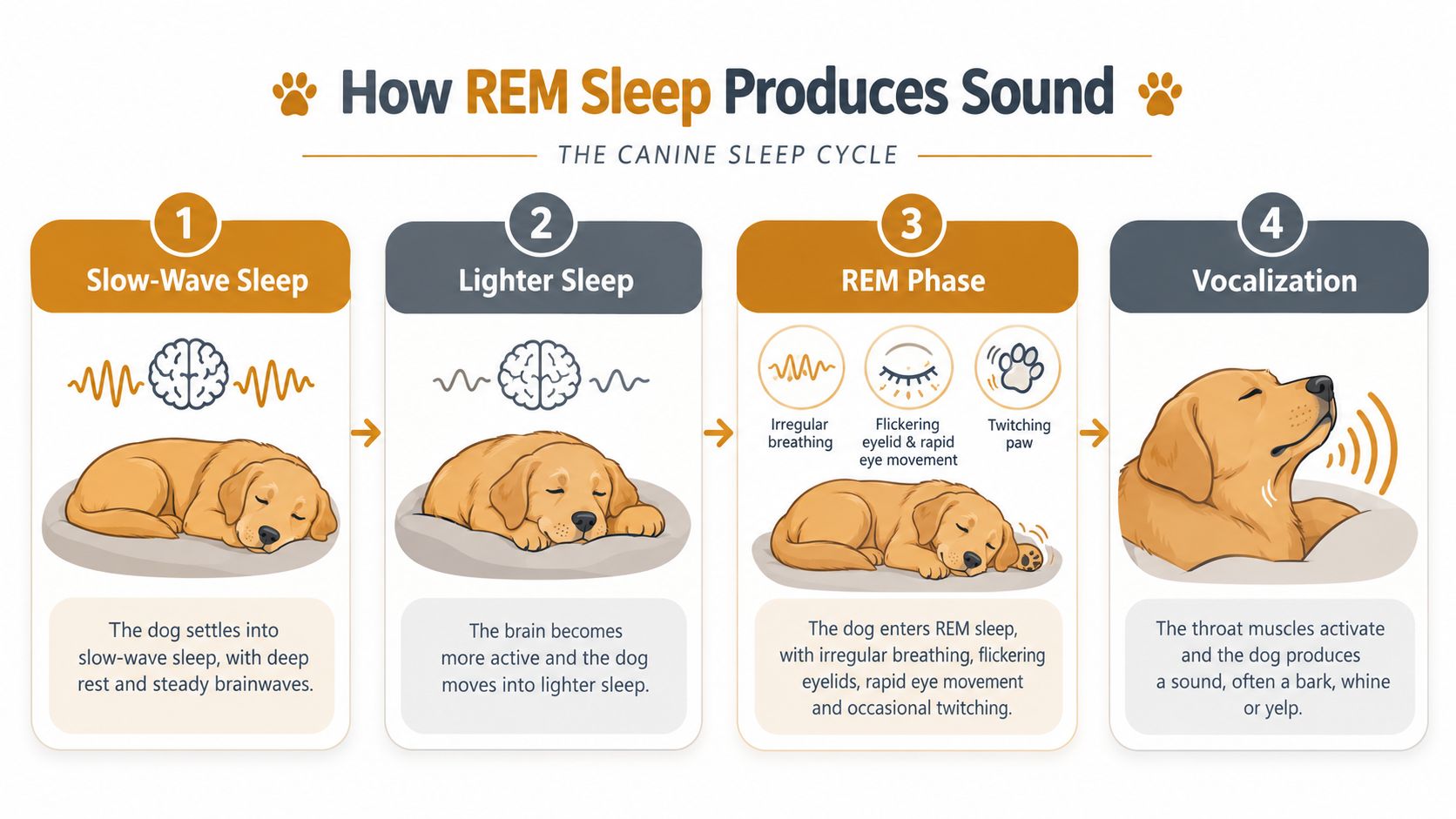
A sleeping dog can seem fully out of reach, then suddenly let out a howl, whine, or bark. That happens because sleep is not one flat state. The brain and body move through different stages, and REM sleep is the stage most closely tied to dreaming and sleep vocalization. Understanding that sequence makes the behavior easier to read.
The sleep cycle in practical terms
Settling and light sleep: The dog relaxes, breathing slows, and awareness of the room fades. A nearby sound or touch may still get a response.
Deeper non-REM sleep: Muscle activity drops further as the body rests. From the outside, this stage looks quiet and still.
REM sleep: Brain activity rises again. The eyes may move under closed lids, breathing can become uneven, and small motions can appear in the face, paws, or legs. A review of canine sleep behavior notes that dogs commonly show twitching, whining, soft barking, and sleep-running during REM.
Vocalization: REM limits large, coordinated movement, but it does not silence every muscle used for sound. Brief activity in the larynx, diaphragm, soft palate, or facial muscles can let a whine, bark, or howl slip out.
A major review notes that dogs typically spend about 10% of total sleep time in REM, while an older 24-hour polygraphic study of 9 adult dogs found REM occupied about 20% of total sleep time, with each REM cycle lasting about 30 minutes. These figures differ because the studies used different methods and groups of dogs, but the basic point is the same. REM is a recurring, organized part of sleep, not a random glitch.
The brainstem usually reduces large movements during REM. That protection keeps a dog from acting out every dream with full-body motion. It is not a perfect mute button. Isolated muscles can still fire, which is why a sleeping dog may twitch, paddle lightly, or make a sound.
Why the howl can sound so realistic
Dreams often draw on familiar experiences, including sounds and social encounters. A dog that regularly hears other dogs, sirens, or household voices may produce a vocal pattern that sounds like a waking response. That does not mean the dog is replaying one exact event. It means the vocal system is active enough to generate a recognizable canine call.
A short, occasional howl during otherwise relaxed REM sleep is the textbook pattern of ordinary sleep vocalization. It usually stops when the sleep stage shifts or the dog wakes on its own. The concern rises when the episode becomes forceful, the dog seems hard to rouse, or there are changes in daytime behavior.
Breed can shape what owners hear. A dog with a naturally expressive voice may produce a longer call than a quieter dog, while another may only whimper. Owners who live with a vocal breed may hear especially clear sleep sounds, and a Basenji breed profile can help explain how breed-related vocal behavior affects what sounds normal at rest.
Breed and Age Factors That Shape Sleep Vocalization
Not every sleeping dog sounds the same. Breed, airway shape, voice, and life stage can change the character of a sleep vocalization, even when the underlying event is normal REM activity. These factors help explain why one dog lets out a low, sustained call while another makes a brief grunt or squeak.
Siberian Huskies, Alaskan Malamutes, Beagles, and Basset Hounds are commonly recognized by owners as vocal dogs. Their awake communication styles can carry into sleep, so a howl may sound longer or more expressive. That doesn't mean a vocal breed is more likely to have a disorder. It means the same sleep movement may be more noticeable.
Brachycephalic dogs, including Pugs and French Bulldogs, may produce grunts, snorts, snores, or wheezes instead of a clear howl. Their shortened airways can shape the sound they make while resting. Any breathing difficulty, prolonged effort, or change from the dog's usual sleep sounds deserves veterinary attention, regardless of breed.
Age changes the context
Puppies can vocalize during sleep while their sleep behavior develops. Their small whines or barks may be unsettling, but sound alone isn't a diagnosis. Senior dogs deserve a broader daytime check because new vocalization can occur alongside confusion, altered sleep patterns, pain, or other changes in behavior. A new pattern in an older dog shouldn't automatically be labeled a dream.
Size can influence how a sound carries and how deep or resonant it seems, but it can't distinguish normal dreaming from a medical event. A large dog may sound dramatic without being unwell, while a small dog can have a serious episode that sounds quiet. The dog's movement, responsiveness, and behavior after waking matter more than pitch or volume.
A quick comparison
| Breed Group | Typical Sleep Sound | Likely Cause |
|---|---|---|
| Vocal northern breeds, such as Siberian Huskies and Alaskan Malamutes | Sustained howl, whine, or expressive call | Normal REM vocalization shaped by an already vocal communication style |
| Scent hounds, such as Beagles and Basset Hounds | Long bay, low howl, or repeated whine | Dream-related vocal activity with a distinctive awake voice |
| Brachycephalic breeds, such as Pugs and French Bulldogs | Grunt, snore, snort, or breathy sound | Airway shape and normal sleep breathing, though breathing effort is concerning |
| Puppies | Soft whines, yips, or brief barks | Developing sleep behavior and REM activity |
| Senior dogs | Howl, whine, or altered nighttime vocal pattern | Dreaming may be normal, but new daytime or nighttime changes need review |
A breed guide can provide useful context about a dog's typical traits, but it can't determine whether a particular sleep event is safe. Use breed information to set expectations, not to dismiss a sudden change.
When the Brain Listens Instead of Dreams
“Your dog is just dreaming” is often a reasonable first explanation, but it isn't complete. A sleeping dog's brain can still respond to meaningful sounds, which creates another route to sleep vocalization.
A 2023 study found event-related potentials in dogs during drowsiness and non-REM sleep. The dogs responded differently to emotional valence and to human versus canine sounds, suggesting that their sleeping brains retained some ability to process auditory information. The canine sleep and sound-processing study involved a small sample, so it doesn't explain every howl, but it adds important nuance.
This doesn't mean a dog fully understands a conversation while asleep. It means sleep reduces awareness without necessarily eliminating sensory processing. A distant siren, a nearby dog, a television, or a familiar person moving through the house may reach the sleeping brain and influence what happens next.
Two routes to a similar sound
A dream-driven howl begins primarily inside the sleeping brain. The dog may show REM signs, such as eyelid movement and small paw or facial twitches, while producing a vocalization that resembles an awake behavior.
A sound-influenced howl begins with information from the environment. The dog may remain asleep or drowsy while the brain detects a meaningful sound and produces a brief vocal response. In real life, the two routes can overlap. An external sound may become part of a dream, intensify a dream vocalization, or wake the dog partway through the episode.
This is why owners shouldn't search for a single explanation based only on the sound. If the howl happens near a recurring siren or another dog's call, note that pattern. If it occurs in a quiet room with twitching and no obvious trigger, REM activity may be more likely. Neither observation proves the cause, but both help a veterinarian understand the context.
Practical rule: Treat the environment as part of the observation. Note nearby sounds, lighting, household activity, and whether the dog returns to normal sleep without intervention.
Sensory processing also explains why two otherwise healthy dogs can react differently to the same nighttime noise. One may sleep through it. Another may whine, bark, or howl briefly. The response can reflect the dog's sleep stage, prior associations, and individual sensitivity.
Normal Dreaming Versus Something More Serious
Most sleep vocalization is mild, brief, and self-limited. The harder cases involve episodes that look more physical than vocal, begin suddenly, or leave the dog confused afterward. A video can help, because owners often remember the howl but not the exact sequence of movements.
Veterinary sleep literature describes REM sleep behavior disorder as involuntary movement and vocalization during REM. Signs can include howling, barking, growling, chewing, or biting. A veterinary review of sleep disorders explains that evaluation may require EMG or EEG during an event, and that episodes stopping when the animal is aroused can be an important diagnostic clue.
A seizure can also involve vocalization or unusual movement, and pain can cause a dog to whine or howl while resting. Cognitive changes may produce nighttime confusion in an older dog. A sound recording alone can't reliably separate these possibilities.
Pattern recognition matters more than one symptom
| Signal to Watch | Normal Dreaming | REM Behavior Disorder | Seizure Activity | Pain or Cognitive Issue |
|---|---|---|---|---|
| Duration | Brief and self-limited | Repeated or unusually forceful episodes | May involve a fixed, abnormal event pattern | May persist or recur with discomfort or confusion |
| Body movement | Small twitches, paw movements, or facial motion | Violent paddling, chewing, biting, or striking | Rigid limbs, repetitive movements, or loss of normal control may occur | Restlessness, stiffness, pacing, or guarded movement |
| Eye activity | Closed eyes with possible eyelid flicker | REM-related eye activity may occur | Eye position or movement may look unusual | May vary, especially if the dog wakes confused |
| Responsiveness | Settles or wakes normally | May stop with arousal, though the dog may be startled | May be unresponsive during the event or confused afterward | Often reacts to discomfort, touch, or changes in surroundings |
| Afterward | Normal behavior and sleep | Possible disorientation or concern about injury | Disorientation, weakness, or other abnormal behavior may follow | Ongoing pain signs, altered appetite, energy, or behavior |
These categories overlap, so the table isn't a home diagnosis. Look for escalation instead. A previously quiet dog that develops repeated howling, a senior dog with new nighttime vocalization, or any dog showing daytime disorientation needs a veterinary conversation.
Pay attention to rigid limbs, forceful paddling, chewing, biting, urinary leakage, apparent unresponsiveness, and confusion after waking. None of these signs proves a seizure or sleep disorder, but they make casual reassurance inappropriate. Pain may appear through stiffness, sensitivity, panting, restlessness, or a change in appetite and energy.
Occasional gentle howling in a relaxed dog is usually part of sleep. Repeated intense episodes are a reason to arrange professional evaluation, not a reason to panic.
What to Do the Next Time Your Dog Howls in Its Sleep
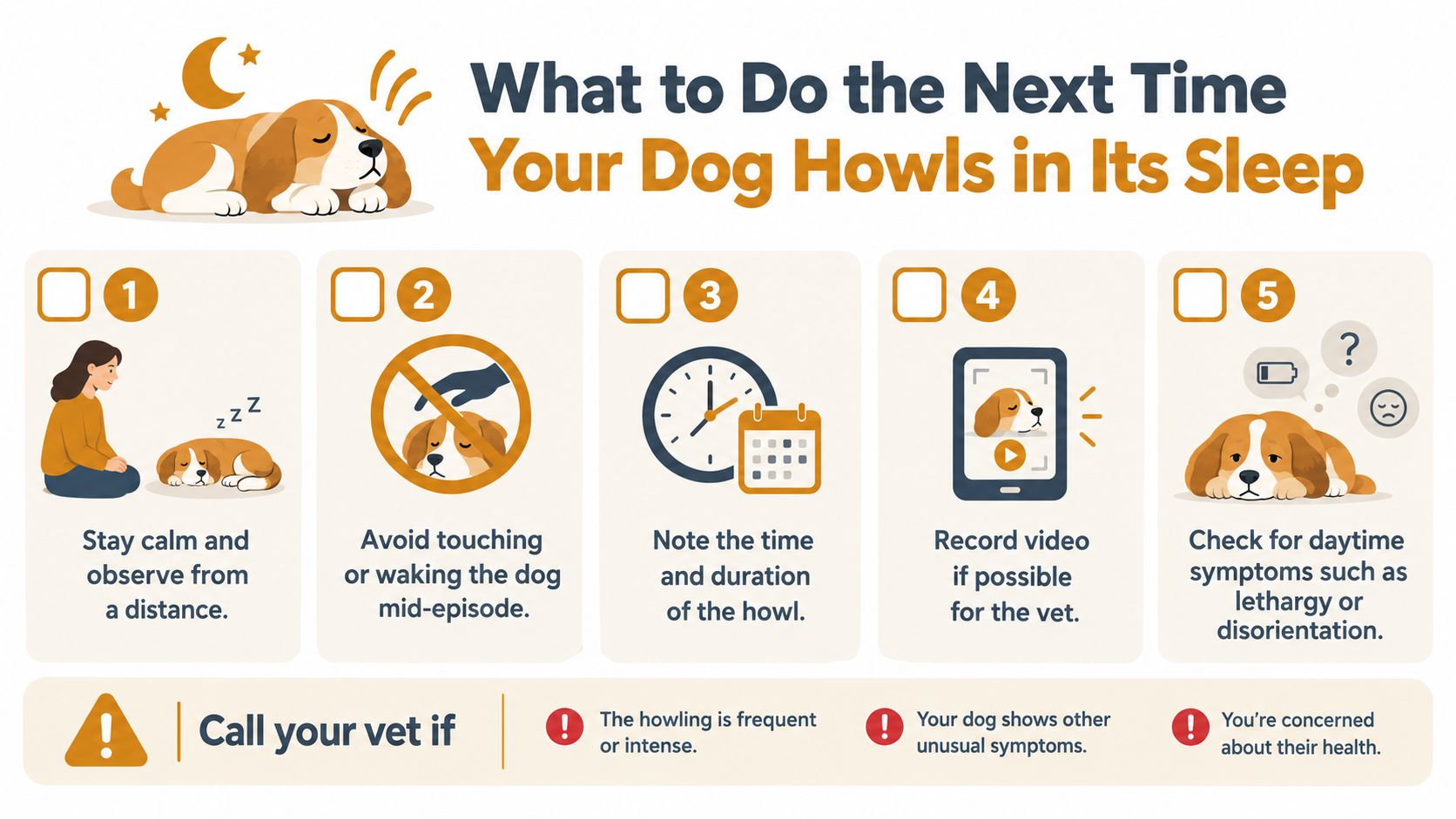
The next episode is an opportunity to collect useful information without turning a normal sleep event into a stressful one. Start by staying calm. Sudden touching, shaking, or shouting can startle a sleeping dog, and a frightened dog may snap reflexively even if it has never shown aggression while awake.
Use this at-home checklist
Observe from a safe distance. Watch the chest, legs, face, and overall posture. Notice whether the sound is a soft howl or a forceful vocalization.
Avoid touching mid-episode. Let the dog transition out of sleep naturally unless there is an immediate safety concern. Keep children and other pets away from the sleeping dog.
Note the time and duration. Write down when the episode started, how long it seemed to last, and whether it happened once or repeatedly during the same sleep period.
Record a short video with sound. A clip can show movement, breathing, eye activity, and recovery much more accurately than a later description. Save it for your veterinarian rather than posting it as a substitute for an examination.
Check daytime behavior. Look for normal appetite, energy, walking, interaction, and awareness. In a Beagle breed profile, vocal tendencies may be expected, but a new change still deserves context.
A non-urgent veterinary call is appropriate when the pattern is new in an adult dog, becomes more frequent, occurs in clusters, or is paired with stiffness, altered appetite, lower energy, or unusual daytime behavior. Contact a veterinarian promptly for forceful episodes, repeated biting or chewing movements, suspected pain, prolonged unresponsiveness, serious breathing difficulty, injury, or marked confusion after waking.
Make the sleep setting easier to interpret
Keep the bedtime routine consistent and provide a quiet, darkened sleeping area. Gradually reduce trigger noises where possible, and note whether a siren, television, music, or another dog tends to precede the howl. Don't punish the sound. Scolding can add stress and makes it harder to tell whether the original behavior was dream-related, sensory, or medical.
At an appointment, expect the veterinarian to ask about onset, frequency, duration, movement, medications, health history, and daytime changes. The clinician may review your video, perform a physical and neurologic examination, and decide whether further testing is needed. In unusual cases, confirming a sleep disorder may require monitoring brain and muscle activity during an episode.
Key Takeaways for Worried Owners
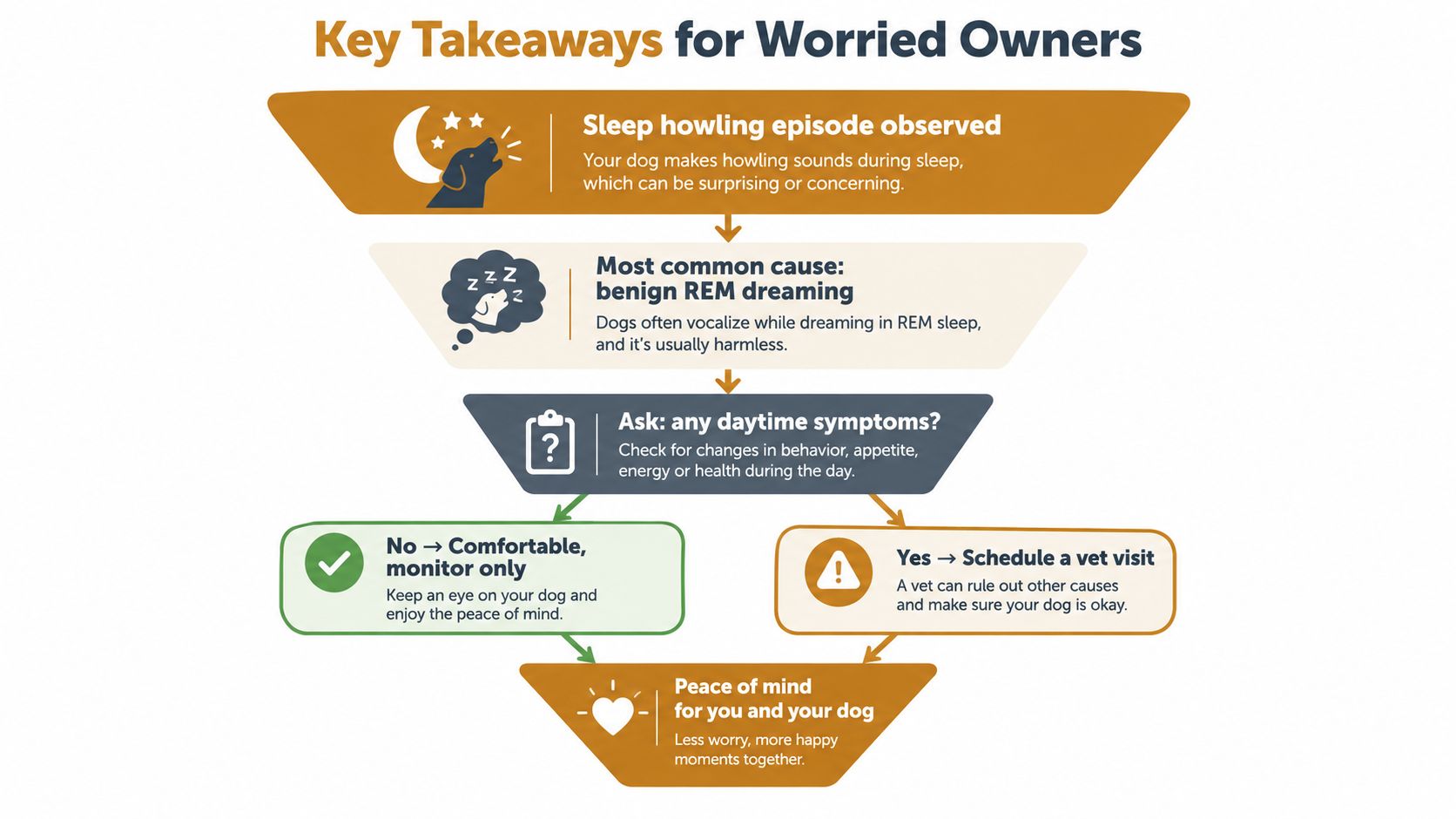
The most common explanation is benign REM dream activity. A dog that gives a short howl, makes a few gentle twitches, settles back down, and behaves normally after waking can usually be monitored rather than urgently examined.
Use this decision path after an episode:
One brief, gentle howl: If your dog remains relaxed and returns to normal sleep, make a note of it and continue observing.
A recurring but otherwise mild pattern: Start a simple log. Record the date, approximate time, sound, body movements, possible environmental triggers, and behavior after waking.
A new pattern in an adult or senior dog: Schedule a veterinary visit, especially if the change continues or occurs alongside altered sleep, appetite, energy, mobility, or awareness.
A forceful or clustered episode: Arrange professional evaluation. Violent limb movements, chewing, biting, rigidity, apparent unresponsiveness, or urinary leakage can signal something other than ordinary dreaming.
Daytime symptoms after the event: Don't dismiss disorientation, pain, weakness, stiffness, or a noticeable behavior change as part of a dream. A veterinarian should assess the whole dog, not only the recording.
The newer sound-processing evidence adds one useful reminder. A sleep howl may reflect a dream, an external sound, or both. Listening for a trigger can improve your notes, but it shouldn't replace attention to movement and recovery.
You don't need to wake your dog for every soft sound. You do need to respond when the pattern changes. Start a brief log tonight, keep a video available if another episode occurs, and schedule a non-urgent exam if the howling becomes repeated, intense, or associated with daytime symptoms.
If this episode raises broader questions about planning for your dog's health needs, PetCostEngine offers breed- and state-specific ownership projections and reference tools for veterinary planning. Visit the site to explore your dog's breed profile and prepare more confidently for future care decisions.
Estimated lifetime and yearly costs for a Siberian Husky, state by state, plus whether pet insurance breaks even for the breed.
See Siberian Husky costs →
Is insurance worth it for a Siberian Husky? →
Premium dry food → Puzzle toys → No-pull harness →
As an Amazon Associate, PetCostEngine earns from qualifying purchases.