A backyard can look completely enclosed and still fail at its most important job. In a large U.S. survey of 1,053 dogs, 26.5% had escaped at least once, and the escape rate was 44.0% for dogs using electronic fences, compared with 23.3% for dogs behind see-through or privacy fences (Journal of the American Veterinary Medical Association survey summary). That finding changes how you should approach backyard ideas for dogs. Open space matters, but it isn't enough by itself.
A useful yard should contain your dog securely, provide shade and fresh water, support physical exercise and mental engagement, and remain easy to inspect and clean. The best setup doesn't need to be elaborate. You can adapt these ideas to a small urban yard, an active young dog, a puppy still learning house rules, a senior with limited mobility, a multi-dog household, or a climate with intense heat, cold, rain, or snow.
The sequence matters. Start with safety, then add comfort, enrichment, and convenience. An attractive yard becomes a practical part of daily life only when you can supervise it, maintain it, and quickly spot the problems that could lead to escape, injury, illness, or conflict.
Table of Contents
- 1. Secure Fencing and Containment Systems
- 2. Designated Digging Zones and Sandboxes
- 3. Shade, Cooling and Weather Protection
- 4. Exercise and Agility Equipment
- 5. Dog Waste Management Systems
- 6. Water Features and Hydration Stations
- 7. Enrichment Toys and Mental Stimulation Equipment
- 8. Landscaping and Ground Surface Considerations
- 9. Supervised Socialization and Training Zones
- 10. Regular Maintenance and Inspection Protocols
- Backyard Dog Ideas: 10-Point Comparison
- Turn the Yard Into a Safer Daily Routine
1. Secure Fencing and Containment Systems
Secure containment is the foundation of every dog-friendly backyard. Before adding agility equipment or planting a dog-safe garden, walk the entire perimeter from your dog's perspective. Look for loose boards, low sections, climbable objects, latch problems, gaps at gates, and places where a determined dog could dig beneath the barrier.
A high fence with a reinforced base works better than a basic boundary that only looks secure. The American Kennel Club's dog fencing guidance recommends placing strips of metal, cement, or large rocks one to two feet below the fence line for a dig-proof setup. If your property uses a shallower buried barrier, including one extending at least six inches into the ground, inspect it often and reinforce it if your dog keeps testing the edge.
A five-foot privacy fence with a reinforced bottom rail may suit a calm medium-sized dog, while a jumper may need more height and a clear area around the fence. In an HOA-controlled neighborhood, vinyl or composite panels can provide a consistent appearance without sacrificing a closed perimeter. Wood can swell in humid weather, and metal can rust in salt air, so choose materials that match the local climate.
Practical rule: If you use an invisible fence, pair it with a visible physical boundary. A collar signal may discourage crossing, but it doesn't block traffic, loose animals, or people from entering the yard.
Set a monthly inspection reminder for rust, rot, sharp edges, and gaps that could trap a paw or nose. Owners of athletic escape artists should also review Siberian Husky characteristics before assuming a standard suburban fence will be sufficient.
2. Designated Digging Zones and Sandboxes
Digging is usually normal dog behavior. Dogs may dig to cool themselves, follow a scent, bury an object, or fill an uneventful stretch of the day. A designated zone gives that instinct a defined outlet while protecting garden beds, tree roots, and the ground near the fence.
In a larger yard, use a wooden sandbox edged with composite boards. A children's sandbox or seasonal kiddie pool filled with loose, dog-safe material suits a smaller property and can be stored when needed. Place it away from outdoor seating and the back door. Sand spreads easily and can irritate paws when tracked indoors.
Match the zone to your dog's size, age, and activity level. A puppy may need short, supervised sessions, while an active adult dog may use the area daily. A sandbox also works better as one part of the yard's enrichment system, alongside exercise, water, and shaded rest areas.
Introduce it gradually. Scatter a favorite toy over the surface, reward your dog for entering, and praise digging in that location. Loose material attracts more digging than compacted or wet fill, but it needs inspection and cleaning.
- Keep it clean: Remove visible feces daily. Refresh the digging material monthly when the zone sees daily use, and sooner if it becomes soiled or compacted.
- Watch soil hygiene: Contaminated soil can carry parasites such as roundworms. Replace heavily soiled material, and ask your veterinarian whether fecal testing fits your dog's routine.
- Match the size to the dog: A Dachshund or other persistent burrower needs enough room to dig naturally without reaching the edge immediately. Larger dogs may also need deeper, wider space, with supervision adjusted for their digging intensity.
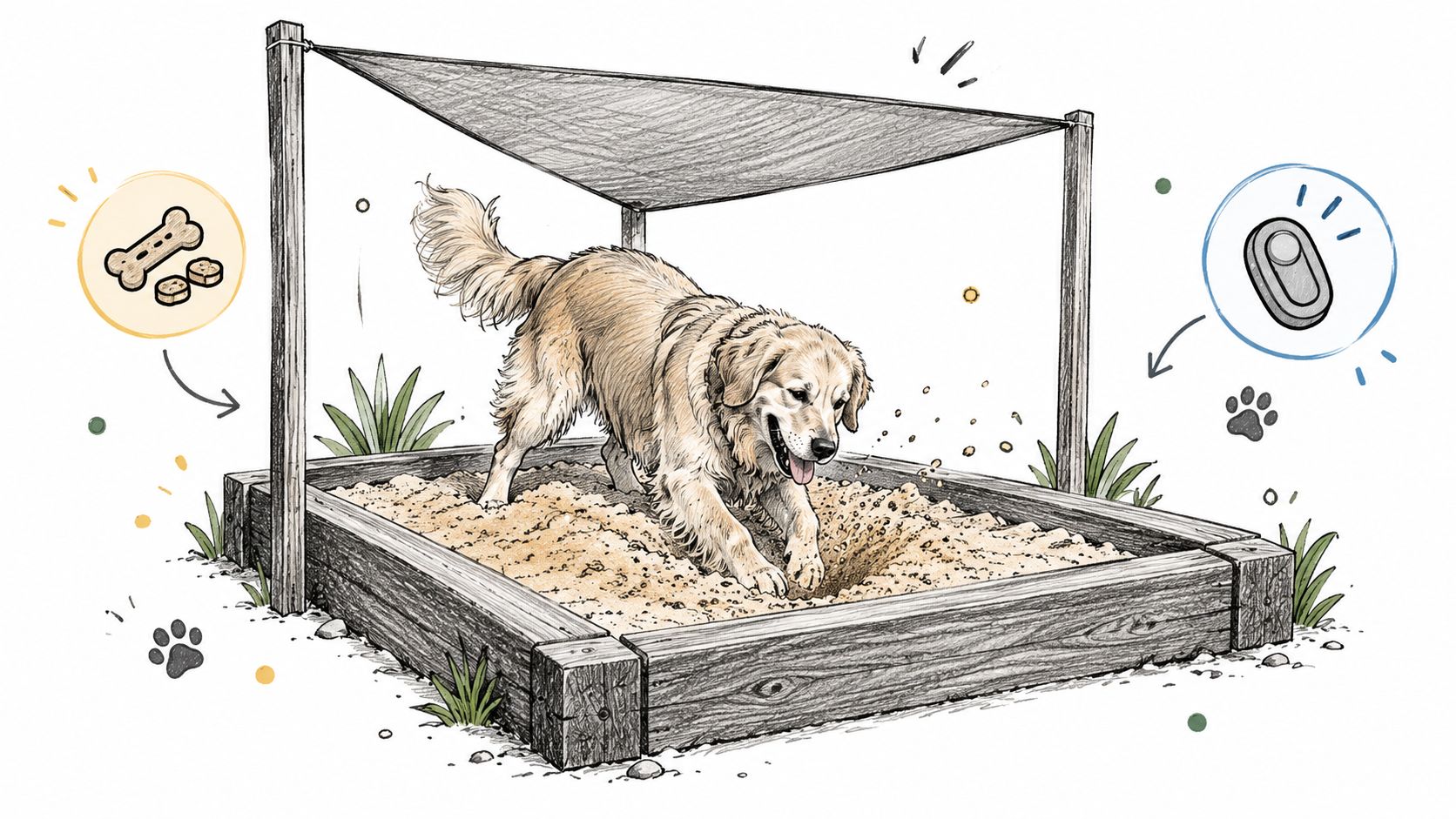
A digging zone will not resolve every escape attempt. If your dog targets the fence, keep the sandbox available for enrichment while supervising that behavior and addressing the perimeter separately.
3. Shade, Cooling and Weather Protection
A dog yard needs a reliable place to rest, not just an open area for running. Put shade over the locations where your dog pauses, especially beside water bowls and near the preferred sleeping spot. A shade sail mounted between sturdy fence posts, a covered patio, or a retractable canopy can work better than a small decorative shelter that leaves the resting area exposed as the sun moves.
Heat management deserves special attention for dogs with short muzzles, heavy coats, or limited exercise tolerance. A shallow kiddie pool can provide cooling and play, but it must be positioned where the dog can enter and exit easily. Change pool water daily, scrub the surface weekly, and drain it if the water becomes dirty or contaminated.
Watch for excessive panting, drooling, lethargy, or vomiting. Those signs call for immediate action, including moving the dog indoors and seeking veterinary guidance when symptoms are serious or don't resolve. Don't treat a pool as a substitute for supervision during hot weather.
Make the setup seasonal
Before summer, test whether shade still covers the water station during the hottest part of the day. Before winter, check shelters, wind-blocking panels, heated water bowls, and electrical components. Insulated bowls can help in hot conditions, while ice-free systems and heated bowls may prevent freezing during cold weather. Outdoor structures need inspection before each seasonal transition and after major storms.
A French Bulldog may need shorter activity periods and faster access to a cool indoor space than a fit, long-nosed dog. Use French Bulldog health and care information to inform broader decisions, but let the individual dog's breathing, fitness, and veterinary advice guide outdoor activity.
4. Exercise and Agility Equipment
Agility equipment can turn unused yard space into a structured exercise area, but more equipment doesn't automatically create better exercise. A few low, stable obstacles are often more useful than a crowded course that encourages uncontrolled jumping. Start with a short tunnel, low weave poles, or a ground-level balance board, then teach each piece separately.
DIY jump standards made from PVC or wooden posts can work for supervised training. Keep the height low at first, particularly for puppies, seniors, dogs carrying extra weight, and breeds with joint vulnerabilities. Avoid repetitive jumping on concrete or pavement. Grass, resilient soil, or another forgiving surface reduces the impact compared with hardscape.
Use the equipment as a conversation between movement and training. Ask for a sit before the tunnel, reward calm waiting beside the poles, and stop while the dog is still coordinated and interested. Excessive panting, reluctance to continue, or stiffness after activity means the session was too demanding.
Build confidence before intensity. A dog that understands one obstacle calmly is safer than a dog rushing through several unfamiliar obstacles.
A senior dog might benefit from low-impact balance work and scent trails instead of jumps. A young Border Collie may need more complex problem-solving and controlled movement, but even an energetic dog needs rest periods. Breed context, including Border Collie activity and health considerations, can help you choose a starting level.
5. Dog Waste Management Systems
A yard stays dog-friendly only when waste management is part of the design. Feces left on grass, gravel, or soil can create odor, attract flies, and spread contamination. Urine can also damage grass and create an unpleasant ammonia smell when one small area receives repeated use.
Choose a potty area that's easy to reach and easy to rinse. Gravel or mulch can provide drainage, while a fence-mounted bag dispenser keeps cleanup supplies close to the point of use. A large yard may need more than one station so owners aren't tempted to postpone cleanup. Multi-dog households benefit from a clear routine, with daily removal and a deeper cleaning rotation.
- Remove feces immediately: Parasites such as roundworms can become infectious within one to three days, so prompt removal matters.
- Rinse strategically: Rinse the potty area weekly to dilute urine and reduce ammonia buildup, while avoiding runoff into vegetable beds or waterways.
- Train one preferred spot: Lead the dog there consistently and reward appropriate elimination.
- Watch health changes: Diarrhea, worm segments in stool, or weight loss warrants veterinary advice and may call for a fecal examination.
An in-ground waste digester may suit some properties, but local rules, soil conditions, and manufacturer directions matter. Don't place one near a vegetable garden, play surface, or water source. For broader planning around veterinary and routine ownership needs, the PetCostEngine dog ownership calculator can help you review breed- and location-specific projections.
6. Water Features and Hydration Stations
One water bowl beside the back door is easy to overlook and easy for a dog to tip over. Multiple shaded stations work better, especially in a large yard, a multi-dog home, or a property where one dog guards resources. Use stainless steel or ceramic bowls because plastic can develop scratches and retain contamination more readily.
Refresh outdoor bowls twice daily, in the morning and evening, and check them again after active play. Place them under shade rather than in direct sun. An insulated bowl or ice addition can help during hot weather, but ice doesn't replace fresh water or a cool resting area.
A circulating pet fountain can encourage some dogs to drink, though it isn't maintenance-free. Clean and refill it according to the manufacturer's directions, with deep cleaning typically scheduled weekly or biweekly. A fountain with a clogged filter or slimy basin isn't a hydration improvement.
Treat pools as enrichment, not drinking water
A shallow pool can support cooling and play, but many dogs splash in it, which quickly makes the water unsuitable for drinking. Drain wading pools daily and sanitize them weekly. During peak temperatures, replace the water after each use if the pool becomes dirty, cloudy, or heavily contaminated.
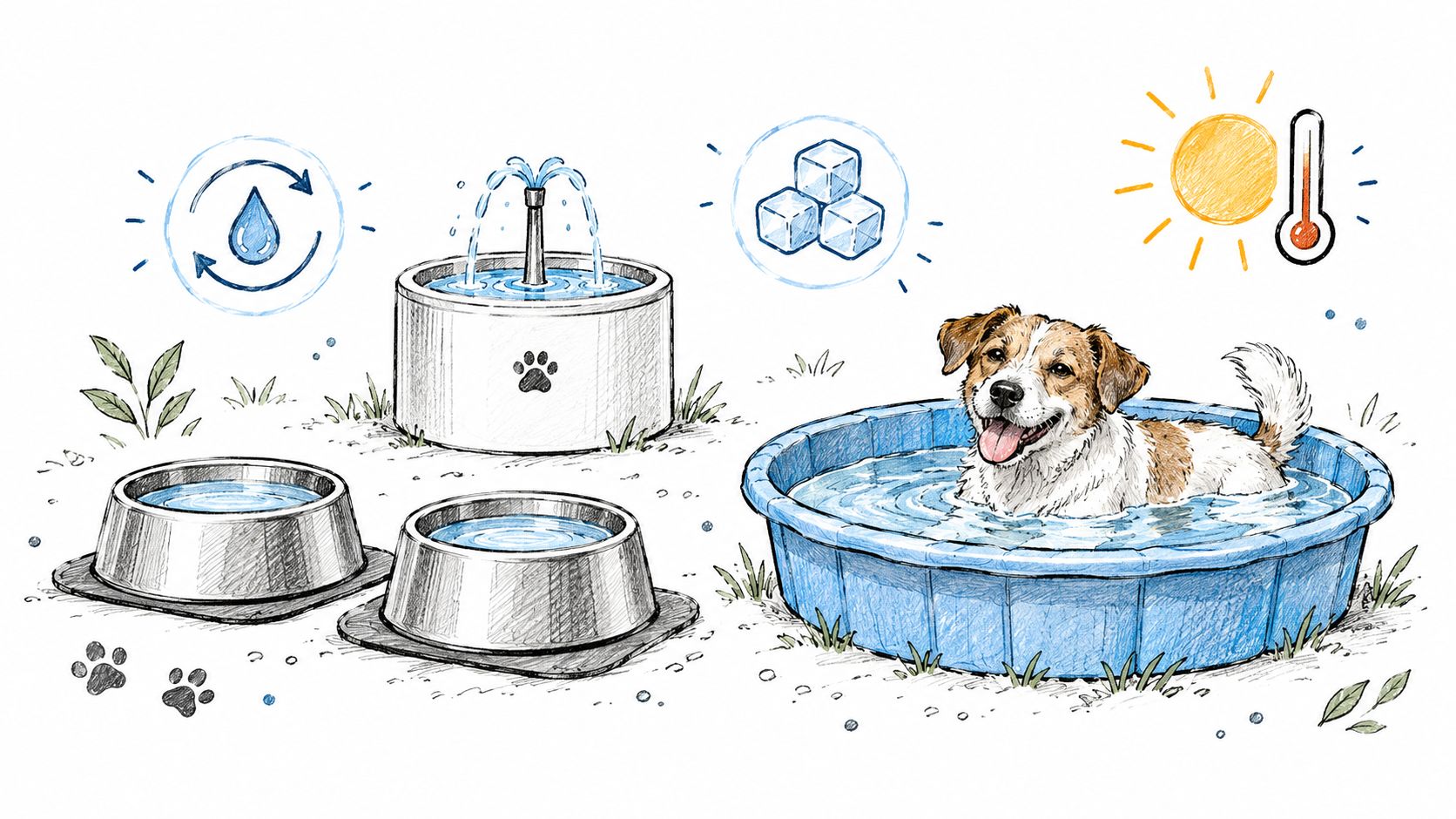
Keep cords, hoses, and fountain components secured so a curious puppy can't chew them. For a small yard, one shaded bowl and a compact splash area may be enough. For a large property, place water where the dog exercises and where it rests.
7. Enrichment Toys and Mental Stimulation Equipment
A yard with space but nothing to investigate can become boring quickly. Add activities that make the dog sniff, search, manipulate, and make choices. Puzzle feeders, treat-dispensing balls, frozen Kong toys, and hidden toys can turn a routine outdoor break into a short mental workout.
Use novelty carefully. Rotate toys weekly, keeping some out of sight for one to two weeks before bringing them back. The break can make a familiar toy interesting again, while constant access can leave the yard cluttered and reduce the value of each activity.
Match difficulty to the dog. A beginner may need a food puzzle with one obvious action, while a confident problem-solver can work through several steps. If the dog gives up, chews destructively, or becomes frustrated, simplify the task. If the dog finishes immediately and loses interest, make the next version slightly more challenging.
- Use scent trails: Hide treats or toys along a safe route, away from toxic plants, sharp mulch, and areas contaminated with waste.
- Pair play with training: Ask for a wait, touch, or recall before releasing the dog to the enrichment item.
- Inspect every toy: Remove items with tears, loose pieces, or damage that could lead to ingestion.
- Supervise new activities: Some dogs shred puzzle toys instead of solving them, so test the first sessions while you're present.
For puppies, short exploration sessions prevent overstimulation. For seniors, scent games and easy food puzzles may provide meaningful engagement without stressing joints. Enrichment should complement exercise and social contact, not replace them.
8. Landscaping and Ground Surface Considerations
Ground surfaces determine whether a yard stays usable after rain, heat, and repeated running. Natural grass feels comfortable for many dogs, but high-traffic zones can become muddy or worn. Artificial turf is easier to keep visually consistent, yet it can retain heat and requires careful drainage and cleaning. Gravel drains well, but sharp or hot stones can irritate paws.
Create a surface mix instead of forcing the entire yard to perform one job. Use grass for movement, a permeable paver path for high-traffic routes, and a designated potty area that drains easily. Test surfaces through the seasons because a material that feels comfortable in summer may become muddy in spring or too hot in direct sun.
Choose plants and mulch conservatively
The ASPCA's guidance on toxic garden plants advises fencing off toxic plants and supervising pets around them. ASPCA also notes that any plant material can cause vomiting or gastrointestinal upset, so even a plant not known for severe toxicity shouldn't be treated as automatically harmless.
Sago palm can cause liver damage and may be fatal, while azaleas and rhododendrons can cause vomiting, diarrhea, weakness, and central nervous system depression. If ingestion occurs, contact a veterinarian or animal poison control promptly. Avoid cocoa mulch, and be cautious with cedar or pine alternatives if they cause respiratory irritation.
Use low-maintenance grass blends, clover, or durable non-toxic plantings only after checking regional suitability and plant safety. A serviceberry or Oregon grape may fit some yards, but local conditions and individual dog behavior still matter.
9. Supervised Socialization and Training Zones
A backyard can support socialization, but a fence doesn't make every interaction safe. Separate play from training by creating a quieter zone with fewer distractions and a larger area for movement. Removable panels can divide the yard for a controlled playdate, a new-dog introduction, or temporary separation during meals and rest.
Start with familiar dogs or people before introducing new visitors. Watch body language rather than assuming that active play means both dogs are comfortable. Play bows, loose movement, relaxed facial expressions, and appropriate pauses are encouraging. Stiffness, avoidance, repeated hiding, hard staring, tucked posture, or frantic pursuit calls for a break.
End the session while the dogs are still making good choices, not after excitement has become conflict.
Timed access can help multi-dog households. One dog can explore an enrichment station while another practices calm behavior behind a removable panel. This arrangement also gives a senior or nervous dog a place to rest without being chased by a younger companion.
Use the training zone during quieter periods, such as early morning or evening, when outside distractions are lower. Keep sessions five to fifteen minutes so the dog can stay focused without becoming frustrated. A small yard can still work well if you control access and remove visual triggers. A larger yard may need more structure because dogs can build speed and arousal quickly when they have unrestricted space.
10. Regular Maintenance and Inspection Protocols
Maintenance is what keeps good backyard ideas for dogs working after the novelty disappears. A loose gate, empty water bowl, torn toy, toxic plant cutting, or storm-damaged branch can turn a safe setup into a hazard. Routine checks are easier when each task has a specific day and owner.
Use a printed or digital checklist with three layers:
- Weekly hazard scan: Look for fence gaps, standing water, sharp objects, damaged toys, unstable equipment, and waste buildup.
- Monthly deep clean: Wash bowls and toys, inspect pool surfaces, rinse potty areas, clear debris, and check the digging zone.
- Seasonal repairs: Test shade structures, examine fencing for weather damage, trim unsafe growth, and prepare for heat, cold, rain, or snow.
A spreadsheet can track the date, task, repair, and photo. Keep replacement bags, cleaning supplies, fasteners, and basic repair materials in one accessible location. That makes it more likely you'll fix a problem immediately instead of leaving it for the next weekend.
After severe weather, inspect the entire yard before releasing the dog. Check for fallen branches, exposed nails, shifted fence posts, damaged electrical components, contaminated standing water, and new escape routes. In a multi-dog household, daily cleanup followed by a weekly deep-clean rotation keeps the work manageable.
Backyard Dog Ideas: 10-Point Comparison
| Item | 🔄 Implementation complexity | ⚡ Resource requirements | 📊 Expected outcomes | ⭐ Ideal use cases | 💡 Key advantages |
|---|---|---|---|---|---|
| Secure Fencing and Containment Systems | Medium–High, professional install or DIY plus permits; ongoing inspections | High, materials, labor, periodic repairs | Strong containment; reduced escapes and traffic-related injuries | Homes with yards near roads; escape-prone or athletic breeds | Reliable safety; allows off-leash outdoor freedom; lowers leash management |
| Designated Digging Zones and Sandboxes | Low, build & train dog to use area | Low–Medium, sand/gravel, borders, periodic replacement | Redirects digging; protects landscaping; tactile enrichment | Digging breeds, gardeners wanting protected beds, budget-conscious owners | Channels instinct; inexpensive enrichment; protects plants |
| Shade, Cooling and Weather Protection | Medium, install shade structures and seasonal systems | Medium, shade sails/trees, cooling mats, water stations, upkeep | Reduced heat/cold illness; longer safe outdoor time year-round | Hot or cold climates; brachycephalic and heavy-coated breeds | Health protection across seasons; multiple shelter options for choice |
| Exercise and Agility Equipment | Medium, equipment setup and staged training | Medium–High, space, commercial/DIY gear, training time | Improved fitness, coordination, reduced excess energy | High-energy/working breeds, active owners, larger yards | Builds strength/mental focus; bonding via training; adaptable equipment |
| Dog Waste Management Systems | Low–Medium, establish stations and schedule | Low–Medium, bags, receptacles, digesters, regular labor | Better hygiene; reduced parasites and ammonia damage | Multi-dog homes, properties near water, health-focused owners | Concentrates waste; protects lawn and public health; reduces odors |
| Water Features and Hydration Stations | Low–Medium, place multiple stations, optional fountains | Low–Medium, bowls, fountains, pools, daily cleaning | Reduced dehydration; cooling and play enrichment | Warm climates, active or multi-dog households | Encourages regular drinking; provides cooling; self-regulation |
| Enrichment Toys and Mental Stimulation Equipment | Low, select, rotate, supervise initially | Low, toys, puzzle feeders, occasional replacements | Less boredom/destructive behavior; improved problem-solving | Dogs left outdoors for periods; intelligent or anxious dogs | Low-cost mental outlet; flexible formats; supports training |
| Landscaping and Ground Surface Considerations | Medium, design selection and plant choices | Medium–High, installation, drainage, maintenance | Safer surfaces, fewer paw/joint injuries, durable yard | Any yard with heavy use; owners wanting low-injury surfaces | Reduces injury/toxicity risks; improves drainage and durability |
| Supervised Socialization and Training Zones | Medium, set up divided areas and routines | Low–Medium, panels, training leads, supervision time | Safer social skills; controlled behavior gains | Puppies (8–16 wks), multi-dog homes, reactive or shy dogs | Structured, gradual exposure; minimizes traumatic encounters |
| Regular Maintenance and Inspection Protocols | Low, establish checklist and routine | Low–Medium, time, supplies; optional professional services | Fewer hazards, longer equipment life, fewer emergencies | All dog-owning properties; especially multi-dog or large yards | Prevents costly failures; maintains hygiene and safety |
Turn the Yard Into a Safer Daily Routine
You don't need to install every feature at once. Prioritize the changes that prevent the most serious problems, then add features that make outdoor time more comfortable and engaging.
Start with the perimeter. A secure physical fence, a reliable gate latch, a reinforced base, and a clear inspection routine give the rest of the yard a safe framework. If your dog jumps, climbs, or digs, design for that behavior instead of hoping the dog will lose interest. Electronic containment may be portable and convenient, but a visible physical barrier offers protection from hazards outside the property as well as from escape.
Add shade and water next. Put both where your dog rests, not only where you expect play to happen. A cool surface, a clean bowl, and an accessible indoor route matter more than decorative features during hot weather. Dogs with short muzzles, heavy coats, limited fitness, or age-related weakness may need shorter outdoor sessions and closer supervision.
Choose surfaces and plants for the individual dog and the local climate. A digger may need a sandbox. A dog with sensitive paws may need softer routes and less hot hardscape. A puppy needs safe exploration and close monitoring, while a senior may benefit more from scent games, low-impact balance work, and shaded rest areas than from jumps. Research every plant before adding it, and keep hazardous landscaping fenced off. The ASPCA's spring garden safety guidance explains why plant selection and prompt veterinary help matter when ingestion is possible.
Then add exercise and enrichment at the right level. Low obstacles, scent trails, food puzzles, and controlled socialization can make a small yard more useful without turning it into an obstacle course. Active young dogs may need a combination of movement and problem-solving, while puppies and seniors usually do better with shorter, carefully paced sessions.
Finally, build maintenance into the routine. Inspect the fence monthly, remove waste promptly, refresh water morning and evening, clean pools and bowls, and complete a full check after severe weather. The best backyard ideas for dogs are the ones your household can operate consistently.
PetCostEngine can help you review breed- and state-specific ownership projections while you make broader care decisions, including choices for puppies, seniors, brachycephalic breeds, and dogs with known health risks. Its breed pages and planning tools can add context to the daily routine you're building in the yard, without replacing advice from your veterinarian or trainer.
PetCostEngine offers individualized dog ownership projections by breed, age, and U.S. state, along with breed health profiles and insurance comparisons. Use PetCostEngine to connect your backyard plans with broader, data-informed decisions about caring for your dog.
Estimated lifetime and yearly costs for a Siberian Husky, state by state, plus whether pet insurance breaks even for the breed.
See Siberian Husky costs →
Is insurance worth it for a Siberian Husky? →
Pet gate → Puzzle toys → Durable chews →
As an Amazon Associate, PetCostEngine earns from qualifying purchases.