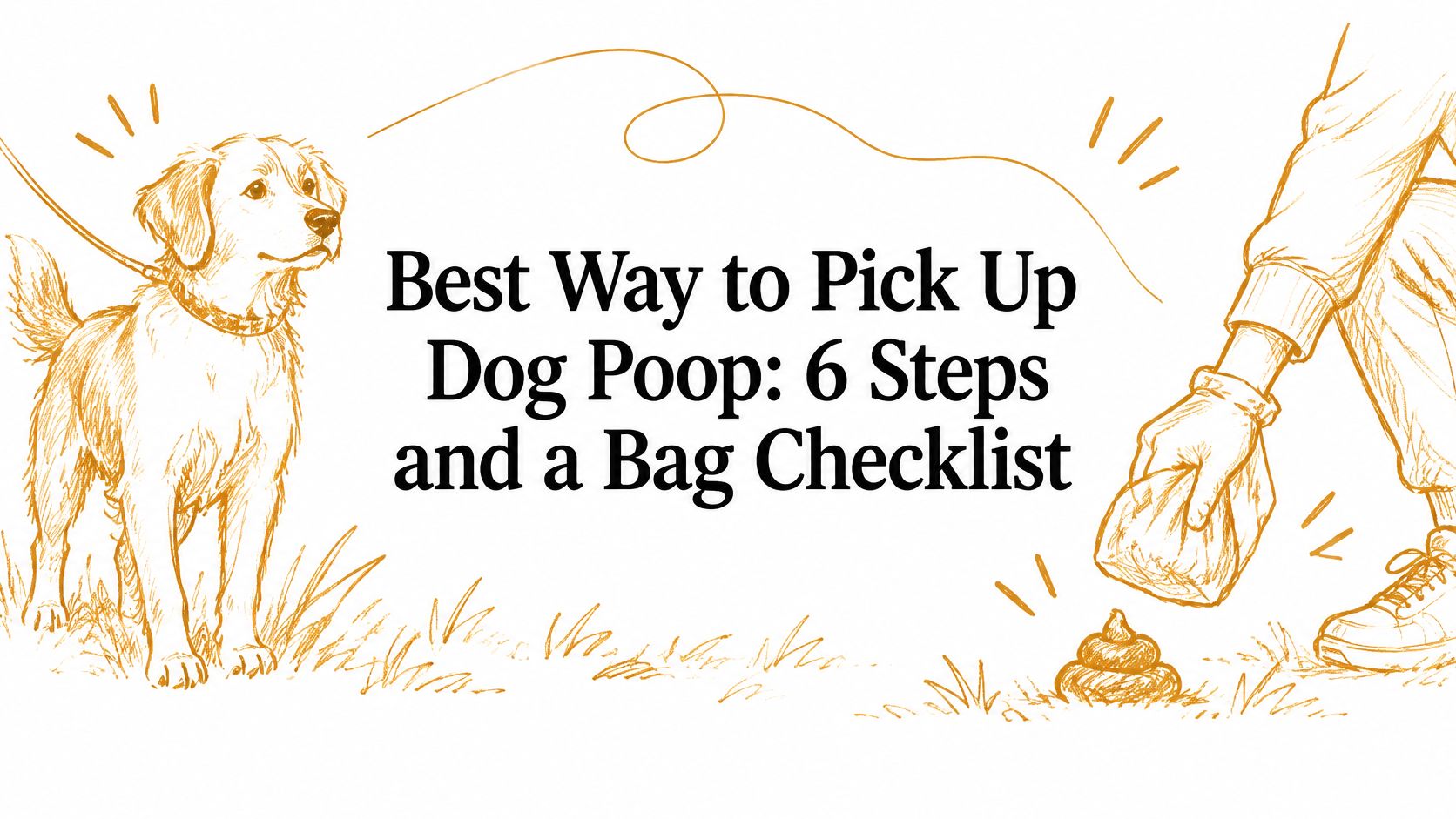
Hold a bag inside out over your hand, pick up the waste without touching it, seal the bag, and put it in a lidded trash can the same day, where local rules allow. That's the routine even when your dog has stopped beside wet grass, you're holding a taut leash, and the nearest public bin is already overflowing.
The best way to pick up dog poop includes what happens after you tie the knot. A sound bag, a controlled pickup, and a plan for carrying it home matter more than a dispenser with extra features.
Table of Contents
- The Best Method in Brief and Why Timing Matters
- Pickup Methods Compared by Terrain and Hand Contact
- Six Steps to Pick Up Dog Poop Without Hand Contact
- Disposal Options When No Bin Is Nearby
- Fixing Common Pickup Problems and When to Call Your Vet
- Confirm Your Pickup Kit Before the Next Walk
The Best Method in Brief and Why Timing Matters
Prompt pickup limits exposure. According to the Centers for Disease Control and Prevention's dog health guidance, dog feces can contain roundworm eggs that generally need 2–4 weeks in the environment to develop enough to cause infection. Daily removal reduces the opportunity for those eggs to remain in soil, but that development period isn't a safe waiting period for leaving waste behind.
Children need particular protection because they touch soil and then put their hands near their mouths. Keep them away from places where feces may be present rather than assuming a lawn is clean because no pile is visible.
Rain moves waste rather than cleaning it up
An EPA fact sheet on pet waste pollution estimates that 61.5 million dogs in the United States in 2001 produced approximately 6.3 billion pounds of poop annually, and says one gram of pet waste contains an average of 23 million fecal-coliform bacteria.
Rain can carry exposed waste from lawns, sidewalks, and streets into storm drains and nearby waterways. Waiting for a storm, mowing over a pile, or washing it off pavement moves contamination instead of collecting it.
Your everyday routine should be simple:
- Carry bags on every walk. Don't rely on a park dispenser being stocked.
- Clear the yard at least daily. Include areas behind shrubs and beside fences.
- Treat the bag as contaminated until disposal. Keep it separate from food, toys, and personal belongings.
Pickup Methods Compared by Terrain and Hand Contact
An inverted bag over the hand is the default. It fits in a pocket, works on most surfaces, and gives you enough control to collect small pieces without putting bare skin against waste.
The American Veterinary Medical Association's zoonotic disease guidance recommends promptly collecting dog feces with a scooper or a plastic bag covering the hand, followed by thorough handwashing. A tool adds reach or grip; it doesn't eliminate cleanup afterward.
Pickup methods by hand contact and terrain
| Method | Hand contact | Works well on | Main drawback | Best for |
|---|---|---|---|---|
| Inverted bag over the hand | None if done correctly | Grass, pavement, gravel, most surfaces | Needs practice; bag can tear on rough ground | Daily walks with small to medium dogs |
| Scooper with a bag | Low; handle stays away from waste | Grass and loose soil | Bulkier to carry; scooper needs cleaning | Large dogs and grassy yards |
| Tongs or grabber with a bag | None with correct handling | Pavement, snow, ice | Hard to grip soft or small pieces; more cleaning | Snow, hard surfaces, owners with limited grip |
| Hands-free bag dispenser, clip-on or pouch | No protection by itself; paired pickup method controls contact | Any surface when paired with the inverted bag technique | Bags can run out; check fit on the leash | Walkers who need a free hand |
A scooper makes sense when a large pile would crowd your hand inside a small bag. On grass, a rake-and-pan set can collect scattered pieces without repeatedly bending down. Line the collection container where practical, and avoid dragging the tool across clean lawn.
Tongs work better on firm, distinct pieces than on soft stool. Test the handle before buying: a stiff spring can make a grabber unsuitable for someone with limited grip, even if its long handle reduces bending.
Choose carrying gear that stays out of the way
A clip-on dispenser or leash pouch keeps unused bags accessible, but it isn't a pickup tool. Look for a roll compartment that holds several bags, an opening you can operate with one hand, and a clip that won't swing into your dog's legs.
For bags, look for dimensions, thickness stated in mils, and a clear explanation of whether leak resistance has been tested. An unsupported “extra strong” claim tells you less than disclosed specifications.
Owners comparing large or high-output dogs can use breed profiles as a starting point for planning gear. Actual bag capacity still needs to match your dog's output, your hand, and enough empty material to tie a knot.
Six Steps to Pick Up Dog Poop Without Hand Contact
Get your dog settled before reaching down. Keep the leash secure, leave enough slack for a comfortable standing position, and open the bag while you're still upright.
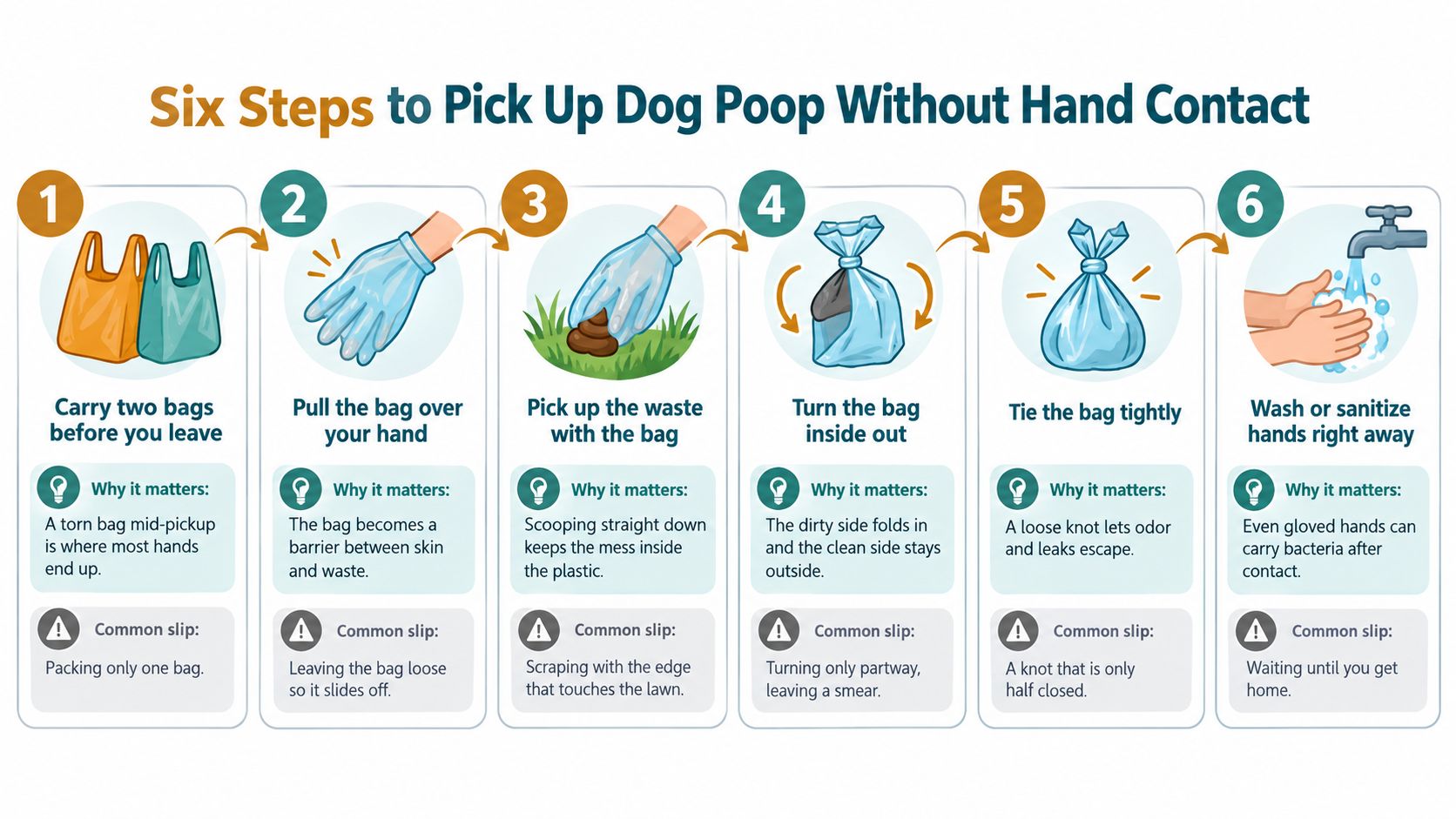
This visual summarizes the barrier, pickup, sealing, and hand-cleaning motions.
Prepare, collect, and contain
Carry two bags before you leave. Keep one ready and another available for a tear or an unexpected extra stop. Open the first bag fully and check its bottom seam before reaching toward the pile. The common slip is discovering an empty dispenser only after your dog has finished.
Approach from the side or rear. Position your feet on clean ground so you don't need to step over the waste. Keep your dog beside you rather than across the pile. Walking straight toward it while watching the leash makes it easy to put a shoe into fresh stool.
Cover your hand, collect the waste, and reverse the bag over it. Slip your hand inside the bag like a glove, with enough loose material around your wrist to hold securely. Cup the waste from underneath, lift it, then use your other hand to pull the bag opening over your covered fingers and the pile. Keep the formerly exposed, dirty surface folded inward. Don't press down into soft ground or scrape so hard that stones puncture the plastic.
Tie the opening before searching for a bin. Leave sufficient empty material above the waste to form a complete knot. If you're struggling to close it, the bag is too full; divide the contents between bags rather than squeezing them upward. Carrying an open bag while looking around is an easy way to spill it or brush waste against clothing.
Put the sealed bag in an approved trash receptacle. Check that the bag goes fully inside and that the opening isn't obstructed. A fence post, tree base, or spot beside a bin isn't temporary storage you can count on returning to. If the available bin can't accept the bag properly, keep carrying it.
Wash your hands with soap and running water. Avoid eating, drinking, or smoking until you've cleaned your hands, even if the plastic stayed intact. When washing isn't immediately possible, use sanitizer containing at least 60% alcohol as an interim measure, consistent with the CDC advice summarized alongside the EPA pet-care pickup guidance. The common slip is treating an apparently clean hand as proof that no contamination occurred.
Practical rule: Finish containing the waste before reaching for your phone, opening a snack, or handling your dog's water bowl.
For a moving demonstration of bag handling, watch the pickup motion before practicing it on your next walk.
Keep children, tools, and belongings separate
The CDC's toxocariasis prevention guidance explains that infection can occur when contaminated dirt or feces reaches someone's mouth through unwashed hands. Keep children away from suspect soil, and have them wash their hands after yard play rather than letting them help hold used bags.
Clean reusable scoopers and tongs in hot, soapy water after each walk where they've been used. Remove visible residue, rinse without splashing nearby belongings, let the tools dry fully, and store them away from food preparation areas. Cleaning a tool isn't the same as disinfecting it; if disinfection is needed, choose a compatible product and follow its contact-time directions.
A used bag doesn't belong in a jacket pocket, car door compartment, or pocket with your keys. For a long walk, use a dedicated washable carrier that keeps the sealed bag upright and separate from clean supplies.
Before you consider cleanup finished, check:
- Did I wash? Include fingertips and any skin touched during bag handling.
- Did I clean the tool? Don't put a dirty grabber back beside unused bags.
- Did the bag go where it belongs? Carrying it away from the pile is only part of disposal.
Disposal Options When No Bin Is Nearby
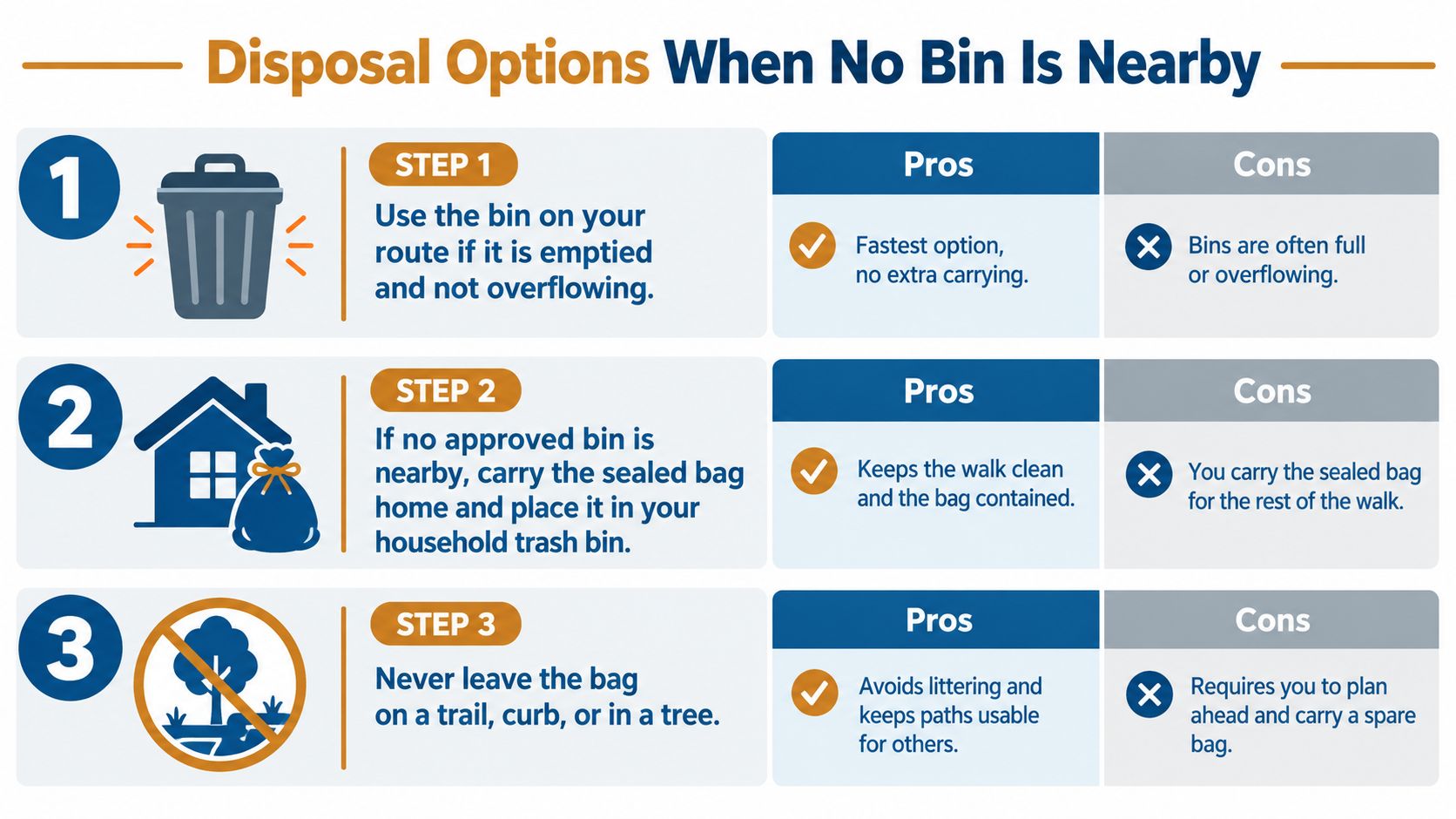
A bin can be full, locked, or missing from your route. Plan to carry the sealed bag until you reach an approved disposal point rather than leaving it by a bin that cannot take it.
- Use an available route bin if it accepts pet waste, has room, and is not overflowing.
- Carry the sealed bag home when no approved bin is nearby. Never leave it on a trail, fence, curb, or tree.
- Use designated pet-waste bins in parks where provided. A bag dispenser alone does not mean bags may be left underneath it.
- Use household trash only where local rules allow. Check city or county waste guidance and any apartment collection rules.
- Flush only unbagged feces if local sewer or septic guidance specifically permits it. Never flush bags.
Carrying the bag takes longer, but keeps an overflowing bin from turning into a litter pile.
Keep waste away from drains and food gardens
The EPA's pet-care fact sheet says not to put pet waste in storm drains and advises keeping dogs at least 200 feet from water bodies when defecating. If your route passes water, direct your dog to an appropriate inland spot before stopping.
- Storm drains are not disposal points. Don't put bags in them or hose loose waste toward them.
- Keep dog feces out of ordinary backyard compost used for edible crops.
- Bury waste only where local rules permit it. Follow local guidance on depth and location, and keep it out of food-growing areas.
An overflowing bin is a reason to carry the bag farther, not permission to leave it beside the bin.
Choose a route you can finish while carrying the bag. The nearest place to set it down may not be an acceptable disposal point.
Fixing Common Pickup Problems and When to Call Your Vet
A torn bag needs an immediate change of plan. Stop squeezing or scraping, open your spare bag, and use it as a fresh barrier around the damaged bag and waste.
If feces reaches your skin, avoid touching your face or belongings and wash promptly. A second layer contains the mess; it doesn't clean a contaminated hand.
Pickup problems, causes and fixes
| Problem | Likely cause | Fix |
|---|---|---|
| Bag tears during pickup | Thin bag or rough ground | Switch to the spare bag and double-bag the next pile |
| Waste smears on grass | Wet or sticky stool | Slide a bag edge under the pile or use a scooper; never rub it in |
| Bag won't close | Pile too large for the bag | Use a larger bag or two bags, tying each one |
| Dog moves mid-pickup | Leash tension or dog stepping into the pile | Keep the leash slack and wait for the dog to finish; approach beside the pile rather than standing over it |
| Waste missed after rain | Waste washed or hidden in grass | Return the same day, collect remaining material, and note the spot for the next walk |
For smeared waste, collect what you can lift without grinding it deeper into the surface. Don't turn a pickup problem into runoff by spraying the residue toward the street.
When to call your vet
Call your veterinarian rather than just changing pickup tools when stool looks abnormal or your dog seems unwell. Contact the clinic promptly for severe signs instead of waiting to see whether the next stool is easier to collect.
- Blood or unusual darkness: Report blood in the stool or black, tarry stool.
- Persistent diarrhea: Call if it lasts more than a day or two, or sooner if vomiting, lethargy, or weight loss accompanies it.
- Possible parasites: Report visible worms or rice-like segments in stool or around the anus.
- Difficulty passing stool: Seek advice for repeated straining with little or no output.
A sudden change in a puppy or senior dog justifies a faster call than an isolated soft stool in an otherwise healthy adult. Note the color and consistency, photograph the stool if your vet asks, and track appetite and water intake over the next day. Ask whether the clinic wants a fresh stool sample and how to store it.
Confirm Your Pickup Kit Before the Next Walk
Check your kit while you're still by the door, not while holding your dog beside a fresh pile. Make sure you can reach clean supplies without opening the compartment used for carrying waste.
The door-side checklist
- Two or more bags: Choose enough capacity for your hand, the pile, and a secure knot. Look for disclosed thickness and leak-resistance information.
- A spare in a separate place: Keep a backup in another pocket or the dispenser so a dropped roll doesn't leave you stranded.
- A secure dispenser or pouch: Check that its clip stays clear of your dog's path and that bags pull out without detaching the holder.
- A terrain-appropriate tool: Bring a scooper for grassy cleanup or suitable tongs for firm waste on snow and hard surfaces.
- Hand sanitizer: Pack an alcohol-based option meeting the minimum described above for times when soap is out of reach.
- A disposal destination: Know the nearest approved bin and be prepared to carry the sealed bag home.
- A fitted leash and collar: Confirm both are secure before opening the door.
Use this visual as a reminder beside your walking gear.
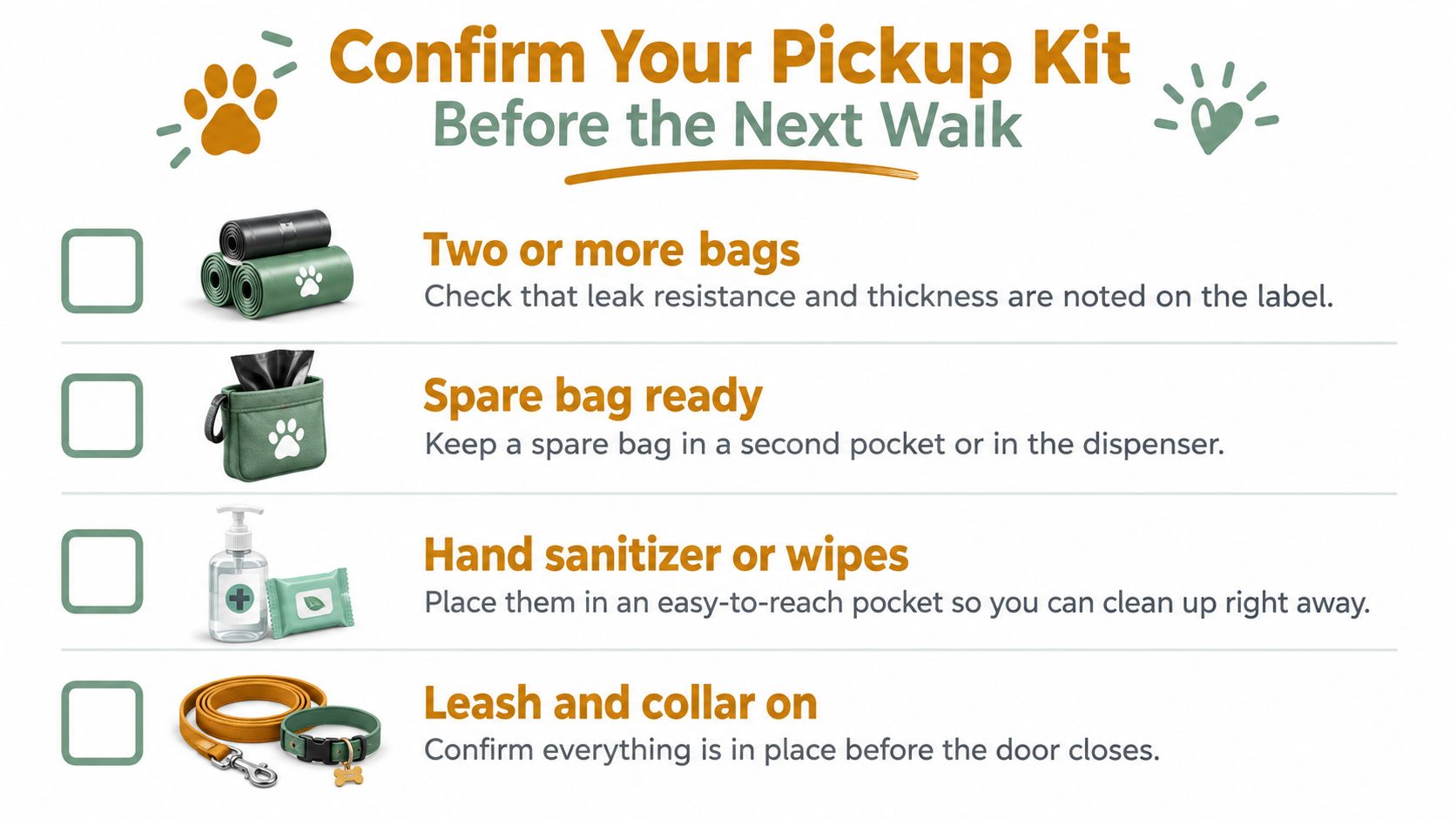
On your next walk, run the pickup routine deliberately and check where the bag ends up. Add a weekly yard sweep to catch anything missed between daily pickups.
Consistent pickup with a simple bag beats an elaborate tool that stays in the garage.
PetCostEngine offers breed-specific health references and a lifetime dog ownership calculator personalized to your dog and location. Alongside everyday routines like waste pickup, plan for veterinary care, food, and gear with PetCostEngine.
Modeled estimates for 226 breeds, with the formula and sources published in full.
See the data →
Digestive support → Slow-feeder bowl → Premium dry food →
As an Amazon Associate, PetCostEngine earns from qualifying purchases.