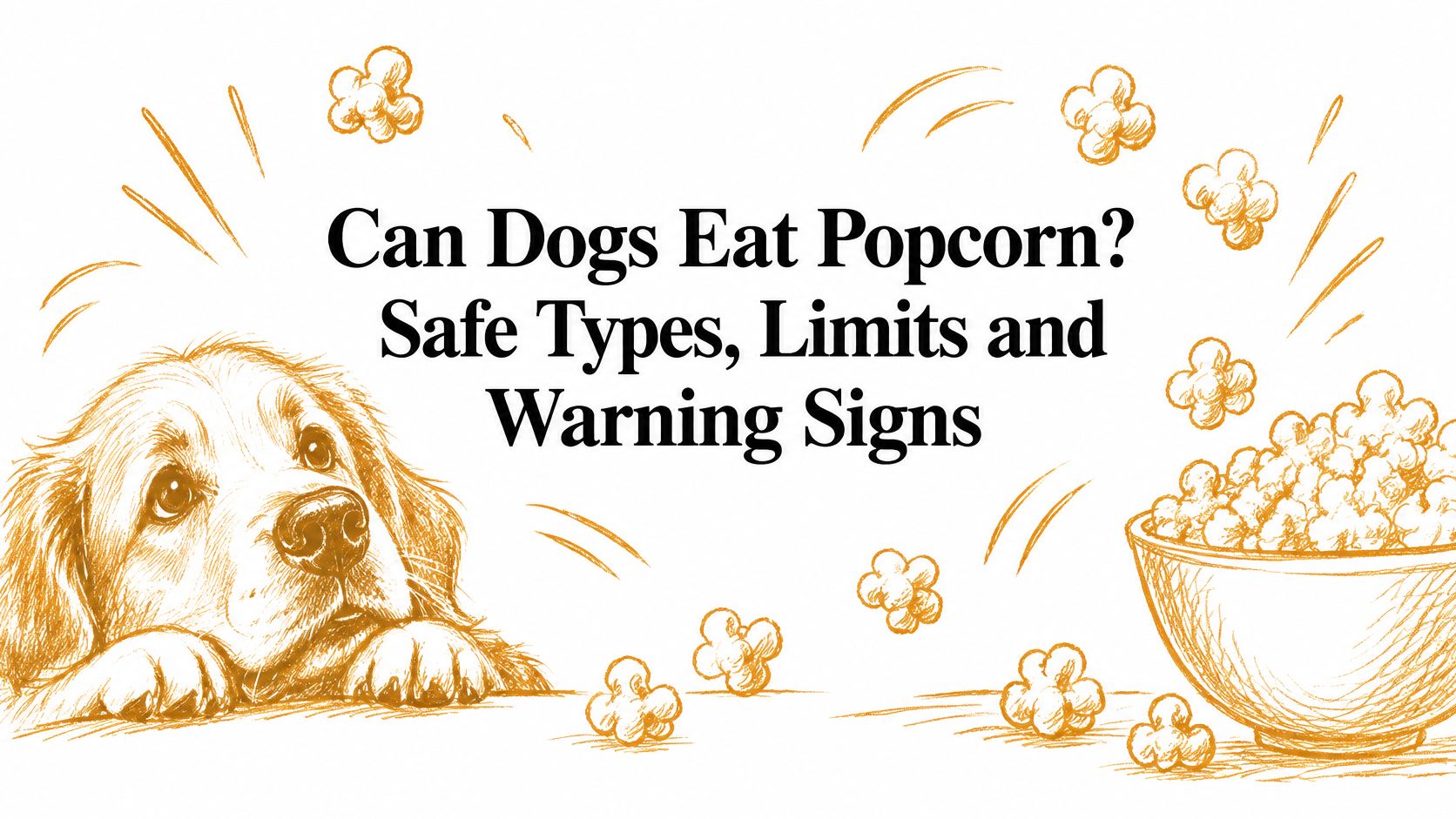
Yes, a healthy dog can have a small amount of plain, fully air-popped popcorn with no salt, butter, or seasoning as an occasional snack. Butter, salt, caramel, cheese, onion or garlic seasonings, and unpopped kernels are the reasons to say no.
The bowl is on the coffee table, the movie is paused, and your dog is parked at your knee. You want a straight answer before a piece leaves your hand. Plain popcorn isn't a poison. The trouble is what got added, how many pieces you share, and whether a hard kernel went down with the fluffy ones. A healthy adult and a small dog with a touchy stomach aren't the same case.
Whether dogs can eat popcorn comes down to preparation, portion, and what the dog does in the next day. Use the type table, the weight samples, and the checklist before you share a single piece.
Table of Contents
- Which Popcorn Types Are Safe and Which to Skip
- Portion Limits for Popcorn in Your Dog's Daily Treats
- Lower-Risk Treat Options to Discuss With Your Vet
- Unpopped Kernels, Choking and Small Dogs
- When to Call Your Vet About Popcorn
- Label Check and Pre-Share Checklist
Which Popcorn Types Are Safe and Which to Skip
The verdict for tonight is narrow. Plain, air-popped popcorn that is unsalted and unbuttered is generally safe for a healthy dog as an occasional small snack. It is not a food you add every evening.
The American Kennel Club treats a small amount of fully air-popped popcorn as an occasional snack, not a regular diet item, and notes the same limit the ASPCA uses for shared snacks: skip extra fat and salt. Treats, popcorn included, should stay at no more than about 10% of daily calories. That moderation rule doesn't set a popcorn-only calorie cap.
Preparation decides the answer, not the word popcorn. Commercial bags often carry butter, cooking oil, cheese flavoring, caramel, sugar, or other seasonings. Repeated use of those additions can mean extra calories, stomach upset, dehydration, or weight gain. Offer only a few completely popped pieces, skip toppings, and stop if vomiting or diarrhea shows up.
How each type lands
| Popcorn type | Verdict for a healthy dog | Main concern |
|---|---|---|
| Plain, air-popped, no salt or butter | Occasional small amount | Calories only, counted in the treat share |
| Plain, oil-popped, no salt or butter | Rare, a few pieces | Added fat from the oil |
| Butter-topped or microwave butter popcorn | Avoid | Fat and sodium, can upset the stomach |
| Lightly salted popcorn | Avoid, or one piece at most | Sodium |
| Caramel or candy-coated popcorn | Avoid | Sugar and coating ingredients |
| Cheese-flavored popcorn | Avoid | Fat, salt and dairy |
| Seasoned with onion or garlic | Never | Onion and garlic are toxic to dogs |
| Unpopped or partly popped kernels | Never offer | Choking, tooth and gut injury |
Plain air-popped is the only row I'd share on purpose. A few pieces, fully popped, nothing on them.
Oil-popped with no salt or butter is still mostly corn, but the oil raises the fat. Keep that to a rare few pieces.
Butter and microwave butter bags belong in the avoid column. Fat is the main issue, and many bags also carry salt. That mix is a common reason for a messy night. Butter isn't an automatic poison.
Lightly salted still loads sodium a dog doesn't need. One stray piece in a healthy adult is unlikely to be a crisis. A handful is a bad idea.
Caramel, candy coatings, and cheese powder add sugar, fat, salt, or dairy. None of that helps, and some coatings hide worse ingredients.
Onion or garlic seasoning is a hard never, including powders in a "savory" blend. Hard kernels aren't a snack. They can chip teeth, lodge in the mouth, or contribute to a blockage.
Practical rule: If the ingredient list shows anything beyond popcorn and a little oil, treat the bag as a no.
That call assumes a healthy adult dog. Size, existing illness, and symptoms change it.
Portion Limits for Popcorn in Your Dog's Daily Treats
A 10-pound dog is already waiting while you portion a bowl. That dog, including many covered on our Chihuahua breed page, does not get the same handful as a 30-pound or 70-pound dog. Popcorn is a treat. It comes out of the treat share, not on top of a complete food.
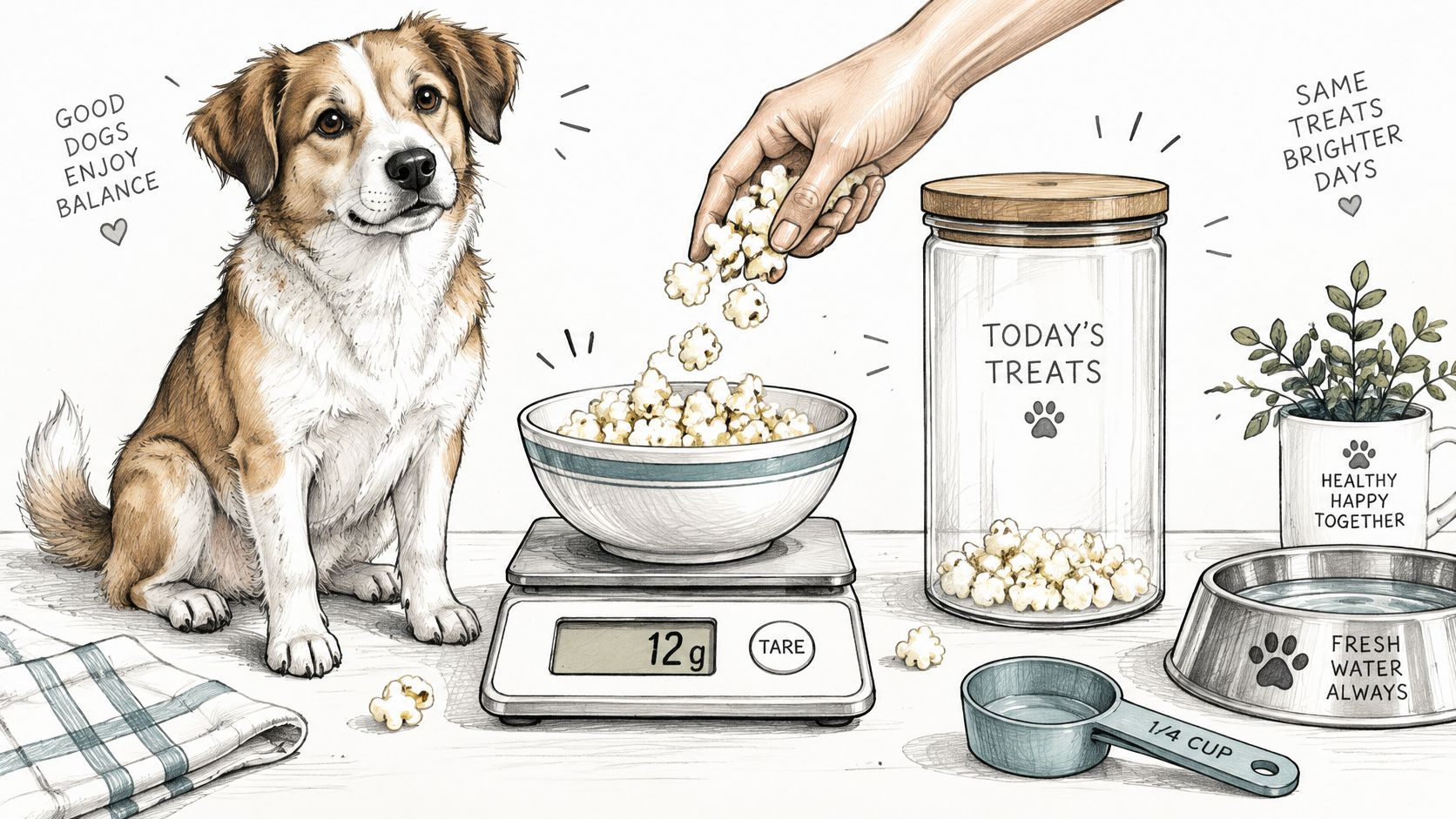
Use these as typical ceilings for plain, fully popped pieces, once in a day. The whole treat pile, popcorn included, stays inside roughly 10% of daily calories.
| Dog weight | Maximum pieces (plain, fully popped) | Place in the day |
|---|---|---|
| 10-pound dog | 1 to 2 pieces | A small slice of the treat share |
| 30-pound dog | 3 to 5 pieces | Still a small slice, not a snack bowl |
| 70-pound dog | 6 to 8 pieces | The high end, and only if other treats stay low |
The ASPCA describes air-popped popcorn as a snack that avoids excess fat and salt, and it advises a vet conversation before new snacks for dogs with weight-management needs or medical conditions. Popcorn may offer a little fiber. It is not a necessary food, and those pieces can crowd out a complete diet or add calories a dog who is already heavy does not need.
Skip the share entirely for a dog on a weight plan, a senior whose teeth or digestion are less forgiving, a dog with dental or gut disease (hulls and hard bits are a poor match), or a dog with metabolic disease, where fat and seasonings matter more than the corn. Products that look light can still hide onion or garlic powder. High-fat toppings are a poor match for a sensitive gut.
Offer the weight-matched count once and watch the next stool. A rapid diet change is the most common cause of soft stools in a healthy dog, and eating too fast is the second cause to rule out.
Lower-Risk Treat Options to Discuss With Your Vet
Popcorn doesn't fill a nutritional gap. The useful question is what else can sit in the treat slot, or whether that slot stays empty.
Three categories are worth raising at the next visit, and they aren't equal.
Part of the regular meal is the cleanest swap. Use a few pieces of the dog's own food as training rewards and subtract them from the bowl. Nothing new hits the stomach, and you aren't guessing at a label.
Vet-recommended low-calorie treats come next. Ask for options matched to weight and any medical condition. I wouldn't pick a bag because the front panel says light or natural. Ask what the label should list, and which ingredients are off limits for this dog.
A fixed daily piece count keeps the habit honest. Have the vet set how many treats per day, then stop when you hit it. Popcorn either takes one of those slots or it doesn't get offered.
A simple swap routine
- Ask the vet for the daily treat allowance in calories.
- Pick one treat source that day and write it down.
- On days the dog is overweight or on a restricted diet, use the planned option and leave popcorn in the cabinet.
- Reassess at the next visit if weight or stools have shifted.
Take three questions in with you: which treats fit this weight, how many per day, and which ingredients to avoid for this condition. For a dog who needs weight management, or who already has a medical issue, get that sign-off before a new snack starts. Free planning tools under /tools/ can help you sketch the day. They don't replace the clinic.
Unpopped Kernels, Choking and Small Dogs
The ingredient list won't show the hazard in the bottom of the bowl. Unpopped and partly popped kernels are hard. They can wedge between teeth, sit under the gum, or lodge in the throat. A dog may gag, cough, or paw at the mouth. The same piece can chip a tooth.
Swallowed whole, a kernel can contribute to an intestinal blockage. Smaller dogs carry more of that risk because one kernel is a bigger share of the dog. Our small dog size pages are a reminder of how little room those mouths and guts have.
Movie night leaves a trail. Hulls and loose kernels collect on the floor, under the couch, and in the last inch of the bowl. A dog who cleans up gets the part you meant to throw out. The American Kennel Club's human foods guidance says to keep unpopped kernels in the bag, and to call a vet promptly if a dog eats popcorn with a potentially toxic ingredient or shows vomiting, diarrhea, lethargy, tremors, seizures, or trouble breathing.
Keep kernels out of reach
- Leave unpopped kernels in the sealed bag, up and away from counters the dog can reach.
- Sweep hulls and loose kernels after you pop a batch, including under the couch.
- Serve from a bowl you hold. Don't let the dog graze a shared bag or the carpet.
- After the snack, look for pieces stuck between teeth or in the gums, and remove only what you can see safely.
Pawing, gagging, or coughing right after a snack means you act now, not after the credits.
If the dog swallowed hard kernels, call the vet even when the dog seems fine.
When to Call Your Vet About Popcorn
Sort the night by urgency, starting with the mildest case. PetMD frames the risk around the dog's size, whether kernels were fully popped, the ingredients, and the symptoms. It isn't a simple piece count. Unpopped or partly popped kernels can lodge in the mouth, damage teeth, cause choking, or contribute to obstruction, and smaller dogs sit higher on that list.
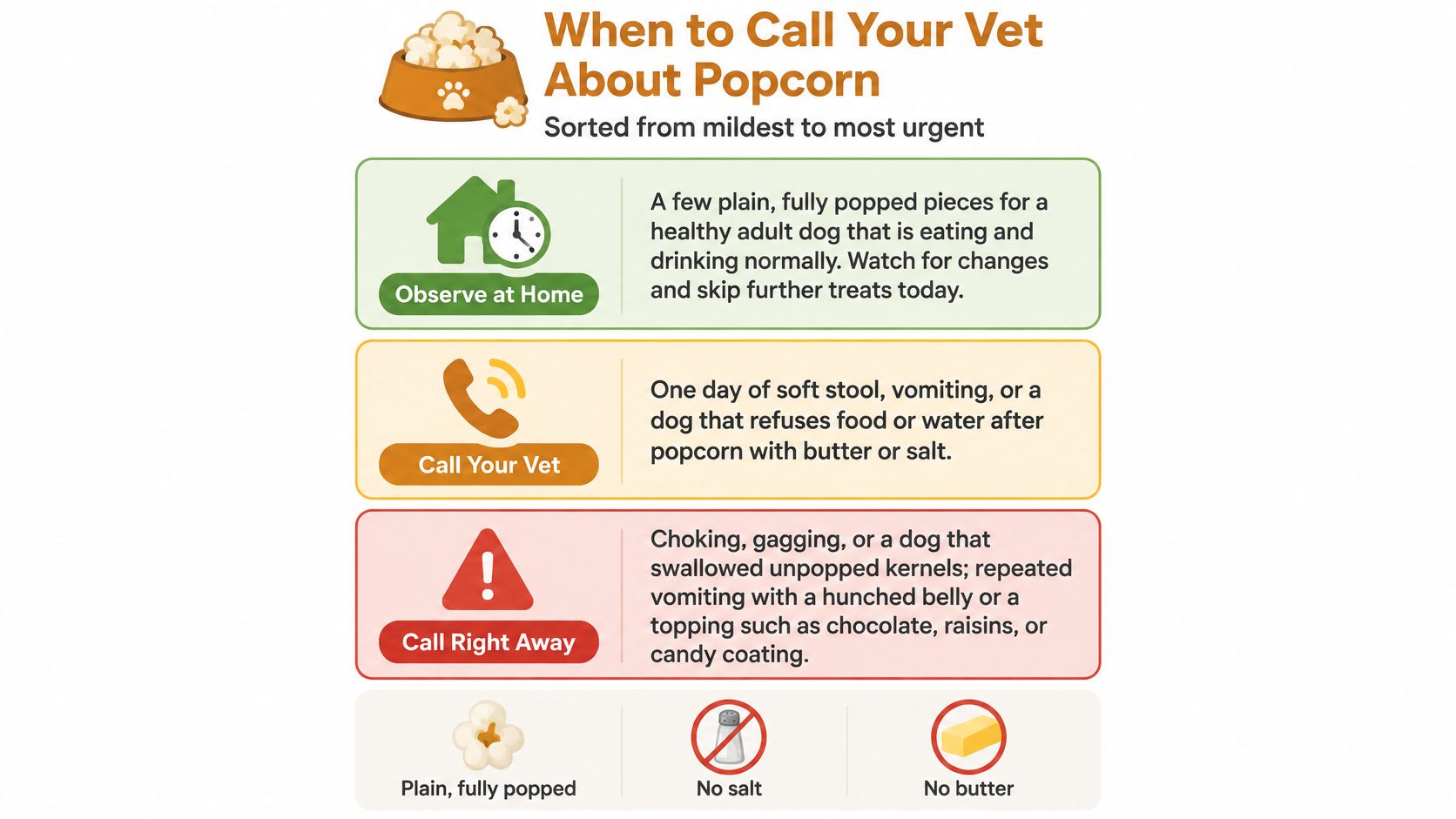
| Situation | Signs to watch | What to do |
|---|---|---|
| Few plain, fully popped pieces, healthy adult dog | Eating and drinking normally | Observe at home; call the vet if soft stools last two or three days |
| Several kernels, a small dog, or a hard kernel swallowed | Pawing at the mouth or gagging possible | Call the vet the same day |
| Puppy, senior dog, or dog with an ongoing condition | Soft stools or vomiting | Same-day vet call |
| Choking or noisy, labored breathing | Persistent gagging or inability to breathe | Emergency care now |
| Any dog with repeated vomiting, collapse, or marked lethargy | Tremors, seizures, or weakness | Emergency care now |
A few plain pieces in a healthy adult who is eating and drinking normally can be watched at home. For an adult, lively dog that eats and drinks, one day of soft stools can be watched, and past two or three days a call to the vet is advised. Skip more treats that day.
Several kernels, a small dog, or a swallowed hard kernel is a same-day call, even if the dog looks fine. Butter is mainly a fat-and-calorie problem, not an automatic poison. Heavy salt is a separate sodium question, so tell the clinic what was on the popcorn.
A puppy, a senior, or a dog with an ongoing condition who develops soft stools or vomiting needs a same-day call. For puppies, elderly dogs, and dogs with ongoing conditions, soft stools are a same-day call to the vet.
Choking, noisy or labored breathing, persistent gagging, repeated vomiting, collapse, marked lethargy, tremors, or seizures means emergency care now, not a wait-and-see evening.
If in doubt, call the vet.
Bring the bag, or a photo of the ingredient list, so the clinic knows exactly what went in and can answer faster.
Label Check and Pre-Share Checklist
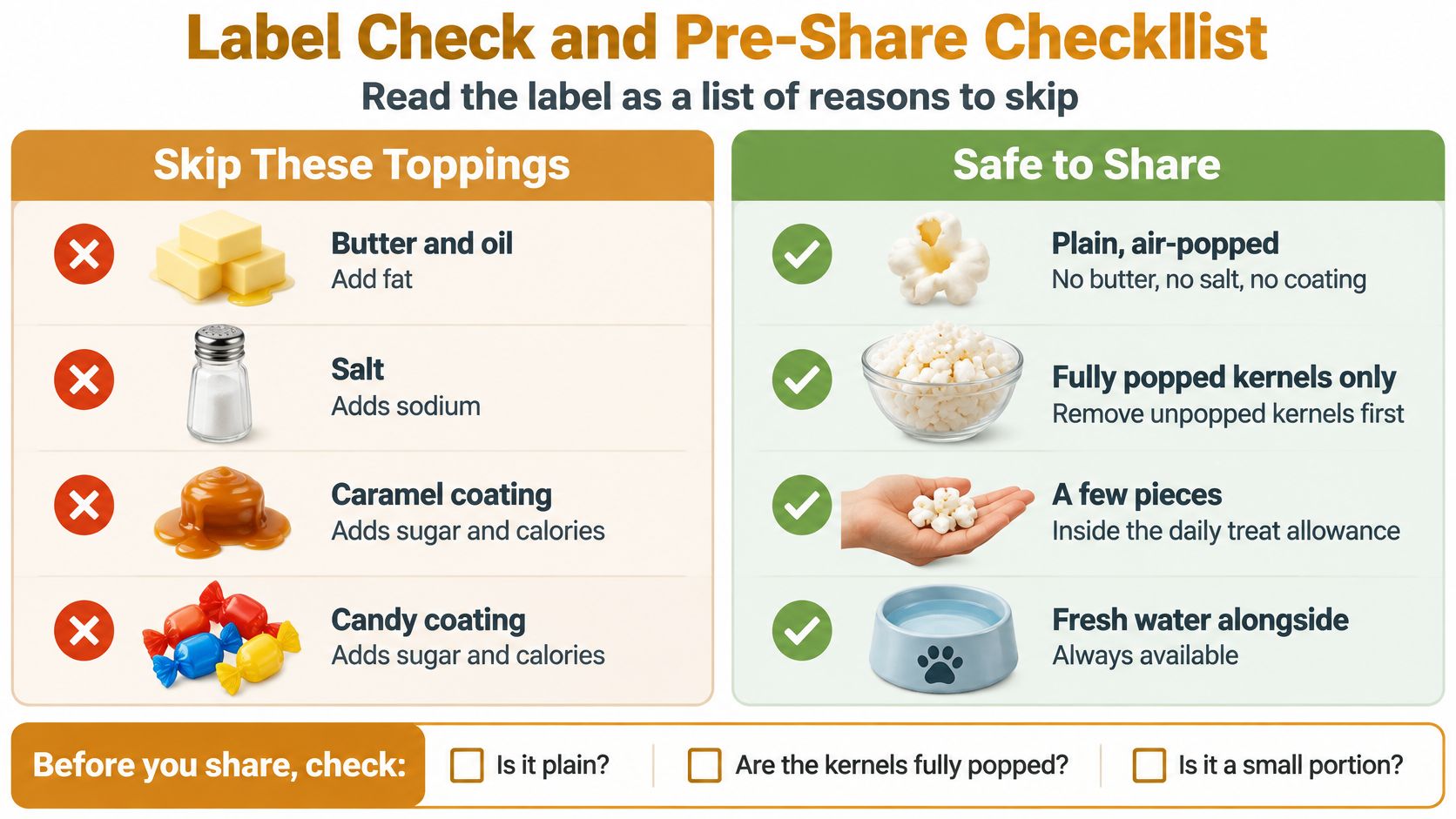
Read the label as a list of reasons to skip the bowl, not as a suggestion to share "just a taste."
Butter and oil add fat. Salt adds sodium. Caramel and candy coatings add sugar and extras many dogs handle poorly. Cheese powder adds fat and dairy. Onion or garlic powder in a savory seasoning is toxic, even when the front of the bag looks mild.
Pet Poison Helpline and the ASPCA recommend popcorn only without butter and salt. Air-popped popcorn contains approximately 35 calories per cup, so it is far less energy-dense than buttered or oil-popped versions, and it still has to sit inside the treat allocation so it doesn't undermine a weight plan. The ASPCA also says to consult a veterinarian before new snacks for dogs with weight-management needs or medical conditions.
Pre-share checklist
- The label shows popcorn and, at most, a little oil.
- No salt, butter, cheese, caramel, sugar, or flavoring appears.
- No onion or garlic appears in any form, including powder.
- Every kernel is fully popped, and hard ones are removed before you sit down.
- The dog is a healthy adult. For a puppy, senior, overweight dog, or one with a condition, ask a vet first.
- The portion is a few pieces inside the day's treat allowance.
- You offer it once as a new food, not as a nightly habit.
- You watch for 24 hours for vomiting, diarrhea, or odd behavior.
Treat the words seasoning and flavoring as unknown until the maker explains them. This isn't a product ranking. We don't test bags. You're checking what the label discloses, and you ask a vet when an ingredient is unclear.
Flavored microwave bags and movie-theater popcorn usually aren't safe to share. A phone call about a snack is less disruptive than an emergency visit later that night. Wider planning for food and veterinary care over a dog's life belongs with our guides and the lifetime calculator, kept qualitative rather than turned into a shopping list.
This is general information, not veterinary advice, and no supplement cures a medical condition.
PetCostEngine turns breed, age, and state into a practical plan for food, veterinary care, and the rest of daily life with a dog, so a movie-night snack question doesn't float free of the bigger picture. If you want that planning in one place, start with the tools built around your own dog. Visit PetCostEngine and see what the estimate looks like for your breed and state.
Estimated lifetime and yearly costs for a Chihuahua, state by state, plus whether pet insurance breaks even for the breed.
See Chihuahua costs →
Is insurance worth it for a Chihuahua? →
Premium dry food → Slow-feeder bowl → Digestive support →
As an Amazon Associate, PetCostEngine earns from qualifying purchases.