
The first time you watch your dog methodically chew a mouthful of grass, it's easy to assume something is wrong. But the numbers tell a different story. In a large internet survey of 1,571 usable owner responses, 68% of owners reported that their dogs ate plants daily or weekly, with grass as the most commonly consumed vegetation, according to a survey of dog owners published by Dierapotheker. Only about 8 to 9% of those owners observed frequent signs of illness before their dogs grazed, and 22% said their dogs regularly vomited afterward. That means most grass eating isn't driven by nausea, and most dogs keep their meals down.
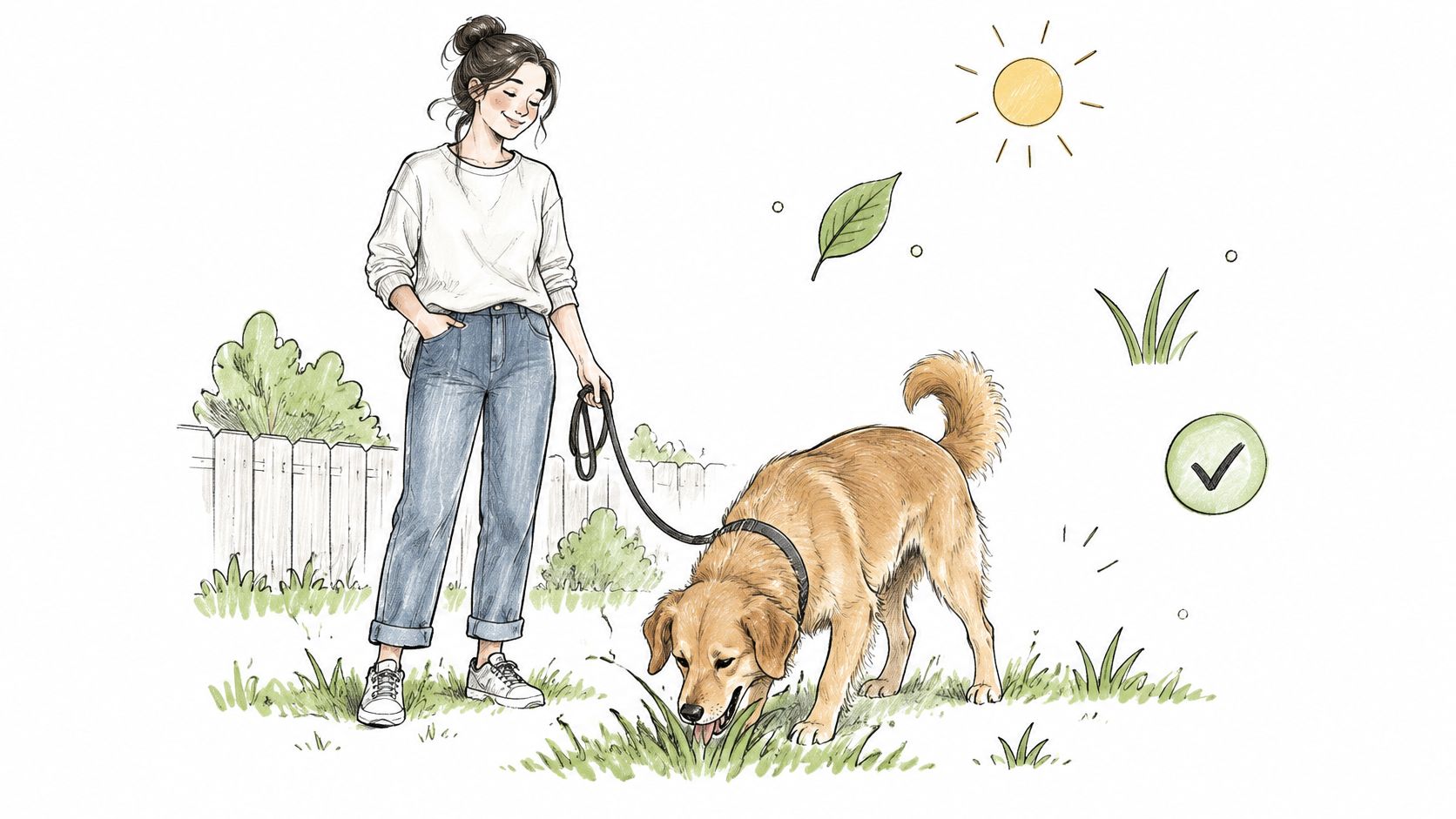
Vomiting after grazing does not prove the grass caused it. A dog that eats grass, then throws up, may already have had an upset stomach. The American Kennel Club notes that healthy dogs on balanced diets commonly eat grass, and many don't vomit afterward. The explanations owners hear most often are taste, curiosity, boredom, and a drive to seek plant material. None of these has a proven medical purpose. Your goal over the next two weeks is to decide whether the behavior needs redirecting, monitoring, or a vet visit.
Start by writing down three things every day: when grazing happens, what seems to trigger it, and whether stool, appetite, or energy change afterward. A cheap notebook or a notes app works fine. You're not trying to diagnose anything yet. You're collecting the pattern that tells you whether this is a habit or a health signal.
Table of Contents
- Normal Grazing Versus Signs That Need a Vet
- Check the Lawn Before Your Dog Grazes
- How to Redirect Your Dog on Walks
- Testing Meal Timing and Enrichment Changes
- Decide Your Next Step After Two Weeks of Logging
Normal Grazing Versus Signs That Need a Vet
There's a simple rule to apply. Occasional grazing on verified untreated grass can usually be monitored. A sudden increase, compulsive grazing, refusal of normal food, weight loss, lethargy, abdominal pain, repeated vomiting, diarrhea, or blood warrants a veterinary assessment. The available owner-based evidence supports this: fewer than 10% of dogs show illness before eating grass, and fewer than 25% vomit regularly afterward, so vomiting alone is a weak signal.
The threshold table below sorts the signs you'll see from least to most urgent. Keep the row that matches your dog handy, so you can act without rereading everything.
Grass eating signs and the action to take
| Sign | What It Usually Suggests | Action |
|---|---|---|
| Occasional grazing, normal stool, eating and drinking normally | Typical exploratory behavior | Monitor and log for two weeks |
| Grazing increases suddenly | Boredom, stress or a new habit, but sometimes an early problem | Log frequency and book a vet visit if the increase continues |
| One day of soft stools in an adult, lively dog that eats and drinks | Dietary upset or eating too fast | Watch closely |
| Soft stools lasting past two or three days | Possible gastrointestinal problem | Call the vet |
| Soft stools in a puppy, senior dog or dog with an ongoing condition | Higher risk of dehydration | Same-day call to the vet |
| Repeated vomiting, lethargy, abdominal pain or appetite loss | Possible illness | Call the vet promptly |
| Black or tarry stool, even once, or blood in stool or vomit | Possible bleeding | Call the vet now |
| Grass eaten alongside rocks, fabric or feces | Possible pica | Veterinary exam and behavior assessment |
| Suspected pesticide or herbicide exposure, heavy drooling or breathing changes | Possible toxic exposure | Contact your vet or an animal poison control center immediately |
If you see blood, black stools, or vomiting, call the vet immediately, regardless of how long the soft stools have lasted. This is not a wait-and-watch situation.
For an adult, lively dog that eats and drinks, one day of soft stools can be watched. Past two or three days, make the call. For puppies, elderly dogs, and dogs with ongoing conditions, soft stools are a same-day call to the vet. A dog that eats rocks, fabric, or feces alongside grass is showing a pattern consistent with pica, which needs both medical and behavioral assessment rather than a training fix alone.
Check the Lawn Before Your Dog Grazes
For many owners, the risk is the environment, not the grass itself. A lawn that looks green and safe may have been sprayed days ago, and residue can still be present long after the grass looks dry. The VCA guide on grass eating identifies herbicides and pesticides as potential toxic hazards and notes that dogs can ingest hookworm or roundworm contamination from fecal residue on grass.
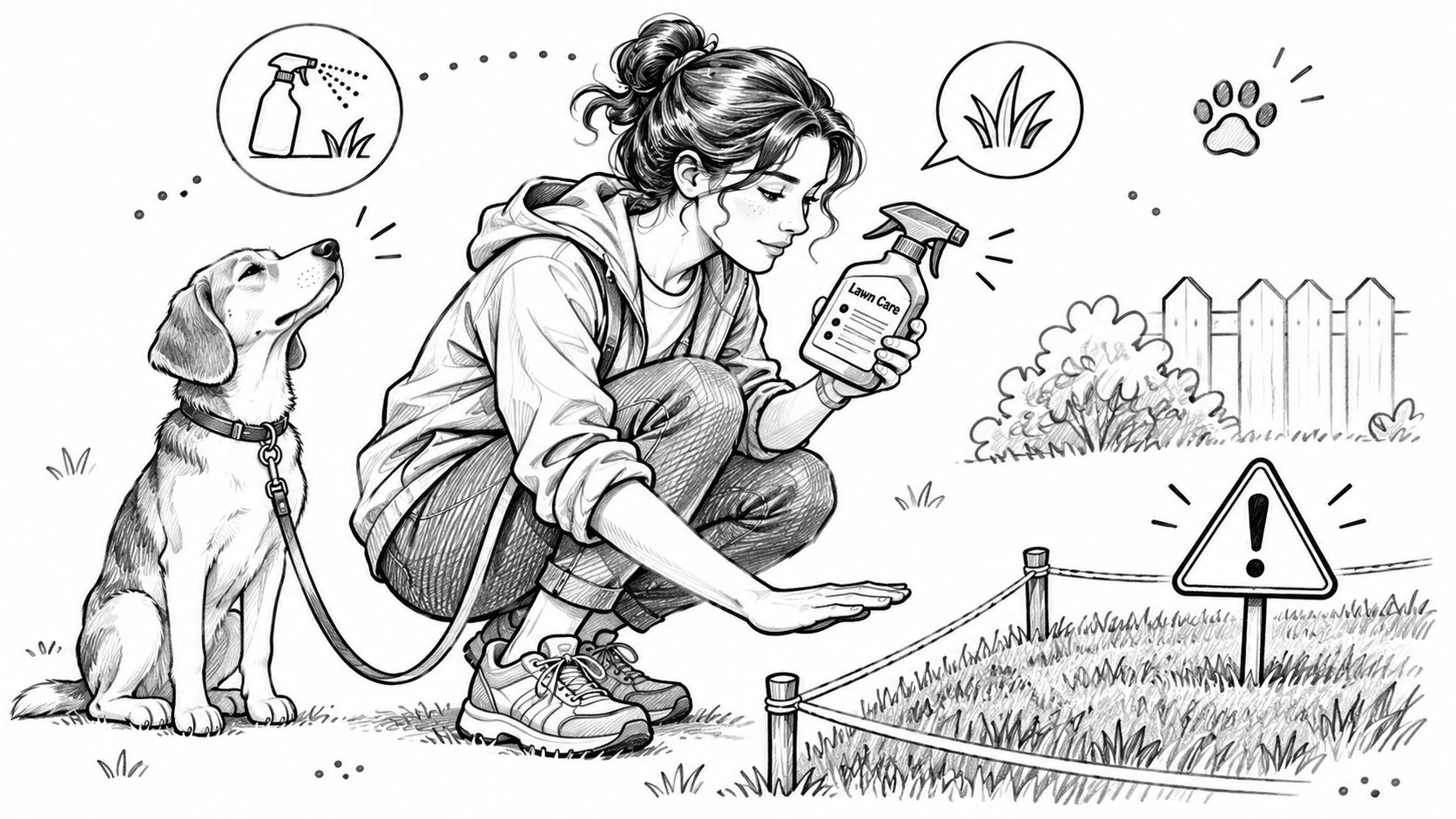
Recent treatment is only one layer of the decision. In parts of the United Kingdom, slugs and snails can transmit lungworm, which means the risk depends on where you live and on the parasite prevention your vet has set for that location. A single global rule like "never let dogs eat grass" misses all of this.
A quick five-point lawn check
Run this checklist before you let your dog graze in any new area. You don't need five separate tools. Just five yes or no answers.
- Was the lawn chemically treated in the past few days? If the answer is yes, keep the dog off until the product's re-entry instructions say it's safe.
- Is there visible feces nearby? Feces attract dogs and carry parasite eggs. Move to a different patch.
- Are slugs or snails present, and does your vet list lungworm as a local risk? This matters most in certain regions, so ask at your next visit.
- Is this park or dog run shared with many dogs and unknown owners? Shared spaces have higher contamination pressure. Supervise closely.
- Is your parasite prevention current and matched to local risk? Prevention is location-specific, so review it with your vet.
A dog that grazes on untreated, familiar grass and shows no symptoms is a very different case from one that grazes in a freshly sprayed public park. The lawn is the variable most owners forget.
If you suspect exposure, act fast. Excessive salivation, vomiting, diarrhea, lethargy, breathing changes, or suspected pesticide ingestion mean urgent veterinary contact, not a home training session. Note the lawn type in your log, so any future patterns include where the grazing happened.
How to Redirect Your Dog on Walks
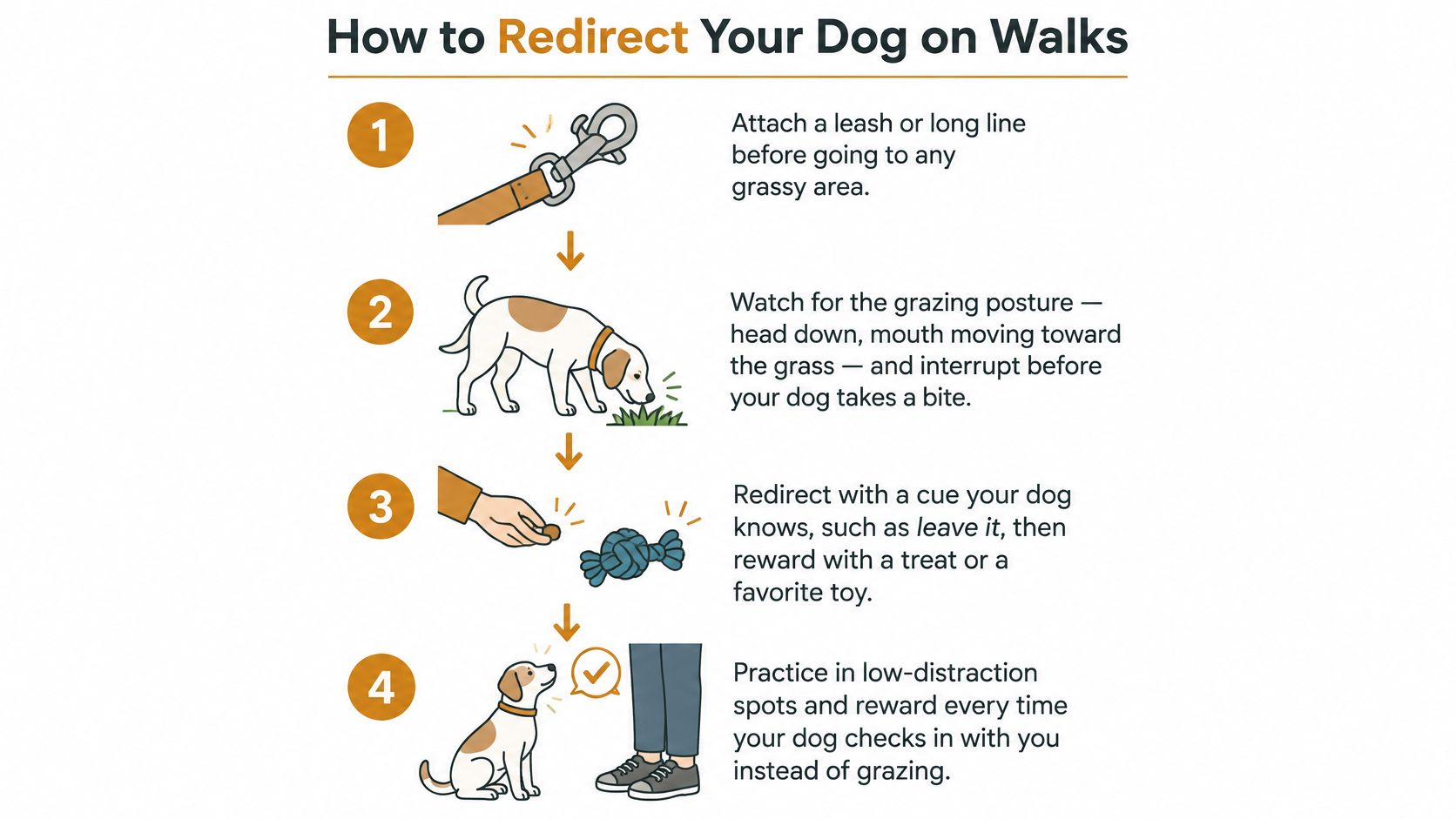
One "leave it" command cannot settle why your dog grazes, and it was never meant to. This routine works as a filter: you log what happens for about two weeks, and you redirect with a known cue on every walk. That window of notes shows whether the grazing is a habit that training can reshape or a health signal that belongs in front of a vet. During each walk, you interrupt before the dog bites the grass, cue a known behavior, move away, and reward compliance immediately.
The seven-step walk routine
Attach a leash or long line before entering any grassy area. A long line keeps the dog within redirection range, so you can interrupt before a bite.
Watch for the grazing posture. Head down, mouth moving toward the grass. Interrupt at that moment, before the dog's teeth touch a blade. Each uninterrupted bite is a repetition, and habits grow with repetition.
Cue a behavior the dog already knows. "Come," "look," or a hand target work well. You want something the dog can do without thinking.
Move away from the grass. Distance prevents rehearsal.
Reward immediately with a high-value treat or a short game. Timing matters. The reward must land while the dog is still doing the right thing.
Repeat the same routine on every outing. Consistency teaches the dog that the cue means the same thing every time, on every lawn.
Keep the dog off treated grass or grass with feces until you've checked the area. Prevention is faster than correction.
Don't punish the behavior. Confrontation can raise anxiety or make the dog swallow grass quickly, which makes the situation worse.
Several common slips undermine this routine. Changing food or adding fiber without veterinary guidance is a big one, because grass eating can reflect boredom, anxiety, attention seeking, roughage seeking, or habit, and indiscriminate diet changes can create gastrointestinal upset. The tools that work are distraction, an alternate behavior, and reinforcement, with affection substituted for food when appropriate. Don't trial supplements on your own either. If diet is suspected, have a veterinarian or veterinary nutritionist assess calorie adequacy, digestibility, stool quality, and fiber.
After two weeks, success looks like fewer grazing attempts per outing and a dog that responds to the cue on the first or second try. If the log instead shows the behavior is persistent, compulsive, or paired with vomiting or stool changes, that is your escalation point. The next step is a vet visit, not a stricter routine.
Testing Meal Timing and Enrichment Changes
A dog that grazes at the same hour every day is telling you something about its schedule. Long gaps between meals leave some dogs looking for something to do with their mouths, and understimulated dogs often find the lawn more interesting than the yard's usual toys. Check your log for those clusters first, because they point to two different fixes, and only a structured test shows which one your dog needs.
The method borrows from any careful experiment: change one variable per week, keep everything else identical, and record grass attempts per outing before and after. Run two changes together and the log stops meaning anything, because you cannot tell which one worked. For meal timing, splitting the same daily calories across an extra meal shortens the fasting window without adding food. For stimulation, structured enrichment means a sniff walk, a puzzle feeder, a short training session, or interactive play. More fetch in the yard mostly repeats the arousal it already produces, which rarely changes the behavior you're measuring.
Routine changes to test one at a time
| Change to Test | How to Apply It | What to Log | When to Check |
|---|---|---|---|
| Smaller, more frequent meals | Split the same daily calories and add a morning meal | Grass attempts per outing | After one week |
| Structured enrichment | Add a sniff walk, puzzle feeder, or training session | Grass attempts and sessions completed | After one week |
| Alternate-behavior training | Cue "look" or a hand target before the dog reaches grass | Successful redirects per outing | After two weeks |
| Diet change | Mix the new food with the old over about a week, only after vet input | Stool quality, appetite, and energy | After the transition, with vet review |
Diet changes sit last in the table for a reason. A rapid diet change is the most common cause of soft stools in a healthy dog, and eating too fast is the second cause to rule out before you touch the food itself, which is why a slow feeder belongs in the timing test rather than the diet test. If your vet recommends soluble fibre for ongoing soft stools, dose it exactly as directed rather than adding it on your own schedule. A probiotic does not solve a recurring problem, and human probiotics can contain xylitol, which is toxic to dogs, so ask your vet before sharing any supplement from your own shelf.
Test variables, not shortcuts. A new feeding time, a new activity, and a new food each answer a different question, and running them together makes the log unreadable.
Keep the log in the same place every day and note the time of each attempt. Consistent notes are what turn a hunch into a result you can act on.
Decide Your Next Step After Two Weeks of Logging
Two weeks of notes turns a guess into a pattern. Before you decide anything, read the log as a whole: count the grazing attempts, check whether they cluster around long gaps between meals, and scan the stool, appetite, and energy columns for any drift.
If grazing has dropped, the dog is eating normally, and stools look normal, keep the routine going for another two weeks. Reduce your cues gradually, the way you would fade any learned behavior, so the dog keeps the habit without depending on a treat appearing every time.
If nothing changed, or grazing increased, book a veterinary visit. Some log entries skip the two-week rule entirely. Blood, black or tarry stools, or vomiting mean calling the vet right away, however brief the episode. Soft stools lasting past two or three days in an otherwise lively adult that eats and drinks also earn a call, and puppies, senior dogs, and dogs with ongoing conditions warrant a same-day one. Bring the log itself, since frequency, timing, and which lawns the dog visited give the vet far more to work with than a verbal summary.
At the appointment, ask four questions. First, whether a fecal test or bloodwork is needed. Second, whether parasite prevention matches local risk. Third, whether a veterinary nutritionist should review the diet. Fourth, whether compulsive grazing or eating other non-food items points to a behavior assessment. The first two questions are diagnostic, the third is nutritional, and the fourth is behavioral, so together they cover every plausible driver.
A vet visit is also a planning question for many owners. Our Vet Costs guide explains how veterinary bills are structured, so you can anticipate what a diagnostic workup might involve without committing to treatment you have not discussed.
Most grass eating is normal. Watch the thresholds, control the environment, and redirect consistently. A dog that grazes occasionally, holds its food down, and passes normal stools does not need to be corrected every time. A dog whose pattern suddenly changes does need your attention.
The numbers behind dog ownership do not stop at grass. PetCostEngine's breed-specific cost projections and health risk models help you plan for the bigger expenses, from routine vet visits to condition-specific treatment, before the bill arrives. If you want a clearer picture of what your dog's next few years might cost, those tools can show you.
Modeled estimates for 226 breeds, with the formula and sources published in full.
See the data →
Premium dry food → Slow-feeder bowl → Digestive support →
As an Amazon Associate, PetCostEngine earns from qualifying purchases.