
A flower can be non-toxic to dogs and still be a poor choice within chewing distance. The ASPCA's flower guidance identifies non-toxic options, but that classification doesn't establish that every nursery plant, treated bouquet, or garden arrangement is safe to eat. Thorns, chemical treatments, potting material, and placement need separate checks.
A non-toxic label is only the first check. It tells you something important about the plant, not everything about the exposure. A rose beside a running path presents a different problem from an orchid in a loose pot on a narrow windowsill.
For dog friendly flowers, start with the botanical name. Then check what came with the plant, where you'll put it, and how your dog behaves around greenery. A dog that ignores flower beds needs a different setup from a puppy that pulls out nursery pots.
The flowers below are practical choices for beds, containers, and indoor displays. Their order isn't a scientific safety ranking. Each recommendation weighs the main management issue, whether that's thorns, seed cleanup, treated foliage, or access to potting mix.
Before shopping, take a photo of the planting area from your dog's height. Look for reachable stems, exposed soil, dangling baskets, and routes through the bed. That quick check often changes where a suitable flower belongs.
Table of Contents
- 1. Snapdragon (Antirrhinum majus)
- 2. African Violet (Saintpaulia ionantha)
- 3. Rose (Rosa spp.)
- 4. Sunflower (Helianthus annuus)
- 5. Zinnia (Zinnia elegans)
- 6. Petunia (Petunia x hybrida)
- 7. Phalaenopsis Orchid (Phalaenopsis spp.)
- 8. Impatiens (Impatiens walleriana)
- How the eight dog friendly flowers compare on toxicity listing, growth habit, and main risk to check
- Your Pre-Planting Checklist for a Dog-Safe Bed
1. Snapdragon (Antirrhinum majus)
Snapdragons work well when you want upright flowers without putting a thorny shrub beside your dog's route through the yard. Their flower spikes suit borders, cutting beds, and containers, with colors ranging from white and yellow to pink, red, and bicolor combinations.
The ASPCA's dog-specific plant database lists snapdragons as non-toxic. It also warns that eating plant material can still cause vomiting or gastrointestinal upset. Non-toxic doesn't mean suitable for grazing.
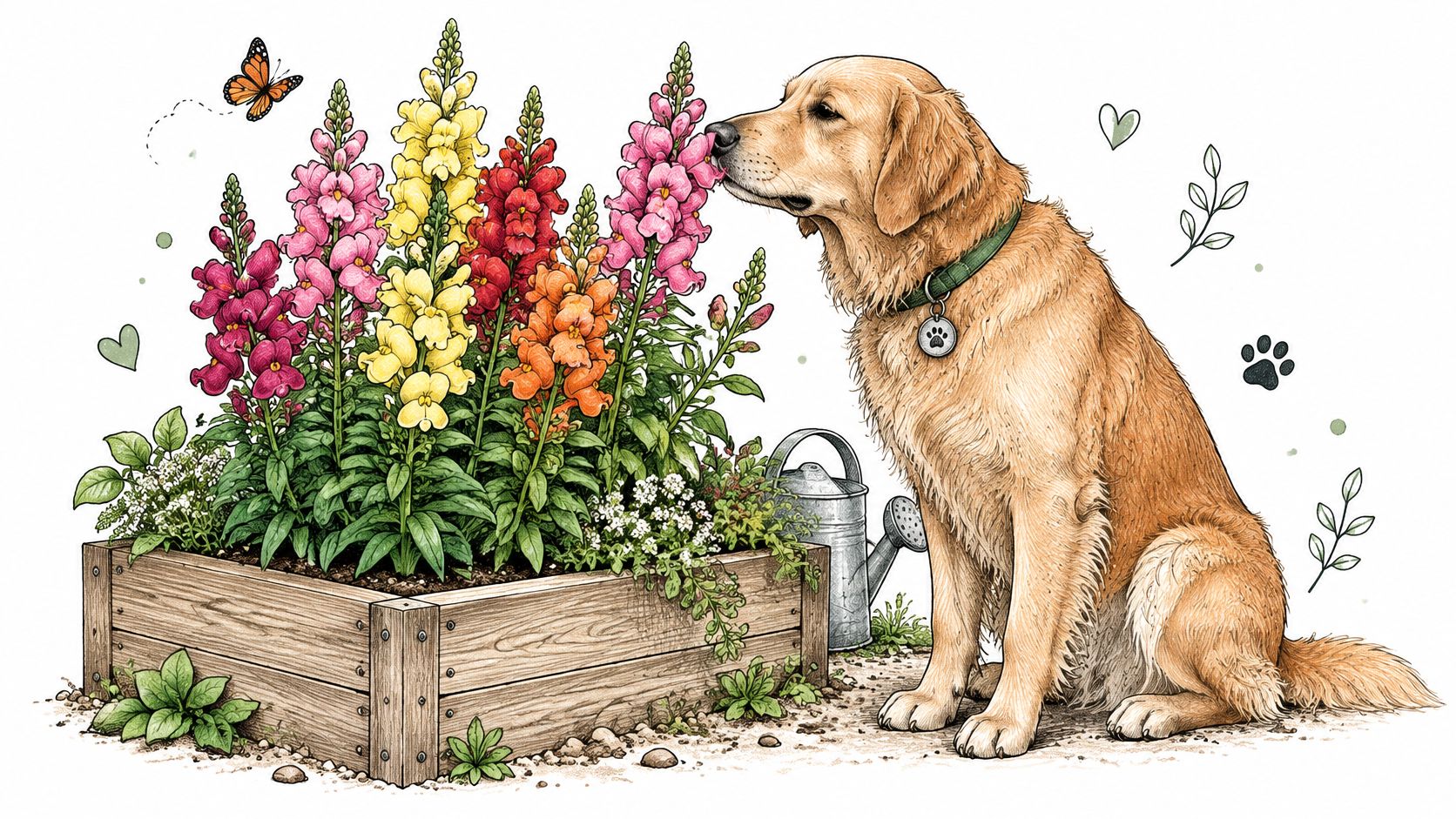
Put the container behind the boundary
For a patio planting, use a broad, stable container behind a railing or plant barrier. Dwarf snapdragons fit smaller pots, but a shorter plant on a low table isn't safer because it's compact. Your dog can still reach the leaves and soil.
Before buying, ask the nursery what pesticides or fungicides were applied. Keep the tag and any treatment information rather than relying on a pet-friendly display sign.
- For a digger: Put the planter behind fencing, not just on a slightly raised surface.
- For a stem chewer: Keep foliage from projecting through the barrier.
- For a cutting garden: Collect dropped stems while you work instead of leaving a tempting pile.
Say an active American Water Spaniel regularly patrols the fence. Put snapdragons inside a protected bed away from that route rather than expecting the dog to weave between delicate stems.
Management priority: access to foliage and treated soil. Snapdragons are a sensible choice when you can separate the planting area from digging and play.
2. African Violet (Saintpaulia ionantha)
An African violet belongs on a secure indoor surface, not a coffee table beside your dog's bed. Its compact rosette, fuzzy leaves, and purple, pink, white, or bicolor flowers make it easy to fit into a room. The small pot also makes it easy for a dog to knock over.
African violets are listed as non-toxic to dogs in the ASPCA's plant-safety database. That makes them a useful houseplant option, but the pot, fertilizer, and accessible growing medium still need attention.
Placement rule: A plant isn't out of reach if your dog can reach it by standing on the sofa.
A typical setup is a bright shelf beside a window, with the pot sitting fully inside a stable tray. Check the approach from nearby furniture. Don't put a narrow pedestal in a busy hallway where a leash, tail, or shoulder can catch it.
Keep watering equipment inaccessible
Bottom-watering can help you avoid wetting the fuzzy foliage. Set the nursery pot in a shallow tray, let the growing medium take up moisture, then remove it and drain thoroughly. Don't leave fertilizer solution or standing water where your dog can drink it.
Skip loose decorative stones if your dog picks up objects. A stone layer may hide the soil without preventing access, and it adds another material the dog can carry away.
For a household choosing among dog breeds, plan around the individual dog's reach and chewing habits, not size alone. A small dog that climbs furniture may reach a plant a larger dog ignores.
Management priority: pot stability and soil access. Move the plant if your dog repeatedly investigates it. A better shelf is more dependable than repeated verbal corrections.
3. Rose (Rosa spp.)
With roses, thorns matter more than the flower's non-toxic classification. A dog can brush against a cane, step on a pruning, or grab a thorny stem during play. That makes roses a higher-management choice beside paths and running areas.
Roses are among the non-toxic flowers identified in the ASPCA's expert flower guidance. Their suitability for a particular yard still depends on the cultivar, pruning, treatment history, and distance from dog traffic.
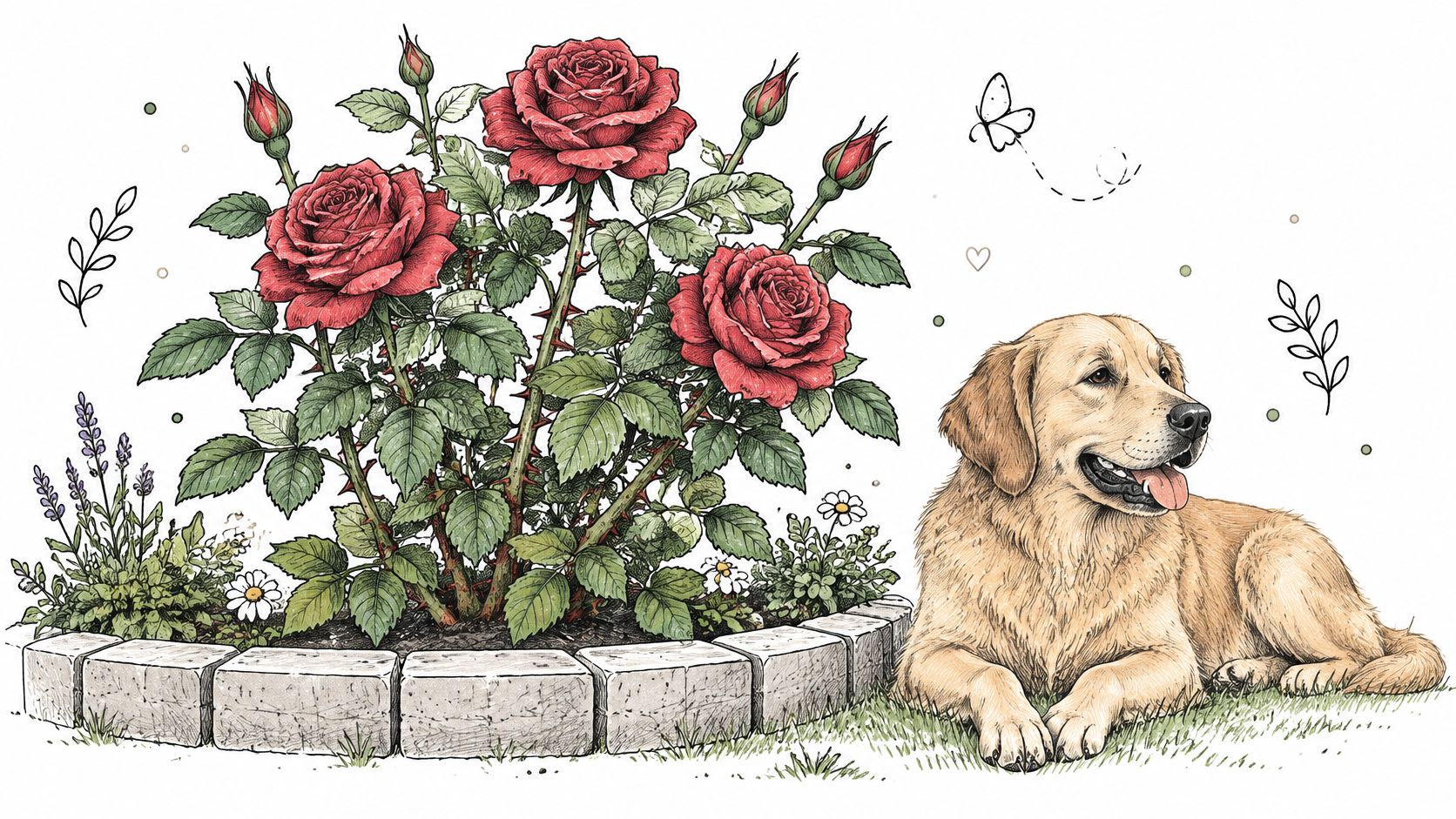
Keep canes away from running lines
Choose thornless or low-thorn cultivars near occupied areas, and inspect the actual stems before buying. Don't assume a label eliminates every sharp projection.
For a Labrador Retriever that races along the same fence line, put the rose bed behind a barrier and leave the running route clear. Allow room for mature growth, not just the nursery pot's current footprint.
- Prune inward growth: Remove canes that reach into gates, paths, or play areas.
- Collect every clipping: Use a bucket or tarp while pruning, then check the ground.
- Separate bouquets: Keep cut roses and vase water away from dogs that investigate tables.
A rose can be an excellent garden plant and an unsuitable fetch-zone plant at the same time. Don't use scattered pots as the only barrier if your dog can weave between them.
Management priority: punctures and snagging. After a collision with a rose bush, inspect paws, skin, and the outside of the mouth without forcing your dog's mouth open. Contact your veterinarian for eye involvement, persistent pain, bleeding, or a suspected embedded thorn.
4. Sunflower (Helianthus annuus)
A sunflower's management needs change as the bloom becomes a seed head. The growing plant is considered non-toxic to dogs, but that doesn't make a fallen head or a pile of seeds an appropriate snack.
Choose sunflowers only if you can manage the seed stage. Their height can keep flowers above a dog, but it won't keep dropped material off the ground. Tall stems can also fall into an accessible part of the yard.
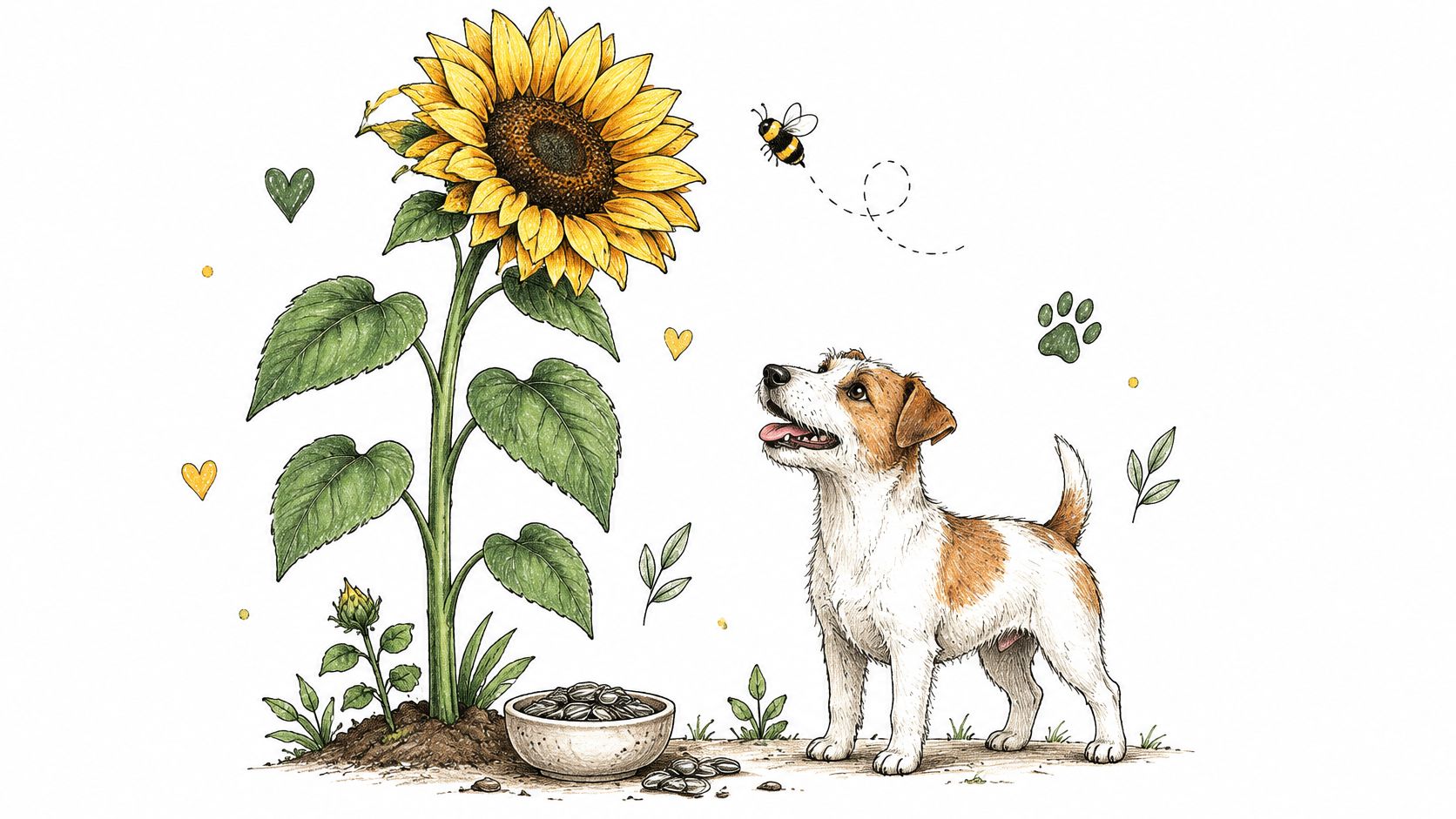
Don't judge a sunflower bed only while it's flowering. Walk it again when the heads begin to dry.
For a dog that scavenges, remove spent heads before seeds scatter. If you're saving seeds for birds or future planting, dry the heads somewhere the dog can't enter. A mesh bag over a head isn't a substitute for a barrier when the dog can reach and pull it down.
Choose cleanup over concealment
Rake up fallen seeds and shells rather than covering them with mulch. Keep human snack seeds separate from garden material, especially seasoned products. Don't offer a whole seed head as enrichment.
A Golden Retriever that carries sticks may also carry dry stalks or detached heads. In that yard, a fenced cutting patch works better than sunflowers beside the back door.
The concern with swallowed shells and bulky plant material is physical as well as digestive. If your dog swallows a substantial amount, report what was eaten to your veterinarian rather than assuming the non-toxic designation settles the question.
Management priority: seed access and seasonal cleanup. Sunflowers suit owners who will inspect the ground as the plants mature, not just water them during flowering.
5. Zinnia (Zinnia elegans)
Zinnias are a practical starting point for a sunny flower bed shared with a dog that mostly stays on paths. They provide bright, daisy-like flowers for garden color and cutting without the thorn-management problem of roses.
Their non-toxic classification makes them a useful candidate, not a substitute for identifying the plant. Buy a labeled Zinnia elegans, keep the tag, and check every additional flower you mix into the bed. A safe focal plant doesn't make an unidentified mixed planting safe.
Build a bed your dog can understand
Use a visible border and preserve the route your dog already takes through the yard. If the dog cuts diagonally between the patio and gate, leave that route open instead of planting directly across it.
- Water at soil level: Direct water toward the roots rather than repeatedly soaking the foliage.
- Remove spent flowers: Collect deadheaded blooms and stems in a container as you go.
- Protect new plants: Use a secure temporary barrier while the bed establishes.
- Store supplies: Put fertilizer, treatment concentrates, and empty nursery packaging away immediately.
For example, plant zinnias behind the edge of a patio bed while keeping the front strip clear for access and maintenance. That arrangement lets you cut flowers without stepping through the plants or leaving a gate open.
Garden prevention also belongs alongside broader dog-care planning. Our calculator adapts lifetime ownership estimates to your dog's breed, state, and age.
Management priority: treated foliage and disturbed soil. Zinnias are a comparatively straightforward option when the dog leaves plants alone. If your dog digs repeatedly, change the barrier rather than adding loose stones, stakes, or decorative objects that create new things to chew.
6. Petunia (Petunia x hybrida)
A hanging basket can make petunias easier to manage around dogs, provided the entire arrangement stays beyond reach. Trailing stems, hanging cords, and drainage water all count as part of that arrangement.
Petunias are considered non-toxic to pets. Their mounding and trailing growth makes them useful for window boxes and containers, but it can also bring foliage back within reach as the plant fills out. Check the mature display, not just the newly purchased basket.
Secure the basket, then check below it
Use a hook and support suitable for the basket when its growing medium is wet. Follow the hardware manufacturer's installation requirements, including the correct mounting surface. A decorative hook pushed into weak material isn't a secure installation.
Keep chairs, benches, and storage boxes away from the basket if your dog climbs. Position it where runoff won't collect in a bowl or saucer the dog can reach.
- Check trailing growth: Trim or reposition stems before they reach the dog.
- Inspect the foliage: Petunia leaves can hold soil and debris, so don't treat a dirty leaf as clean plant material.
- Check treatment instructions: Keep the basket inaccessible for the product's required period after applying a garden treatment.
For a small patio, a secured window box outside the dog's accessible area may work better than a freestanding plant stand. It leaves the floor clear and removes a potential collision point.
Management priority: hanging hardware and chemical exposure. Rinsing a plant doesn't prove that residues are gone. If treatment information is unavailable, keep the plant inaccessible rather than guessing that washing made it safe.
7. Phalaenopsis Orchid (Phalaenopsis spp.)
The flower isn't the most interesting part of an orchid to every dog. Some will ignore the blooms and pull at the bark-based growing medium, plastic pot, support stake, or clips instead.
Phalaenopsis orchids, also called moth orchids, are non-toxic options for indoor displays. Their suitability depends heavily on the container setup. A stable pot on a protected surface is a different proposition from a lightweight nursery pot at nose height.
Treat the whole arrangement as the plant
Remove decorative picks and loose packaging after purchase. Check that support stakes don't project into a place where your dog could strike them. Keep fallen clips and plant ties off the floor.
Water according to the growing medium's condition rather than following a rigid weekly schedule. Let excess water drain before returning the plant to its decorative container, and don't leave fertilizer solution accessible.
Practical rule: If your dog digs in orchid bark, relocate the orchid before adding a decorative cover.
A fitted barrier over the growing medium may help in some setups, but it must stay secure and allow appropriate drainage and airflow. Loose pebbles or improvised fabric aren't a dependable answer for a determined chewer.
A useful placement is a broad cabinet near suitable light, away from furniture the dog climbs. Keep the pot back from the edge and check that a curtain, cable, or passing leash can't pull it down.
Management priority: growing medium and accessories. If your dog chews bark or swallows part of the arrangement, tell your veterinarian about the material, not just the orchid's name. The non-toxic flower classification doesn't describe a plastic clip or a mouthful of potting material.
8. Impatiens (Impatiens walleriana)
For a shaded bed, impatiens offer color where sun-loving flowers may struggle. Their soft stems also make them a poor match for a dog's shortcut between the door and fence.
Impatiens are considered non-toxic to dogs. In a well-placed bed, the everyday challenge is often protecting the plants from trampling and digging rather than keeping a dog away from a poisonous flower. That still calls for a boundary if the dog chews or uproots plants.
Keep the shaded route open
Shade is attractive to dogs as well as plants. Leave a resting spot outside the bed and give your dog an obvious path through the area. Don't fill every cool patch with flowers and expect the dog to stop using it.
Use edging to define the bed, but choose fencing when you need to prevent access. Low edging marks a boundary; it doesn't stop a dog that wants to investigate.
- Inspect leaf undersides: Yellowing foliage and white growth warrant closer examination for disease.
- Remove affected material: Bag suspect plants and seek local extension guidance before treating the whole bed.
- Manage mulch access: Use mulch for moisture management, not as a promise that digging will stop.
- Keep stems off paths: Reposition containers if plants spill into a frequently used route.
Seasonal decorations nearby need their own safety check. The FDA's holiday-hazard guidance explains that plant risk depends on the species and amount eaten, so a familiar decorative plant shouldn't be assumed safe.
Management priority: placement and treatment decisions. Impatiens work best where shade, drainage, and a protected boundary already fit. A repeatedly trampled bed needs a layout change, not replacement plants.
How the eight dog friendly flowers compare on toxicity listing, growth habit, and main risk to check
| Item | ASPCA listing | Growth habit | Main risk to check |
|---|---|---|---|
| Snapdragon (Antirrhinum majus) | Non-toxic to dogs | Upright annual or short-lived perennial; 1–4 feet tall | Stomach upset from chewing; pesticide or fertilizer exposure |
| African Violet (Saintpaulia ionantha) | Non-toxic to dogs and cats | Compact flowering houseplant; typically 6–12 inches across | Mouth or stomach irritation from chewed leaves; spilled soil |
| Rose (Rosa spp.) | Non-toxic to dogs | Woody shrub or climber; under 2 feet to over 10 feet | Thorn injuries; harmful garden chemicals |
| Sunflower (Helianthus annuus) | Non-toxic to dogs | Tall annual; 3–12 feet, with large seed heads | Seeds and shells may cause stomach upset, choking, or blockage |
| Zinnia (Zinnia elegans) | Non-toxic to dogs | Annual; 1–4 feet tall | Mild irritation from chewed foliage |
| Petunia (Petunia x hybrida) | Non-toxic to dogs | Trailing, mounding, or upright annual | Ingested soil or fertilizer residue on sticky leaves |
| Phalaenopsis Orchid (Phalaenopsis spp.) | Non-toxic to dogs | Compact indoor orchid with long-lasting flower spikes | Stomach upset from swallowed bark potting mix |
| Impatiens (Impatiens walleriana) | Non-toxic to dogs | Shade-tolerant annual; 6–24 inches tall | Trampling or digging damage; possible stomach upset if chewed |
Your Pre-Planting Checklist for a Dog-Safe Bed
Choose the flower and its location together. A non-toxic plant behind a secure boundary is easier to manage than the same plant beside a dog that digs, chews, or scavenges.
Plant identity deserves particular care. A peer-reviewed review of companion-animal plant poisoning documents why ornamental plants remain a veterinary toxicology concern and why common names alone aren't a reliable safety check. Keep the botanical name available before there's an incident.
Check before the plant comes home
- Confirm the identity: Match the botanical name on the nursery tag to the ASPCA listing. Check every component of a mixed planter or bouquet.
- Ask about treatments: Request the names of pesticides, fungicides, and fertilizers used, plus any access restrictions.
- Plan the boundary: Keep thorny canes, seed-heavy plants, exposed growing medium, and unstable containers away from your dog.
- Inspect the accessories: Remove reachable packets, ties, decorative picks, and loose packaging.
- Record the details: Photograph the plant and tag. Keep treatment labels where you can retrieve them quickly.
- Recheck after growth: Look for trailing stems, fallen seeds, projecting canes, and gaps beneath barriers.
When to call your vet
If your dog may have eaten a poisonous or unidentified plant, contact your veterinarian, an emergency clinic, or a poison helpline immediately. The ASPCA's poisoning guidance advises seeking help rather than waiting for symptoms and having the plant's identity available.
Tell the veterinary team what your dog ate, approximately when it happened, the dog's weight, and any symptoms. Photograph the plant and collect a sample safely if you can. Don't induce vomiting unless a veterinary professional directs you to.
Abnormal breathing, collapse, tremors, seizures, marked weakness, repeated vomiting, or suspected choking need urgent veterinary attention. A swallowed thorn, support stake, shell, or plastic accessory also changes the situation, even when the flower itself is non-toxic.
For puppies, senior dogs, and dogs with ongoing conditions, soft stools warrant a same-day call. An otherwise lively adult dog that's eating and drinking can sometimes be watched through one day of soft stools, but symptoms continuing for two or three days warrant a call. Those observation limits don't apply to suspected poisoning or concerning symptoms.
Before planting, save your veterinarian's contact details, photograph the labels, and install the boundary. Those steps make a dog-safe bed more dependable than a flower list alone.
PetCostEngine offers breed-specific health information and lifetime dog ownership estimates adapted to your state and your dog's age. Visit PetCostEngine to put everyday prevention, routine care, and potential veterinary needs into your broader plan for your dog.
Estimated lifetime and yearly costs for a American Water Spaniel, state by state, plus whether pet insurance breaks even for the breed.
See American Water Spaniel costs →
Is insurance worth it for a American Water Spaniel? →
Premium dry food → Puzzle toys → No-pull harness →
As an Amazon Associate, PetCostEngine earns from qualifying purchases.