
Coconut oil isn't a proven treatment for a dog's coat: it may add short-term shine, but it shouldn't be used to manage itch, infection, allergy, or yeast. If your veterinarian agrees to a cosmetic trial, keep it small and about once weekly rather than making it a daily coat treatment.
The popular advice to rub coconut oil all over a dog confuses a visible finish with healthier skin. A glossy hair shaft tells you oil is present, not that you've corrected the reason for dullness, flakes, or scratching. The useful decision is whether your dog has a cosmetic concern at all, or a skin problem that needs a different approach.
Table of Contents
- Coat Checklist Before Any Coconut Oil
- What Coat Evidence Actually Shows
- Coconut Oil Compared With Coat Alternatives
- How to Patch Test a Weekly Coat Trial
- When to Stop and Call Your Vet
- Age Coat Type and Breed Situations
- Choose Diet Care Over Routine Oil
Coat Checklist Before Any Coconut Oil
Veterinary sources don't establish coconut oil as a reliable coat treatment, so a shinier appearance should be treated as a cosmetic result. Match one row in this checklist before proceeding; don't combine several rows to justify a trial.
Coconut oil decision by coat situation
| Situation | Coconut oil role | Prefer instead | Stop or call |
|---|---|---|---|
| Healthy coat, owner wants shine | Optional tiny cosmetic film or skip | Complete balanced diet | Stop if greasy or the dog licks it off |
| Mild flakes, no odor, redness, or hair loss | One small-patch trial about once weekly, only if there's no itch | Diet review if dryness continues | Recheck in 7 days; stop if itch rises |
| Itch with redness, hair loss, or odor | Don't treat as dryness | Veterinary exam | Call if signs persist or spread |
| Hot spot, open wound, ooze, or infection | Do not apply | Veterinary care | Same day if painful, spreading, or the dog is unwell |
| Yeast-prone or greasy skin | Avoid | Vet plan for yeast or seborrhea | Stop if odor or itch increases |
| Known allergy or atopic history | Not a treatment | Vet plan and evidence-based fatty acids | Call if pruritus continues |
| Puppy on a growth diet | Skip routine use | Complete puppy diet | Ask a vet before any added oil |
| Pancreatitis history or likely to lick oil | Skip, or topical only if a vet agrees and residue is rinsed | Diet review | Stop if vomiting or loose stool |
Separate appearance from symptoms
PetMD's coconut oil guidance doesn't establish a meaningful skin-treatment benefit and warns that topical use can cause contact allergy or worsen yeast-associated skin disease. Redness, hives, scabbing, or increased itching after application are reasons to stop, not signs that the skin is adjusting.
Look beneath the coat rather than judging the hair alone. Part it gently and check for redness, flakes attached to irritated skin, missing hair, moisture, or odor. Scratching, chewing, and repeated licking also count as symptoms, even if the skin looks fairly normal between episodes.
The narrow home-trial situation is mild surface flaking on otherwise comfortable, intact skin. Persistent scaling, odor, hair loss, redness, or itching needs veterinary assessment because allergy, parasites, bacteria, and yeast can resemble ordinary dryness.
Record the starting point
Write down the matching row and what you're trying to change. A useful note might be: small dry-looking flank patch, no scratching, no odor, skin intact. Take a clear photo under consistent lighting so you aren't relying on memory.
A sparse coat doesn't make oil automatically appropriate. Owners researching a dog with little hair can use the American Hairless Terrier breed profile to organize breed-related care questions, but visible skin still needs the same symptom check.
Write down your row before reading application steps. If the row says veterinary care, a patch test isn't the next step.
What Coat Evidence Actually Shows
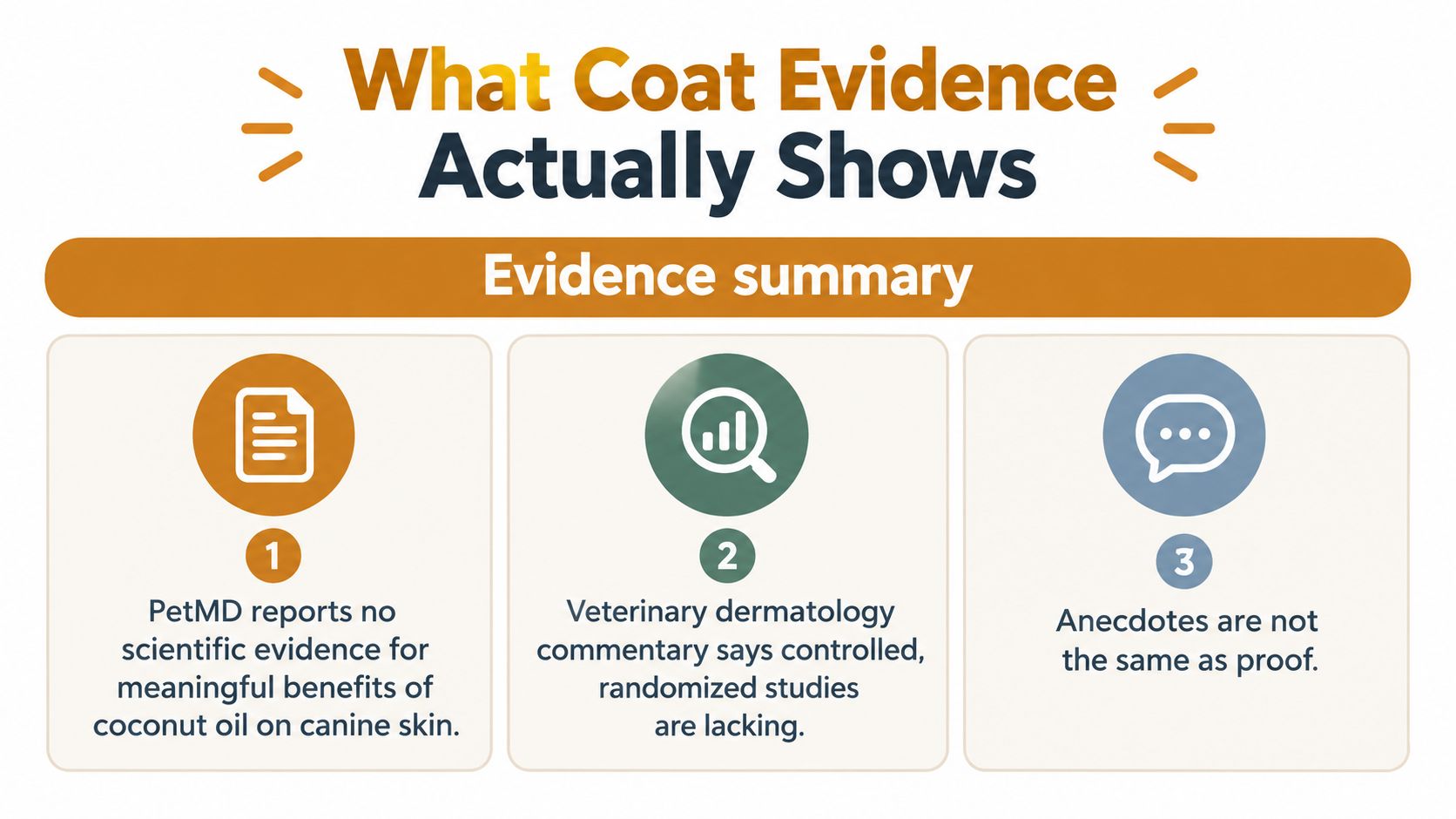
The missing evidence matters more than testimonials about softness. To establish a useful treatment, researchers need to compare treated dogs with suitable controls, assess relevant skin outcomes, and record adverse effects rather than observe a glossier coat.
Veterinary dermatology commentary published by dvm360 describes the lack of controlled, randomized, double-blinded canine trials and discusses a 2019 laboratory study in canine epidermal keratinocytes in which virgin coconut oil increased cell-membrane disruption compared with controls. That is a cellular safety concern, not proof that every topical application harms a dog, and it cannot establish a safe home dose.
What a small positive report can't establish
A small report of coconut-oil massage in puppies with atopic dermatitis doesn't resolve the clinical-trial gap. Without a stated control group, improvement can't confidently be attributed to the oil rather than massage, concurrent care, changing symptoms, or other differences.
It also doesn't establish benefit for a healthy adult dog whose owner wants more shine. Diseased skin and healthy hair are different treatment targets, and a result in one group shouldn't be stretched into a general grooming recommendation.
The nutritional argument is weak too
Coconut oil contains very little omega-6 fatty acid. That matters because omega-6 strategies have a stronger evidence base for influencing superficial skin lipids and improving clinical signs of canine atopic dermatitis. Coconut oil's medium-chain fats aren't an interchangeable substitute.
Evidence check: A smoother-looking hair shaft is an appearance outcome. Less inflammation, controlled infection, and a healthier skin barrier are treatment outcomes.
Oil can coat hair and reduce the visible appearance of dryness without addressing its cause. The defensible description is an optional cosmetic moisturizer with unproven therapeutic value, not a dermatology treatment.
Owners comparing coat expectations can start with a relevant profile, such as the Afghan Hound breed page, and bring specific skin concerns to a veterinarian. A breed's impressive coat doesn't create evidence for a pantry remedy.
Coconut Oil Compared With Coat Alternatives
Choose an option by the job your dog needs done, not by which ingredient sounds most natural. Cleaning dirt, supporting nutrition, treating yeast, and making hair shine are separate jobs.
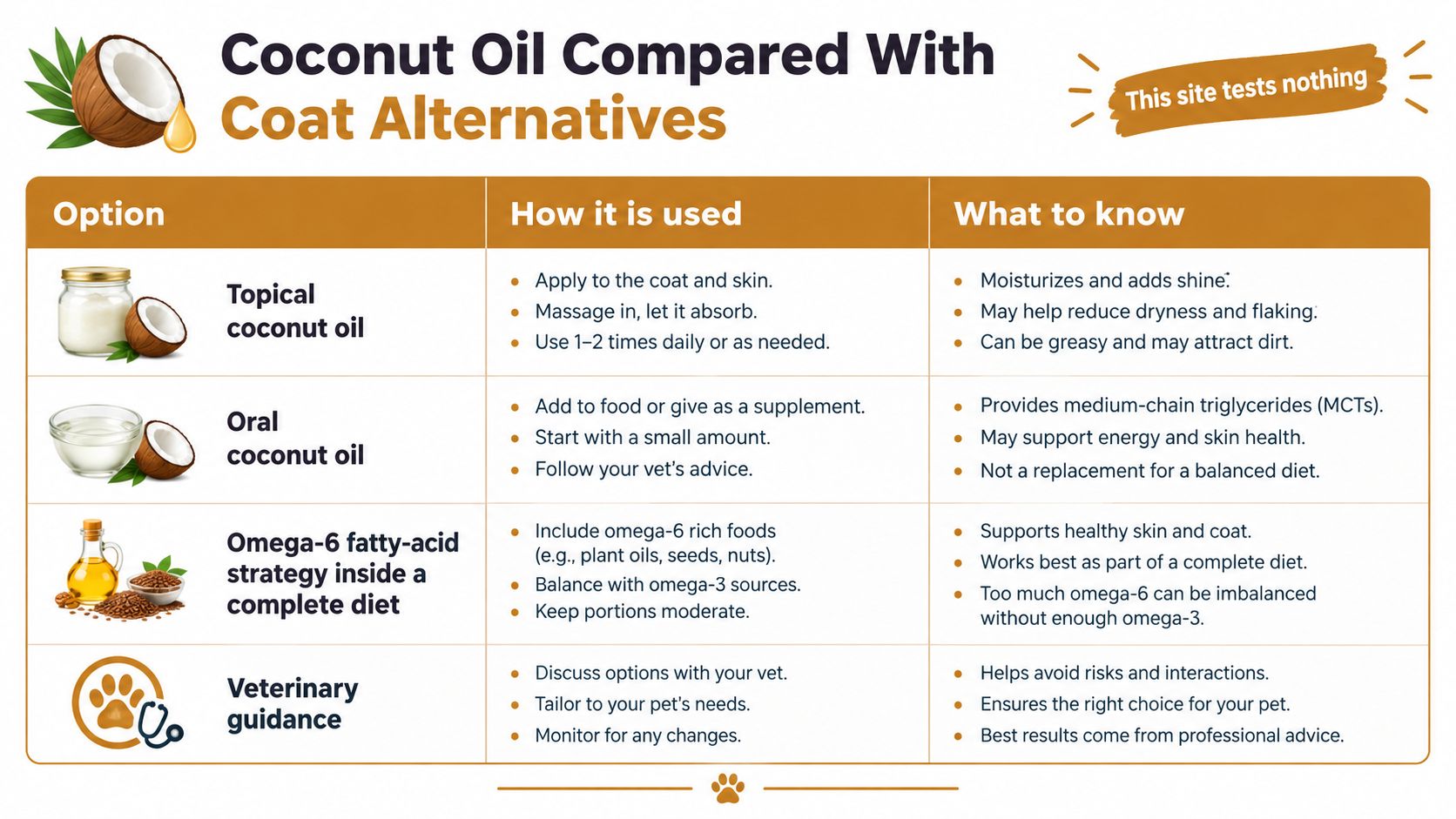
This site tests nothing. The comparison below describes categories and their appropriate uses; it doesn't rank retail products or claim that a particular bottle performs better.
Coat options compared by job and evidence
| Option | Coat job | Evidence | Main drawback | Fits when |
|---|---|---|---|---|
| Topical coconut oil | Short-term moisture and shine | No strong clinical trials in dogs | Mess, clogged pores, licking, contact irritation | Uncomplicated dryness after the checklist allows a patch |
| Oral coconut oil | Not a meaningful coat-nutrition strategy | Very little omega-6; unfavorable versus targeted diet support | Calories, stomach upset, pancreatitis concern | Generally not for a coat goal |
| Omega-6 strategy in a complete diet | Support for atopic signs and skin lipids | Stronger veterinary nutrition evidence than coconut oil | Needs vet guidance and a balanced diet | Itch or barrier issues after diagnosis |
| Veterinary medicated shampoo | Targets infection, yeast, or seborrhea as labeled | Condition-specific care under veterinary direction | Wrong active or overuse can irritate | Odor, grease, or diagnosed skin disease |
| Plain moisturizing or oatmeal shampoo | Cleans a healthy coat without a heavy oil film | Supportive hygiene, not disease treatment | Too-frequent baths can dry skin | Dirt on otherwise healthy skin |
The AKC's health guidance on coconut oil describes possible topical moisturization, but it doesn't establish that oil reliably treats canine skin disease. Practical permission to use an ingredient sparingly isn't proof that it should replace diagnosis or a formulated skin-care plan.
Read labels for the intended job
For a plain moisturizing shampoo, look for a product labeled for dogs, a clear ingredient list, and bathing instructions. Don't interpret oatmeal, botanical ingredients, or a pleasant scent as evidence that the product treats allergy or infection.
For a medicated wash, the label should identify the active ingredient, intended species, contact time, and bathing frequency. Ask your veterinarian which problem the active is meant to address and how you'll judge whether it's working. Don't borrow the schedule from an unrelated shampoo.
A nutrition plan needs similar specificity. Bring the dog's food label and a list of treats and supplements to the appointment. Ask whether the existing complete diet is appropriate before adding another source of fat.
Ask a diagnostic question, not a shopping question
The useful question is whether your dog has dryness, allergy, infection, yeast, or a grooming problem. Follow that with: does this dog need a fatty-acid strategy, a medicated wash, or gentler cleaning?
Oil winning on shine isn't the same as oil winning on skin health.
For a dog with a substantial coat, such as an American Water Spaniel, separate the grooming routine from treatment of the skin underneath. A wash chosen for dirty hair shouldn't become an improvised treatment for odor, grease, or recurring itch.
How to Patch Test a Weekly Coat Trial
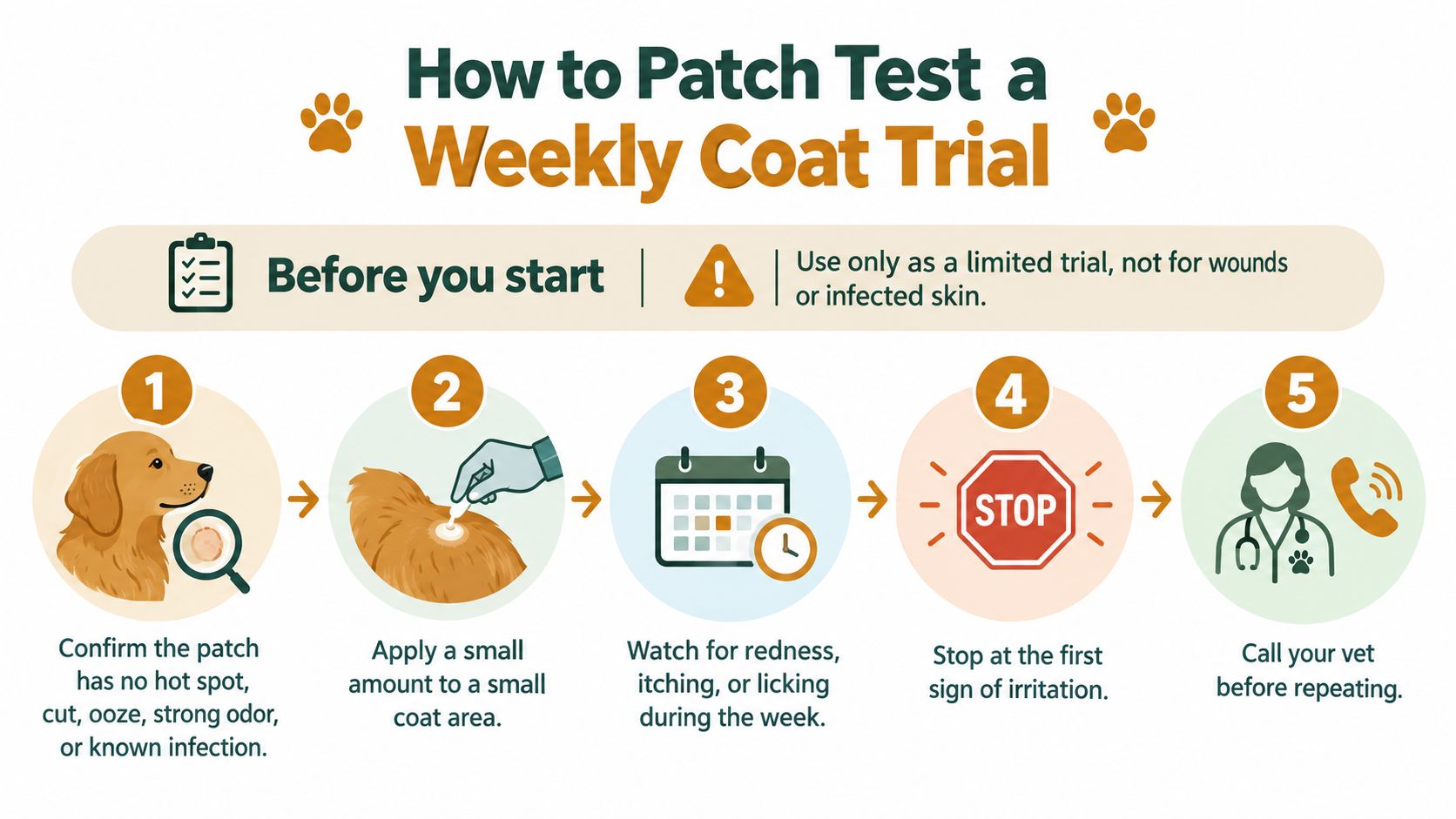
Coconut oil is a temporary cosmetic film, not a treatment for an underlying skin problem. Use a small trial only if the coat checklist permits it and your veterinarian agrees. Skip it on wounds or infected skin, and if you cannot prevent licking.
The AKC's topical coconut oil guidance supports sparse use, about once weekly, with residue rinsed away after about five minutes. The oil may leave a greasy coat, clog pores, and prompt licking that can worsen irritation.
Keep the exposure small
Inspect the patch. Don't start if you find a hot spot, cut, discharge, strong odor, or known yeast problem.
Choose plain coconut oil without fragrance or added essential oils. Soften a pea-sized dab between clean fingers. Do not heat it into a hot liquid.
Part the hair over a small area on the flank. Avoid applying oil over the whole body, in facial folds, or where your dog is already chewing.
Spread a thin film over the exposed hair and skin for a few seconds. Stop if your dog flinches or tries to get away.
Leave the oil on briefly, following the short contact period in the AKC guidance. Longer contact has no support here as a way to improve the result.
Rinse thoroughly. Work water through the hair to remove residue, then dry the area gently.
Supervise your dog to prevent licking during application and contact time. If you cannot prevent licking, rinse the area and end the trial.
Check the skin before considering another application. Don't make the test a daily routine; ask your veterinarian whether repeating it has a useful purpose.
Watch the patch over the next 24 hours and through the following week. Stop for redness, hives, scabbing, increased scratching, odor, or greasy buildup. This is a practical observation period, not a validated allergy test.
Decide what the result means
A failed trial means new irritation, persistent licking, trapped grease, or digestive signs after licking. Don't respond by using more oil, leaving it on longer, or trying another spot.
A neutral result is a shinier patch without new symptoms. It shows only that your dog tolerated that exposure. It does not show improved skin-barrier function or rule out a later reaction.
Do not apply oil to hot spots, open wounds, oozing lesions, infected skin, or yeast-prone areas unless your veterinarian directs you to. A patch test cannot make an unsuitable application site safe.
When to Stop and Call Your Vet
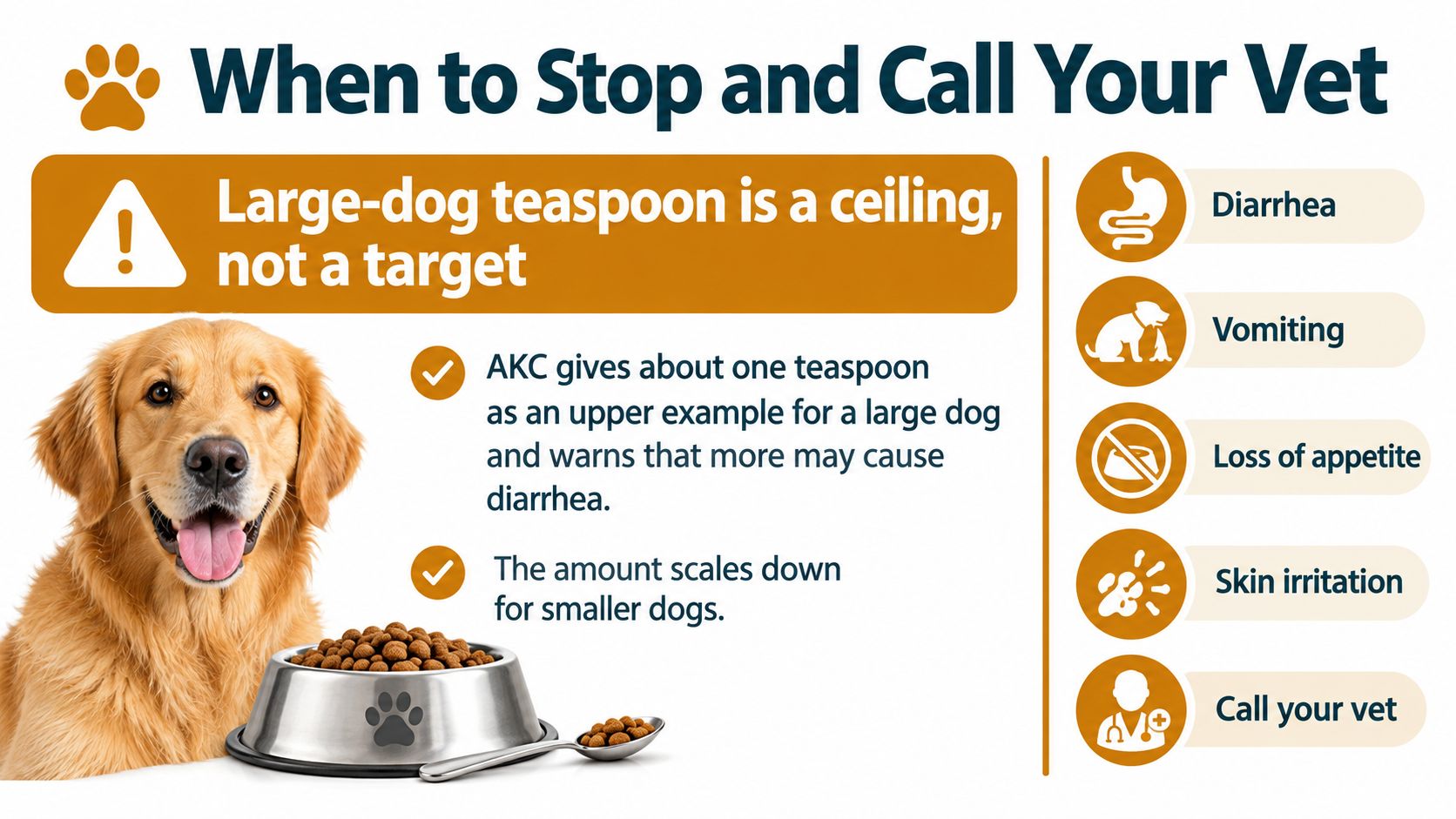
The AKC's coconut-feeding guidance gives about one teaspoon for a large dog as an upper example and warns that larger amounts may cause diarrhea. Treat that as a ceiling example, not a target, a universal safe dose, or a coat-care recommendation; smaller dogs shouldn't receive the same amount.
Small amounts of coconut products are generally unlikely to cause serious poisoning, but that doesn't mean unrestricted ingestion is harmless. Digestive upset, loose stool, and diarrhea remain possible, and the jar should stay out of reach.
Match symptoms to urgency
When to call your vet by urgency
| Urgency | Signs | Action |
|---|---|---|
| Same day | Repeated vomiting, blood in stool, painful abdomen, lethargy, or a suspected large greasy intake | Call your veterinarian or nearest emergency clinic now |
| Prompt | Facial swelling, hives, fast-spreading redness, or a hot spot the dog won't leave alone | Call your veterinarian promptly |
| Routine | Itch, odor, hair loss, or flakes still present after the one-week patch | Book a routine visit and don't repeat the oil |
| Stop now | Loose stool or vomiting after any oral coconut oil | Stop all oil and monitor; call if signs persist |
Breathing difficulty, collapse, or swelling involving the mouth or throat warrants emergency care rather than waiting for a routine callback. Don't restart oil while arranging care, even if the coat looks better.
Count licking as ingestion
Topical and oral use aren't separate if the dog removes the application with its tongue. Rinsing residue and preventing licking matter especially for dogs with a history of pancreatitis, fat intolerance, obesity, or unexplained gastrointestinal symptoms.
If the dog gets into the container, note the product, estimated amount missing, time of access, and symptoms. Contact your veterinarian or ASPCA Animal Poison Control when you're unsure what was swallowed; don't induce vomiting unless a veterinary professional directs you.
Recurring skin trouble deserves a record of its own. For a dog such as a Chinese Shar-Pei, use breed information to prepare questions, but tell the veterinarian exactly where the odor, irritation, or hair loss occurs rather than assuming every episode has the same cause.
A coat-care experiment should never continue through stomach signs or worsening skin. Avoiding an adverse reaction matters more than preserving a cosmetic result.
Age Coat Type and Breed Situations
The most manageable candidate is a healthy adult dog with an accessible dry-looking patch and no urge to lick it. Life stage, coat density, folds, and medical history can make even that modest cosmetic experiment a poor fit.
ASPCA's guidance on foods to avoid feeding pets supports a limited conclusion: small amounts of coconut products aren't likely to cause serious harm, but their oils can cause stomach upset, loose stools, and diarrhea. It doesn't endorse coconut oil as a coat supplement or justify leaving residue where a dog can swallow it.
Puppies and older dogs
Puppies should stay on a complete growth diet rather than receive routine oil for coat development. Flakes, itching, or hair loss in a puppy warrant assessment, not an assumption that the growing coat needs more dietary fat.
A small report involving puppies with dermatitis doesn't establish a routine puppy-care practice. Treatment of a diagnosed disease belongs with the veterinarian overseeing growth, nutrition, and skin care.
For an older dog, consider how easily you can inspect and rinse the site and whether concurrent disease changes the plan. Fragile-looking skin, discomfort during handling, or an existing prescription skin regimen are reasons to ask before applying anything new.
Dense coats and skin folds
Double coats, feathering, and tightly curled hair make residue harder to see and remove. Don't keep adding oil because the first dab disappears into the hair; difficulty reaching the skin is a reason to skip the application, not expand it.
Short coats make grease and redness easier to notice, but visibility doesn't guarantee tolerance. Inspect the skin itself and watch behavior rather than judging only the finish.
- Facial folds: Don't pack oil into a fold or use it to cover odor. Moist, irritated folds need a specific cleaning or treatment plan.
- Heavy coats: Avoid a full-body rub that you can't rinse thoroughly.
- Recurring skin history: Bring previous diagnoses and treatment responses to the appointment rather than restarting pantry remedies.
Owners of a Poodle can use the breed profile to organize care questions, while keeping coat maintenance separate from diagnosis.
Cosmetic use may be reasonable for a healthy adult's isolated dry patch. It's a poor default for a puppy, a yeasty fold, or a dog on a fat-restricted plan.
Choose Diet Care Over Routine Oil
The practical answer to whether coconut oil is good for a dog's coat is narrower than the usual benefit lists suggest. You don't need to add it to provide good coat care, and oral use isn't a sensible shortcut to a better nutritional plan.
Use a conservative default plan
Keep the diet complete and balanced. For a healthy coat or mild dryness, don't start daily oil or replace part of the dog's formulated food with supplements.
Clean a dirty, otherwise healthy coat with a plain dog-appropriate shampoo. Treat bathing as hygiene, not an improvised cure for itching or infection.
If dryness is the only finding and your veterinarian agrees, use a limited, rinsed patch rather than a full-coat application.
Stop if the patch provides no useful cosmetic improvement by the planned weekly recheck. Don't increase the amount to chase a result.
Choose diagnosis for symptoms. Itch, odor, hair loss, grease, wounds, or known allergy belong on the veterinary path, with urgency determined by the dog's signs.
Don't add oral coconut oil for coat quality. Ask whether the existing food needs adjustment or whether a targeted fatty-acid strategy is appropriate.
Make the appointment specific
Bring photos, the food label, and a list of everything applied or fed. Ask what diagnosis is being considered, whether a medicated shampoo is needed, and which active ingredient, contact time, and frequency its label must disclose.
For recurring breed-related concerns, use the matching breed profile and the ownership-care guides to organize ongoing care around the dog's actual history.
Coconut oil is optional cosmetics for a narrow dry patch. Everything else belongs with appropriate diet care and a veterinarian.
PetCostEngine offers breed health profiles and personalized ownership-planning tools to help you prepare for ongoing grooming and veterinary care. Visit PetCostEngine to put recurring skin concerns into a broader care plan based on your dog's breed, age, and US location.
Estimated lifetime and yearly costs for a American Hairless Terrier, state by state, plus whether pet insurance breaks even for the breed.
See American Hairless Terrier costs →
Is insurance worth it for a American Hairless Terrier? →
Deshedding brush → Orthopedic bed → Premium dry food →
As an Amazon Associate, PetCostEngine earns from qualifying purchases.