
Yes, dogs get stuffy noses, medically described as rhinitis or sinusitis, and the triage checklist below helps you decide whether to monitor, call your vet, or seek emergency care. The surprising part is that a dog with mild-looking discharge from just one nostril may need a faster assessment than a bright, comfortable dog with a visibly runny nose on both sides.
Table of Contents
- Yes Dogs Get Stuffy Noses
- Stuffy Nose Triage Checklist
- What Rhinitis Does Inside the Nose
- Causes Behind a Congested Dog
- How to Check a Stuffy Nose at Home
- Three Congestion Patterns Owners Miss
- Preparing for the Vet Visit and Planning Care
Yes Dogs Get Stuffy Noses
A congested nose describes what you're noticing, not what's causing it. Veterinarians use rhinitis for inflammation of the nasal lining and sinusitis when the sinuses are involved. Calling it a cold doesn't distinguish an infection from irritation, lodged material, dental disease, or another nasal disorder.
The useful question isn't merely, “Do dogs get stuffy noses?” It's whether your dog's pattern makes brief observation reasonable. The Merck Veterinary Manual's owner guidance identifies sneezing, discharge, snoring, and breathing changes as signs owners may notice, while emphasizing that persistent obstruction, blood, and localized discharge warrant evaluation.
Notice the pattern, not just the noise
Before reaching for a remedy, collect these observations:
- Onset: Did signs build gradually or begin with a sudden sneezing fit?
- Side: Is fluid coming from one nostril or both?
- Discharge: Is it watery, thick, yellow-green, or bloody?
- Breathing: Can your dog rest comfortably without visible effort?
- Appetite and behavior: Is your dog eating and acting normally?
Clear fluid from both sides in an otherwise bright dog can fit irritation or early viral illness. Violent sneezing, blood, declining appetite, or visible effort to breathe changes the decision, even if the nose only started running recently.
Practical rule: A stuffy nose is a reasonable home observation only while the dog remains comfortable and the overall pattern stays mild or improves.
For flat-faced dogs, a familiar snort isn't a reliable safety check. Compare the dog's current breathing with its own baseline, especially during quiet rest. The important distinction is a change in effort, not whether that breed usually makes noise.
Stuffy Nose Triage Checklist
| What you notice | Often suggests | What to do |
|---|---|---|
| Clear fluid, both nostrils, mild sneezing, eating and bright, under about a day | Early virus, dust, smoke, or another irritant | Log it and use comfort care while signs improve |
| Sudden violent sneezing fits | Foreign material in a nasal passage | Same-day veterinary visit |
| Discharge from one nostril only | Foreign body, tooth-root disease, oronasal fistula, fungus, or a mass | Prompt veterinary visit, same day if worsening |
| Yellow-green or thick discharge | Secondary infection or deeper nasal inflammation | Book a vet visit; sooner if the dog is dull |
| Blood in the discharge or nosebleeds | Trauma, foreign body, fungus, dental disease, or a mass | Same-day veterinary care |
| Facial swelling or pain around the nose | Tooth-root abscess, trauma, or a localized nasal problem | Same-day veterinary care |
| Not eating, lethargy, or signs spreading beyond the nose | Systemic illness, including infectious respiratory disease | Same-day veterinary care |
| Open-mouth breathing, blue or pale gums, or hard work to breathe | Obstruction or respiratory distress, not ordinary congestion | Emergency care now |
| Signs lasting many days, returning, or slowly worsening | Chronic rhinitis, dental disease, fungus, or a growth | Veterinary workup rather than more home waiting |
Use the most urgent matching row. This “Dog stuffy nose triage by what you see” table sorts the speed of your response, not the diagnosis. WebVet's sneezing guidance supports distinguishing sudden sneezing, localized discharge, systemic illness, and breathing difficulty rather than treating every case as a minor respiratory infection.
How to choose the next action
Say a young dog has had clear discharge from both nostrils since yesterday, still eats eagerly, and breathes easily while resting. Comfort care and a written record of onset, side, and appearance are reasonable while the signs improve.
If that same dog develops open-mouth breathing at rest or starts visibly struggling for air, the emergency row applies immediately. An earlier mild pattern doesn't grant a waiting period.
The actions mean:
- Keep a same-day log: Record what you see and reassess during quiet rest, meals, and sleep.
- Book a routine visit: Arrange an examination for persistent or recurring mild signs rather than continuing home remedies indefinitely.
- Request same-day care: Tell the clinic about blood, pain, marked sneezing, appetite loss, or deterioration when you call.
- Go to emergency care: Don't finish the log or try steam first when breathing is difficult.
Why a clock isn't enough
The “under about a day” row is a description of a mild scenario, not a medically guaranteed safe window. A dog that's brighter the next morning and still eating is different from one becoming quieter, producing thicker discharge, or breathing more noisily at rest.
One-sided discharge also shouldn't be dismissed just because it started recently. A localized problem can be important from the beginning, and blood or facial swelling deserves prompt attention even when breathing appears acceptable.
For a flat-faced dog such as a Brussels Griffon, use breed information for background, not permission to normalize a new breathing change. When you're unsure which row applies, describe the signs to the veterinary team and let them help set the urgency.
What Rhinitis Does Inside the Nose
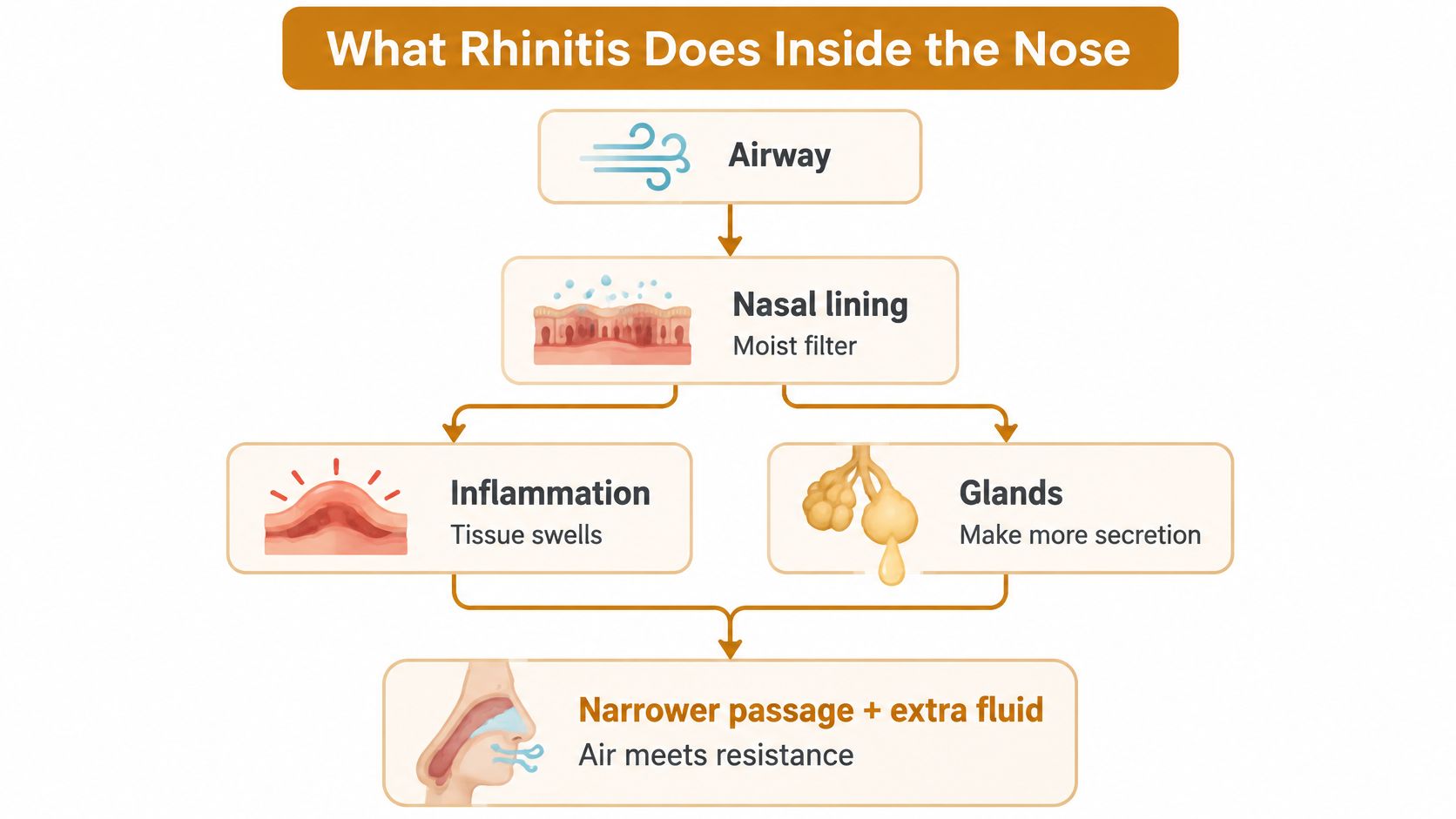
The nasal lining acts as a moist filter along the airway. When it becomes inflamed, tissue swells and glands produce more secretion. Air must then move through a narrower passage containing extra fluid.
Think of a soft straw that's been pinched and partly filled with water. The opening is smaller, resistance increases, and airflow becomes less smooth. In a dog's nose, inflammation and secretions can therefore produce stuffiness, sneezing, and unfamiliar breathing sounds without telling you which disease started the process.
Sudden inflammation isn't automatically bacterial
The Merck Veterinary Manual's clinical guidance on rhinitis and sinusitis identifies viral infection as the most common cause of acute rhinitis in dogs, naming canine distemper virus, canine adenovirus types 1 and 2, and canine parainfluenza virus. It describes primary bacterial rhinitis without preceding viral illness as extremely rare.
Bacteria more often become involved after an initial viral infection. That distinction matters because congestion alone doesn't establish that bacteria are the cause, and thicker mucus doesn't identify a particular organism.
The appearance of secretions can change as the nasal tissues become irritated or damaged. Watery material may give way to mucus, pus-like discharge, or blood. Those changes help a veterinarian assess the problem, but they aren't a home diagnostic test.
Similar swelling can have different triggers
Seasonal pollen and indoor allergens such as dust and mold can produce watery discharge and sneezing. Smoke and irritating gases can inflame the lining abruptly, while an object lodged in a nasal passage can create a more localized reaction.
Acute describes a sudden onset. Chronic describes a persistent or recurring course, not a more dramatic version of a brief illness. Either pattern can interfere with comfortable nasal airflow.
For owners of a Boston Terrier, distinguishing sound from effort is especially useful when interpreting congestion. The mechanism explains why a swollen nose may sound different, but it doesn't establish that a new sound is harmless.
A quieter nose after humidity doesn't prove the underlying problem has resolved. Easier airflow and a settled diagnosis are different outcomes.
Side, discharge, breathing effort, and appetite remain more useful for deciding what to do than the volume of a snuffle.
Causes Behind a Congested Dog
| Cause group | History clue | Typical pattern |
|---|---|---|
| Infectious respiratory disease | Unvaccinated puppy, dog-park or kennel exposure, cough with sneezing | Both sides; discharge not always present |
| Allergy or irritant | Pollen season, dust, mold, smoke, or fumes; dog otherwise bright | Watery; both sides; sneezing |
| Foreign body | Sudden violent sneezing, often after a walk through grass | One side; sudden onset |
| Dental disease or oronasal fistula | Foul-smelling discharge from one side; known tooth problem | One side; foul; may be bloody |
| Fungal infection or nasal mass | Older dog; one-sided blood or persistent discharge | One side; chronic; may bleed |
| Chronic inflammatory rhinitis | Signs persisting after infection, foreign body, fungus, and mass are considered | Chronic; often both sides |
This “Cause groups by history clue” table helps organize possibilities, but a typical pattern isn't a diagnosis. Several causes overlap, and a veterinarian may need to investigate more than one.
When the nose is part of a broader illness
In a 2024 study by Louisiana State University researchers, 15 of 50 dogs, or 30%, with suspected canine infectious respiratory disease complex had nasal or ocular discharge. The practical point is that discharge can accompany infectious respiratory disease, but its absence doesn't exclude that illness.
Cough, sneezing, recent contact with other dogs, vaccination history, and changes in energy provide context that the nose alone cannot. An unvaccinated puppy with respiratory signs deserves a different conversation with the clinic than a bright adult dog that sneezed after smoke exposure.
Watery discharge associated with a recognizable irritant may make irritation more plausible. It still doesn't prove an allergy, particularly if the pattern becomes persistent, painful, or localized.
When a localized cause moves up the list
A sudden sneezing episode after walking through grass raises concern for lodged plant material. Foul discharge alongside a known tooth problem raises dental concern, including an oronasal fistula, an abnormal connection between the mouth and nasal cavity.
Persistent one-sided discharge or blood requires consideration of fungal disease and a nasal mass, among other causes. Dental disease can also affect both sides, so bilateral flow doesn't rule it out.
Chronic inflammatory rhinitis is considered after competing explanations have been investigated. A 2024 study in Frontiers in Veterinary Science reported that chronic rhinitis may account for up to 24% of canine chronic nasal-disease cases. That figure concerns dogs with chronic nasal disease, not all dogs with a brief runny nose.
Breed background, including information for a French Bulldog, can help frame the history. It can't identify the cause of new discharge. A localized or persistent pattern needs an examination rather than another change in home remedies.
How to Check a Stuffy Nose at Home
A useful home check records visible findings without trying to open, flush, or instrument the nasal passages. Whole Dog Journal's discussion of congested breathing separates supportive care from treatment and cautions against using medications or nasal devices without veterinary direction.
Record what you can see safely
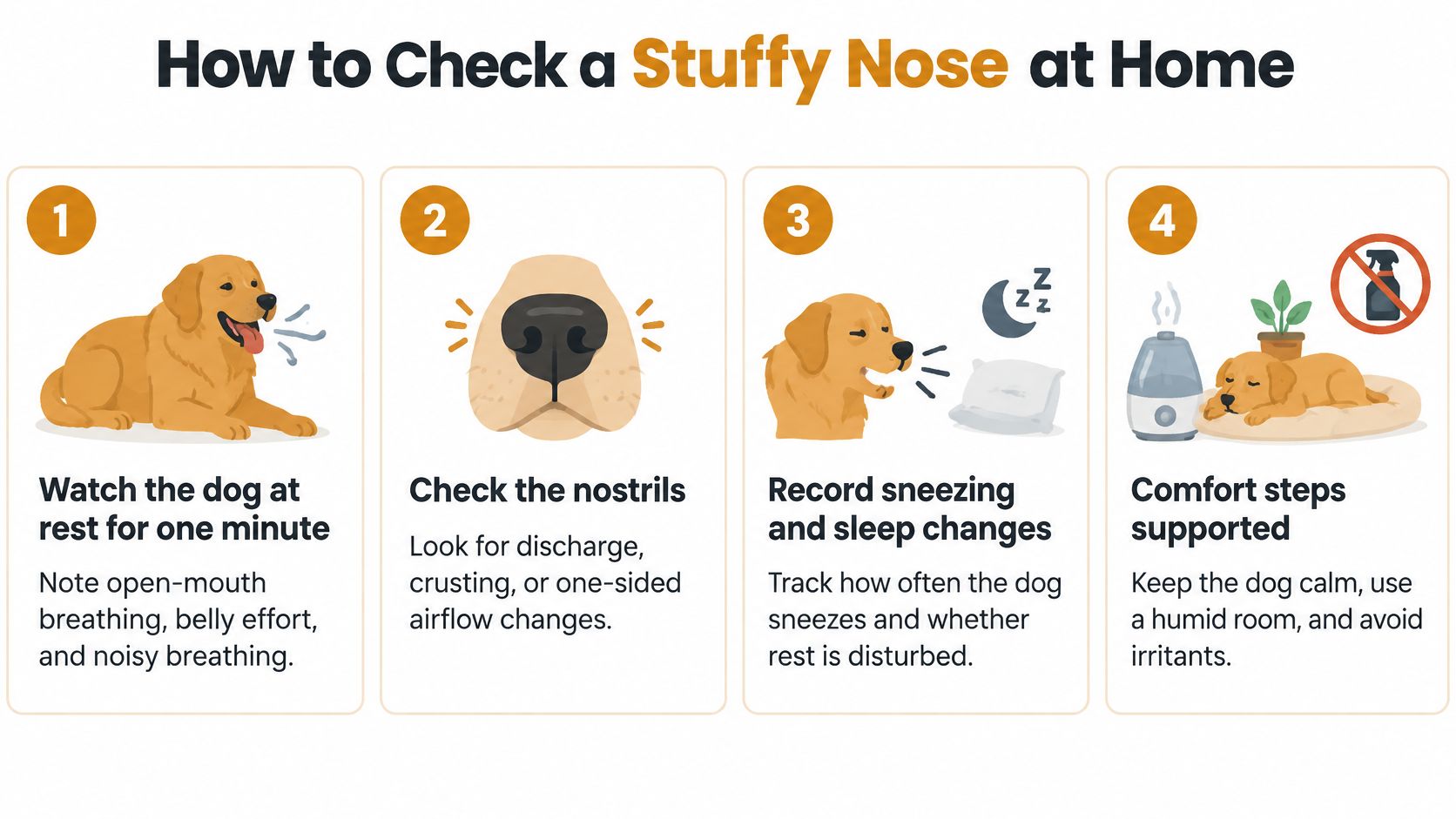
- Watch during quiet rest. Observe for about a minute as a practical check, not a diagnostic test. Open-mouth breathing at rest, pronounced belly effort, or pale or blue gums means stop and seek emergency care.
- Compare the nostrils. Note one side or both, then describe the material as clear, thick, yellow-green, or bloody. Look from outside rather than blocking either nostril to test airflow.
- Check the whole dog. Record appetite, energy, cough, disturbed sleep, and whether other dogs in the household have similar signs.
- Leave examination to the willing dog. Look at the mouth only if your dog comfortably allows it. Don't pry the jaws open or probe painful areas.
A short video of resting breathing or a sneezing episode can help you describe an intermittent sign. Recording should never delay leaving for emergency care.
Offer comfort without treating an unknown cause
- Clean only the outside. Gently wipe external discharge with a damp cloth. Don't pull at firmly attached crusts or push material inward.
- Offer water and rest. Keep the dog away from smoke, dust, and fumes. A humidifier or brief stay in a comfortably steamy bathroom may help, provided the dog is breathing easily and doesn't become hot or distressed.
- Make food easier to smell. Try gently warming wet food so its aroma is stronger, checking that it's not hot before serving. Reduced smell can make food less appealing, but continued refusal to eat still warrants veterinary attention.
Comfort care is appropriate only while the overall picture remains mild. Eating a warmed meal is encouraging, but it doesn't explain why the nose became blocked.
Keep medicines and objects out
- No human medicines without veterinary instructions: Don't give decongestants, antihistamines, or pain relievers on your own.
- No flushing or suction experiments: Don't put squeeze bulbs, irrigation devices, cotton swabs, or other objects into the nostrils.
- No diagnosis by response: Temporary relief after humidity doesn't rule out a foreign body, dental disease, or a mass.
For a Bulldog, compare current breathing with familiar resting behavior rather than assuming every snore is routine. A new struggle takes priority over every comfort measure.
A mild, bilateral, clear, improving case can use these steps alongside a written log. Any departure from that pattern should trigger another urgency assessment.
Three Congestion Patterns Owners Miss
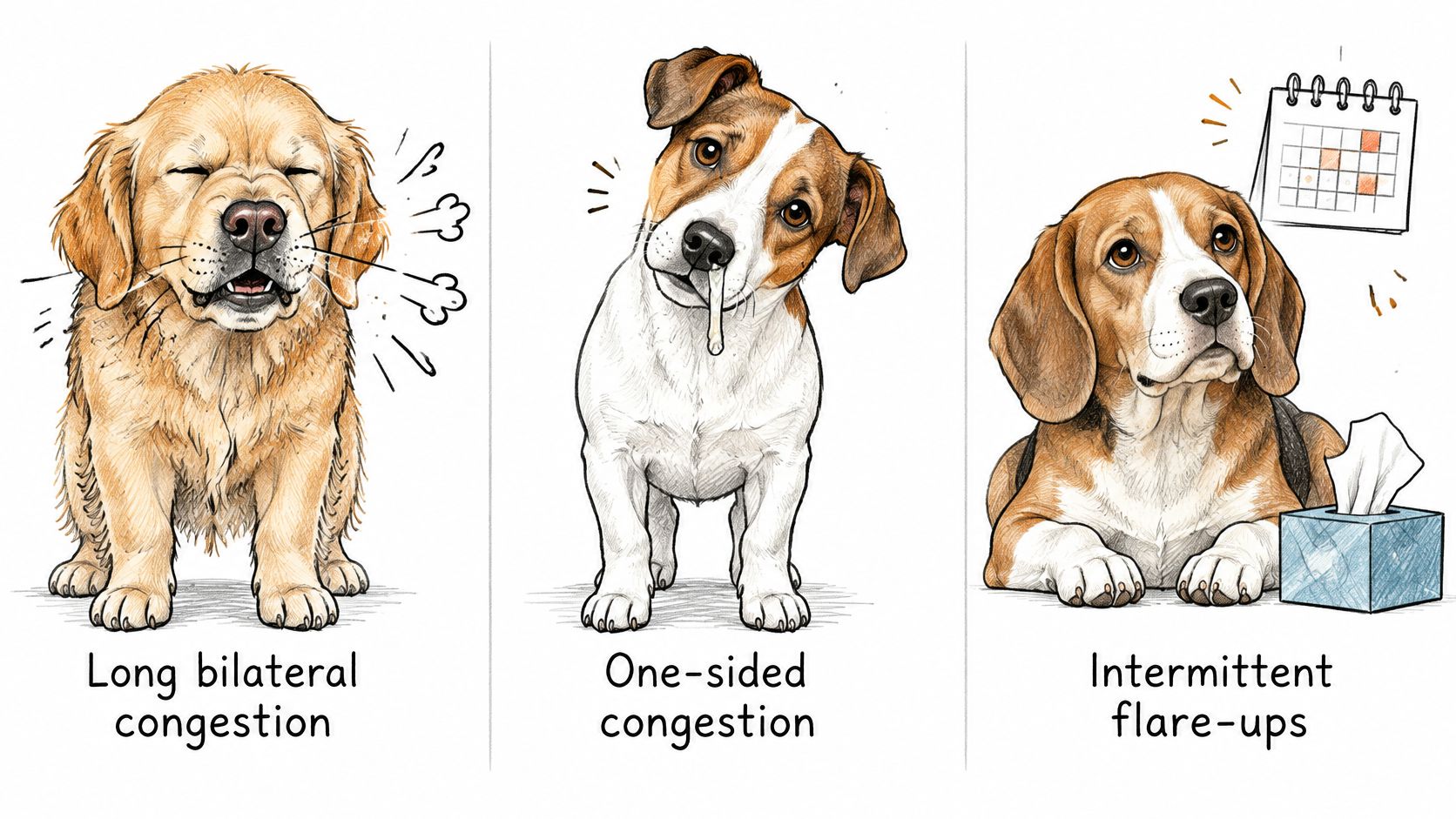
The dog that keeps eating through months of sneezing
Consider a dog that still finishes dinner but has become a daily sneezer, with discharge repeatedly appearing on both sides. The owner gradually treats the noise and tissues by the door as normal household routines.
In a 2026 single-center retrospective study of 75 dogs with chronic idiopathic rhinitis, sneezing occurred in 69 dogs, or 92%, and nasal discharge in 66 dogs, or 88%; discharge was bilateral in 46 and unilateral in 20, while cough occurred in 45 dogs, or 60%, and the median duration before referral was 104 days, with a range from 3 to 1,954 days, approximately 5.3 years at the upper end.
Those referral cases don't describe the expected course of an ordinary brief respiratory episode. They demonstrate why a long history shouldn't be mistaken for a harmless one.
Write down the duration. If you can't recall the first episode, check photos, messages, or calendar entries rather than guessing that it started recently. A normal appetite doesn't cancel persistent nasal signs.
The sneeze that starts on the walk home
A dog leaves home normally, then develops violent sneezing during a grassy walk. Later, discharge appears from one nostril.
That sequence puts lodged material higher on the concern list than a vague assumption of a cold. It doesn't prove there's a grass awn, but it gives the clinic a specific reason to arrange prompt assessment.
Write down which nostril is affected and what happened immediately before the sneezing began. Don't try to retrieve an object you can't clearly and safely access, and don't assume plant material will dissolve.
Persistent signs deserve attention even when the dog has learned to carry on around them.
The flat-faced dog whose familiar noise changes
A Pug normally snores, but now sleeps with unusual open-mouth breathing, struggles during a familiar walk, or appears uncomfortable while resting. The owner may describe this as louder snoring when the more important finding is increased effort.
Breed familiarity can make a new problem easier to overlook. A recording of ordinary sleep may help establish the difference, but visible respiratory distress isn't something to document at length before seeking help.
Write down whether breathing changed. Pale or blue gums, open-mouth breathing at rest, or hard work to breathe calls for emergency care, not reassurance based on the dog's usual sounds.
Preparing for the Vet Visit and Planning Care
Bring a concise history rather than only the description “sounds congested.” The sequence of events can help the veterinarian distinguish a brief respiratory episode from a localized or chronic nasal problem.
Make the history easy to use
- Start and course: Record when signs began, whether they ever stopped, and whether they're improving or worsening.
- Location and appearance: Note the affected side, discharge color, blood, odor, and any facial swelling.
- Possible trigger: Include a grassy walk before violent sneezing, smoke exposure, boarding, or contact with coughing dogs.
- Health context: Bring vaccination information and mention known dental problems.
- Daily function: Describe appetite, energy, cough, sleep disruption, and changes from the dog's normal breathing.
The veterinarian generally begins with a physical examination, including assessment of the mouth and teeth when appropriate. One-sided, bloody, or chronic signs may lead to imaging, nasal scoping, or sampling, depending on the findings.
Expect treatment to follow the cause
Supportive care may be appropriate for viral illness. Antibiotics address a veterinarian's assessment of bacterial involvement, not every sneeze or change in mucus color.
A foreign body may require removal, a diseased tooth needs dental treatment, and a suspected mass requires its own investigation. A decongestant doesn't resolve those problems.
The depth of the workup, imaging, anesthesia, follow-up visits, and repeated care for chronic disease can all affect planning. Use the site's lifetime calculator and insurance guides when considering ongoing care needs, but don't let financial planning delay an urgent breathing assessment.
Write the triage observations tonight: onset, side, discharge, breathing effort, and appetite or behavior. That single note gives your next call to the clinic a useful starting point.
PetCostEngine offers breed-specific health references, a lifetime ownership calculator, and insurance comparisons to help you plan for veterinary care, including recurring problems that need investigation. Visit PetCostEngine to explore your dog's breed and ongoing care needs while your veterinarian determines what's causing the congestion.
Estimated lifetime and yearly costs for a Brussels Griffon, state by state, plus whether pet insurance breaks even for the breed.
See Brussels Griffon costs →
Is insurance worth it for a Brussels Griffon? →
Premium dry food → Puzzle toys → No-pull harness →
As an Amazon Associate, PetCostEngine earns from qualifying purchases.