
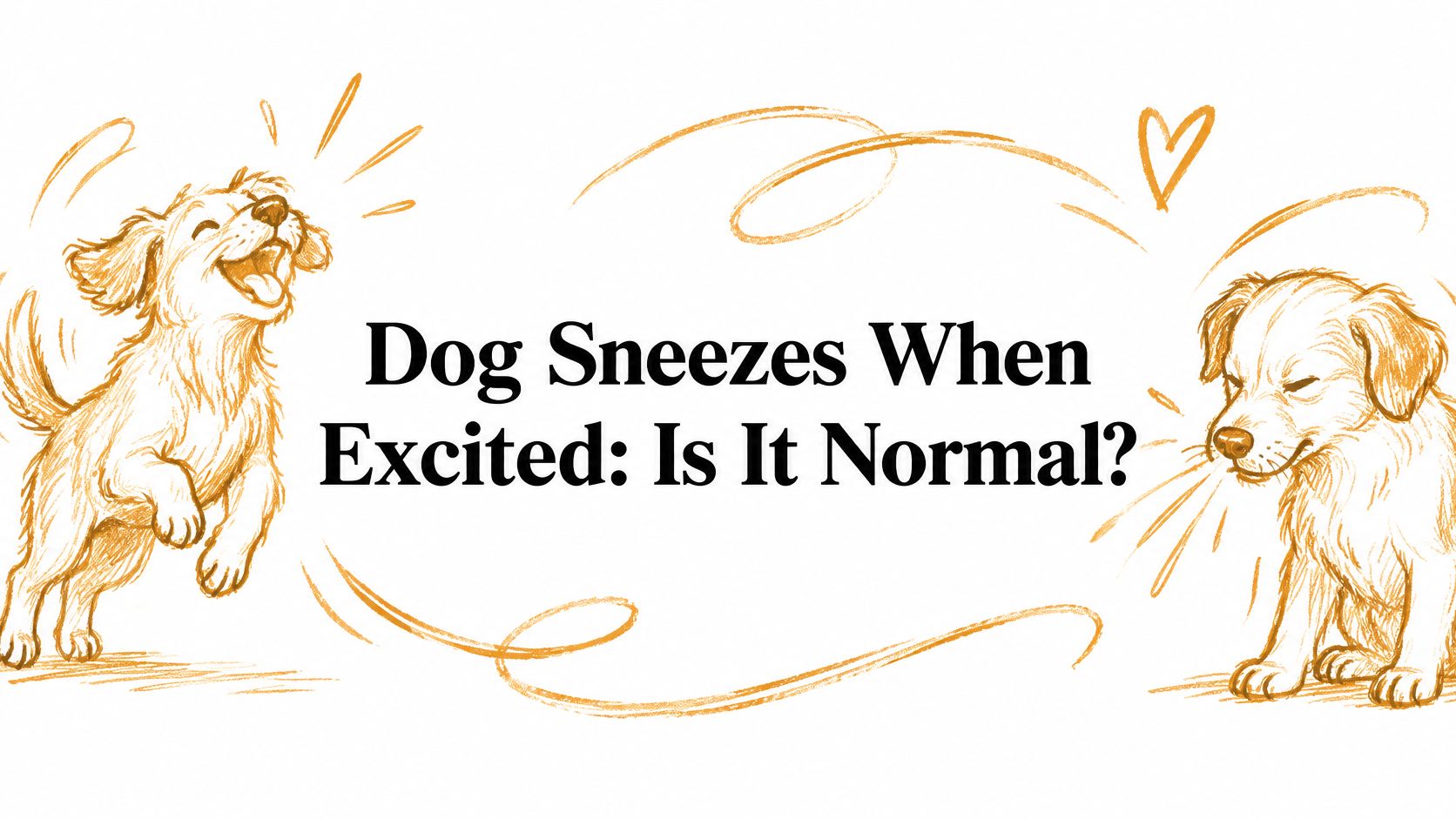
The doorbell rings, your dog skids into the hallway, sneezes twice, and stands there wagging as though nothing happened. Or the trigger is the leash. Lift it off the hook and three quick puffs come out before you reach the door. If your dog sneezes when excited, the pattern is rarely random, and it usually belongs to one of two very different events.
One is an ordinary play sneeze, dropped into a greeting like punctuation. The other is a reverse sneeze, which sounds far more alarming than it is. Telling them apart takes about ten seconds once you know what to watch.
Two details decide almost everything that follows in real life. How often the episodes happen, and how completely the dog recovers afterward. A dog that sneezes twice at the door and immediately wants to play sits in a different category from one that snorts for a minute, looks distressed, and takes a while to breathe evenly again.
Table of Contents
- Play Sneezing Versus Reverse Sneezing
- What to Do During an Episode
- Telling Communication Apart from a Nasal Problem
- Which Dogs Sneeze Most During Excitement
- When Sneezing Needs a Vet Visit
- Decide Whether to Book a Vet Visit This Week
Play Sneezing Versus Reverse Sneezing
Sneezing during excitement comes in two patterns, and they behave differently enough that most owners stop mixing them up after seeing both once. The first is an ordinary play sneeze: one brief, forceful push of air out through the nose, dropped into a greeting, a game of tug, or a hard sniff along a fence line. The second is reverse sneezing: a run of rapid, repeated inhalations through the nose that sounds like snorting, honking, or a small engine failing to start.
A 2022 retrospective observational study of 30 dogs evaluated for reverse sneezing lists excitement as a recognized trigger for the reflex, alongside upper-airway irritation, inflammation, foreign material and nasal disease. Its findings show why the reflex deserves attention rather than a laugh. In that series, 60% of the dogs had chronic signs lasting more than three months, 60% had episodes more than once per week, and 63% had at least one additional respiratory sign. Airway inflammation accounted for 57% of diagnoses, anatomical or functional disorders for 27%, and nasal or nasopharyngeal foreign bodies for 10%.
None of those figures means an excited sneeze is secretly serious. They mean the sneeze alone doesn't sort the harmless from the significant. Frequency and recovery do that sorting.
Play sneezing and reverse sneezing compared
| Feature | Play sneezing | Reverse sneezing |
|---|---|---|
| Sound | One forceful sneeze | Repeated rapid inhalations with snorting or honking |
| Air direction | Pushed out through the nose | Pulled in through the nose |
| Typical trigger | Play, greetings, active sniffing | Overexcitement, irritation behind the nose |
| Dog's posture | Keeps moving or playing | Often stops and extends head and neck |
| Duration | Brief | Brief and usually self-limited |
| Recovery | Returns to play right away | Returns to normal once calm; slow recovery is a warning sign |
Treat the table as a first check, not a diagnosis. It tells you which event you watched. It doesn't tell you why it happened.
The mechanism behind a reverse sneeze
Reverse sneezing is a mechanosensitive aspiration reflex set off by irritation of the nasopharynx, the space behind the nasal cavity and above the soft palate, as the Cornell Riney Canine Health Center explains. A normal sneeze expels air. A reverse sneeze pulls it in. The glottis closes, the dog makes repeated rapid inhalations against that closed airway, and the resulting negative pressure produces the loud snorting that sends owners looking for the phone.
Excitement triggers it for a mechanical reason. Rapid breathing, vigorous movement and abrupt shifts in upper-airway muscle activity all increase stimulation of that same patch of tissue.
What an episode looks like, step by step
- The dog stops. Play halts mid-chase, the head and neck extend forward, and the elbows often plant a little wider than usual.
- The inhalations start. With the glottis closed, the dog takes a series of quick, forceful breaths in through the nose, producing a snort, a honk, or a repeated gasp-like pull.
- It ends on its own. The irritation clears, the airway reopens and normal breathing returns, usually within seconds and often before you've decided whether to intervene.
Watching this the first time is alarming. It reads as choking. The useful detail is that a dog in a reverse sneeze is generally still moving air, and the episode commonly resolves without help.
Why it sounds worse than it looks: the noise comes from air being pulled hard against a narrowed opening, not from a blocked one. A dog that keeps its color, stays upright and settles quickly is showing you a reflex, not a crisis.
Flat-faced dogs put on the most dramatic version. A French Bulldog has less room behind the nose to begin with, so a short episode can sound like an emergency while the dog is in no immediate danger.
A short, excitement-linked episode in an otherwise healthy dog that ends when the dog calms down is usually uncomplicated reverse sneezing. What changes that verdict is how often it happens and how completely the dog recovers. Your vet will ask about both first.
What to Do During an Episode
An episode will almost always end without help, so your job in the moment is observation and trigger removal, not intervention. Work through these five steps in order.
- Stay calm and keep the head level. Low voice, hands off the muzzle, and move the dog a few steps away from whatever set off the excitement, whether that's the front door, a visitor or another dog.
- Take the pressure off the throat. If a leash or collar is tight because the dog is pulling into a greeting, loosen it or unclip it. Throat pressure keeps the reflex cycling.
- Hold food, water and toys. Eating or drinking fast can restart the spasm. Wait until breathing is quiet and even before the water bowl comes back.
- Check the gums and the breathing. Pink gums and an easy rate after the episode fit a simple reverse sneeze. Blue or gray gums, or a dog who can't settle, means emergency care now.
- Film ten seconds of it. A short clip of a typical episode gives your vet more than any description you can write in a parking lot.
While the dog settles, scan the room or yard. Dust from a rug, powder, a plug-in fragrance, a freshly cleaned floor, pollen from a walk: those are the ordinary irritants that keep the reflex primed.
Three things not to do. Don't clamp the mouth shut, don't pinch the nose, and don't reach into the throat. None of them shorten the episode, and all of them can turn a calm dog into a struggling one.
The ten-second test: watch what happens after the last inhalation. A dog that shakes off and picks up the toy is in a different category from one that stays braced, keeps the neck extended, or needs a minute to breathe evenly.
Owners of flat-faced breeds such as the Boston Terrier tend to learn these steps early, because a short airway leaves less margin when excitement spikes. Write down what you saw while it's fresh. A date, a trigger, a duration and a recovery note take about a minute.
Telling Communication Apart from a Nasal Problem
Dogs do sneeze when they're happy, excited or playful, and veterinary guidance treats that as a possible social signal rather than a purely nasal event. The Royal Kennel Club guide to excessive sneezing notes that a dog may sneeze in excited or playful moments. Keep the claim narrower than the internet version of it. The evidence supports an association with excitement and play, not a universal emotional message, and a sneeze on its own proves nothing about mood.
That distinction matters because excitement can also expose a physical trigger. Dust, fragrance, household cleaners, airway irritation, dental disease and narrowed airways all produce sneezing that happens to cluster around high-arousal moments, since an excited dog breathes faster, sniffs harder and drags its nose through more of the environment. The American Kennel Club explainer on why dogs sneeze separates an ordinary outward sneeze inside playful body language from a reverse sneeze, which is a reflex with a different cause.
So the question isn't whether the sneeze means joy. It's whether the same trigger fires in calm moments too.
A five-line sneezing diary you can start today
- Date, time and length. One line per episode, in seconds or minutes.
- Context. Greeting, leash walk, toy play, exercise, cleaning day, perfume, outdoor sniffing.
- Type. A single outward sneeze, or repeated rapid inhalations.
- Recovery. How many seconds until breathing looked normal and the dog went back to what it was doing.
- Baseline. One line from a quiet day with no excitement, so you have something to compare against.
Reading it back is straightforward. Intermittent sneezing without discomfort or other signs is commonly benign. A pattern that shows up across many contexts, or one that keeps running after the excitement drains out, changes the assessment and belongs in front of a vet.
Don't train the behavior away before you know the cause. Suppressing a sneeze doesn't remove dust from a rug or a grass awn from a nostril, and removing the irritant comes first. For a Pug or another flat-faced dog, the diary earns its keep faster, because airway shape makes a short episode harder to read from sound alone.
Which Dogs Sneeze Most During Excitement
Size is the clearest pattern in the numbers. A 2023 questionnaire study of 779 owned dogs in southeastern Spain recorded reverse sneezing in 412 dogs, a prevalence of 52.9%, and found toy dogs weighing under 5 kg and small dogs weighing 5 to 14 kg more predisposed than larger dogs, per the published survey in PubMed. The same research named Yorkshire Terriers, Chihuahuas, Bichons and Shih Tzus among the breeds with higher occurrence, and reported a greater predisposition in dogs older than 10 years.
Veterinary references put terriers and brachycephalic breeds on that same list of dogs reported more often, as the AKC description of a reverse-sneezing episode sets out.
Keep the limits in view. The survey was regional and questionnaire-based, so it describes what owners in one part of Spain reported, not a worldwide rate. None of it shows that excitement causes disease. A separate clinical series of 30 cases shows a similar size pattern, and its figures describe the mix of cases that reached a veterinary service, not the risk facing any individual dog.
Reverse sneezing cases by body weight in a 30-case clinical study
| Weight class | Share of 30 clinical cases |
|---|---|
| Toy, under 5 kg | 50% |
| Small, 5–15 kg | 27% |
| Medium, 15–30 kg | 17% |
| Large, over 30 kg | 7% |
Read that as a case mix. Small dogs made up most of the cases seen. It doesn't make a large dog immune.
What the size pattern means at home
If you own a toy or small breed, you're more likely to see this behavior, and more likely to see it often. That's a reason to keep the diary, not a reason to panic. Two situations deserve a closer look: a dog over 10 years old with new or rising episodes, and any dog that has other breathing signs alongside the sneezing.
Breed shape matters as much as weight. The Bulldog breed profile is a reasonable starting point for understanding how a compressed airway changes the picture, and PetCostEngine's breed pages cover all 226 AKC-recognized breeds, grouped into toy, small, medium, large and giant, so you can compare your dog against animals of similar size and skull shape.
When Sneezing Needs a Vet Visit
Excitement-linked sneezing doesn't get a free pass. The same reflex fires from leash or collar pressure, fast eating or drinking, allergens, foreign material, infection, nasal mites, masses, lower-airway disease and brachycephalic obstructive airway syndrome, according to the Cornell Riney Canine Health Center guidance on reverse sneezing.
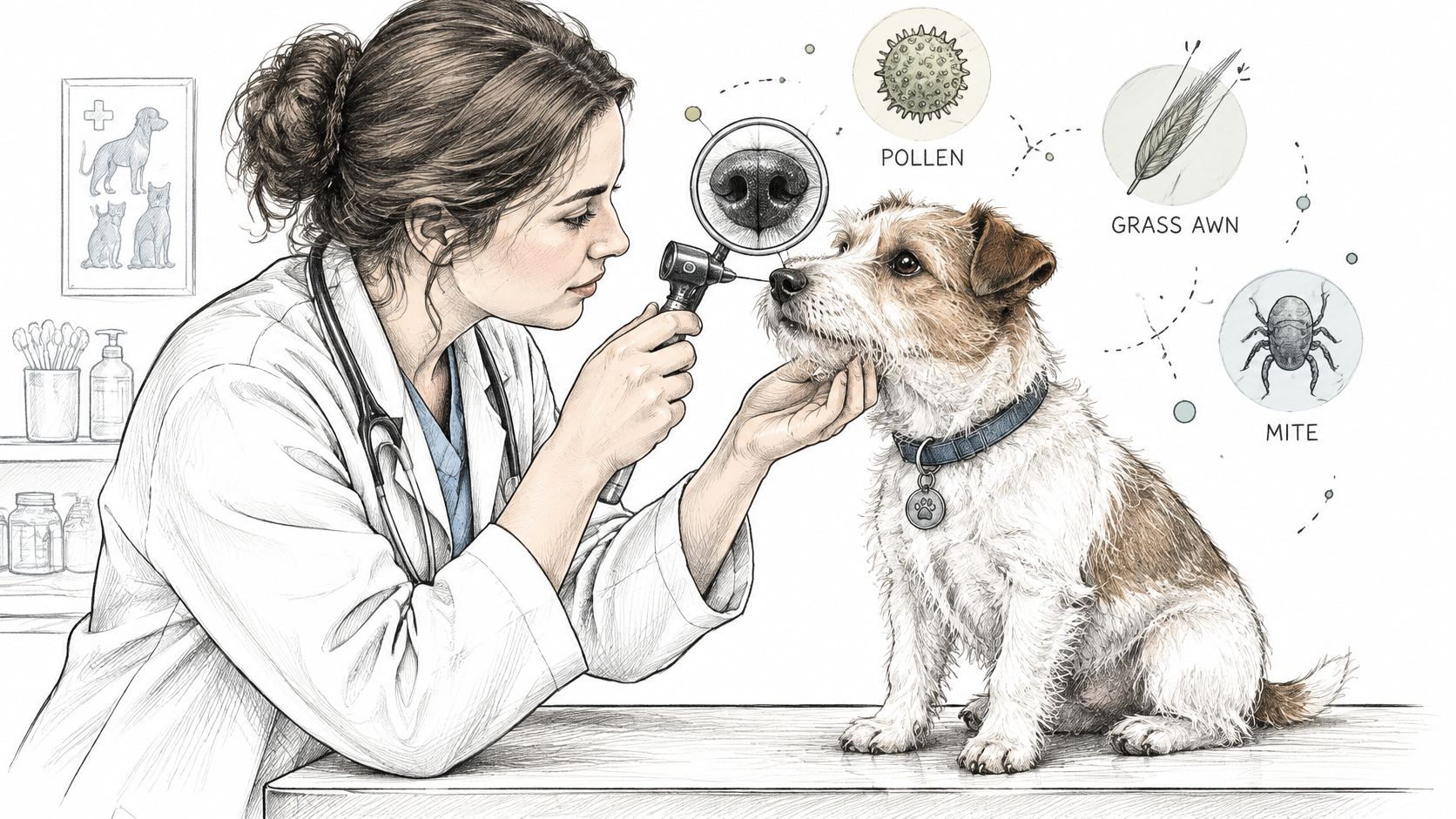
The split that matters is frequency and recovery. Isolated, short episodes with normal breathing and behavior between them fit uncomplicated reverse sneezing. Persistent or progressively frequent episodes, one-sided nasal discharge, blood, coughing, exercise intolerance, fever, lethargy, open-mouth breathing, cyanosis or a dog that doesn't bounce back after an episode belong in the other category, and they warrant evaluation.
When to call your vet about excited sneezing
| Situation | What it suggests | What to do |
|---|---|---|
| One short episode, normal breathing and behavior afterward | Likely uncomplicated reverse sneezing | Log it and watch the pattern |
| Episodes more than once a week, or becoming more frequent | Recurring airway irritation or inflammation | Book a routine vet visit |
| Signs lasting more than three months | Chronic airway disorder possible | Book a routine vet visit |
| Nasal discharge on one side, blood, or coughing | Possible foreign material, infection or lower-airway disease | Call your vet the same day |
| Fever, lethargy, or exercise intolerance | Illness beyond the nose possible | Call your vet promptly |
| Open-mouth breathing, blue gums, or no recovery after an episode | Possible breathing emergency | Go to an emergency vet now |
Most owners live in the top row. The bottom row ends the discussion: blue gums or open-mouth breathing at rest mean the car keys, not the calendar.
What a visit may involve
Your vet will examine the nose, throat and breathing, then decide whether imaging or a look inside the nasal passages is needed to find a foreign body or pin down inflammation. Bring the diary and the clip. A recorded episode shortens the guessing considerably.
The video below shows the shape of a typical episode, which is worth two minutes before your next appointment.
Flat-faced dogs need this conversation earlier than most. An elongated soft palate leaves limited upper-airway reserve, and excitement is exactly the moment that reserve gets tested, which is why brachycephalic anatomy counts as a reason for concern rather than reassurance. For a Brussels Griffon or another flat-faced breed, ask your vet what a normal episode looks like for your dog specifically, so you know what counts as a change.
One look-alike is worth naming. A loud honking cough points more toward tracheal collapse than reverse sneezing, and collapsing airway disease is the more serious of the two.
Read the table from the bottom up if you're unsure. The urgent rows call for immediate action, not a wait-and-see week, and the reassurance in the top row only holds while the dog keeps breathing normally between episodes.
Decide Whether to Book a Vet Visit This Week
Four decisions, in order.
- Sort your log into three buckets. Episodes that resolved on their own, episodes clustering into a pattern week after week, and any episode that came with the signs from the bottom of the triage table.
- Hold the line if you're in the first bucket. Short, recoverable, excitement-only episodes in a healthy dog justify a few more weeks of logging. Act when the pattern shifts.
- Book a routine visit if you're in the second. Bring evidence rather than a description.
- Skip the wait if you're in the third. Call an emergency service now.
What to bring: a short video of a typical episode, the diary entries with context and duration, and one line about the dog's breathing while resting at home.
Three questions worth asking your vet. Could these episodes come from nasal irritation or something lodged in the nose? Does my dog's airway shape or breed raise the risk? Which signs should bring us back sooner than the next scheduled visit?
Bring the video, the diary and the resting breathing note. Vets work faster with a timeline than with a memory.
Excited sneezing is often harmless when it is short and recoverable. The decision turns on frequency, recovery and what else shows up, never on the sneeze alone. For more on reading symptoms and planning ahead, the PetCostEngine guides library covers veterinary costs and first-year preparation in the same plain language.
PetCostEngine models breed-level health risk and lifetime ownership costs across 226 AKC-recognized breeds, adjusted for the state you live in, so an owner of a flat-faced or small breed can see which conditions that breed is predisposed to before the first vet bill arrives. Its free analysis asks four questions about your dog's breed, state and age and returns one personalized projection, which pairs well with the episode diary you're already keeping. Visit PetCostEngine to look up your dog's breed profile and get a clearer picture of the years ahead.
Estimated lifetime and yearly costs for a French Bulldog, state by state, plus whether pet insurance breaks even for the breed.
See French Bulldog costs →
Is insurance worth it for a French Bulldog? →
Premium dry food → Puzzle toys → No-pull harness →
As an Amazon Associate, PetCostEngine earns from qualifying purchases.